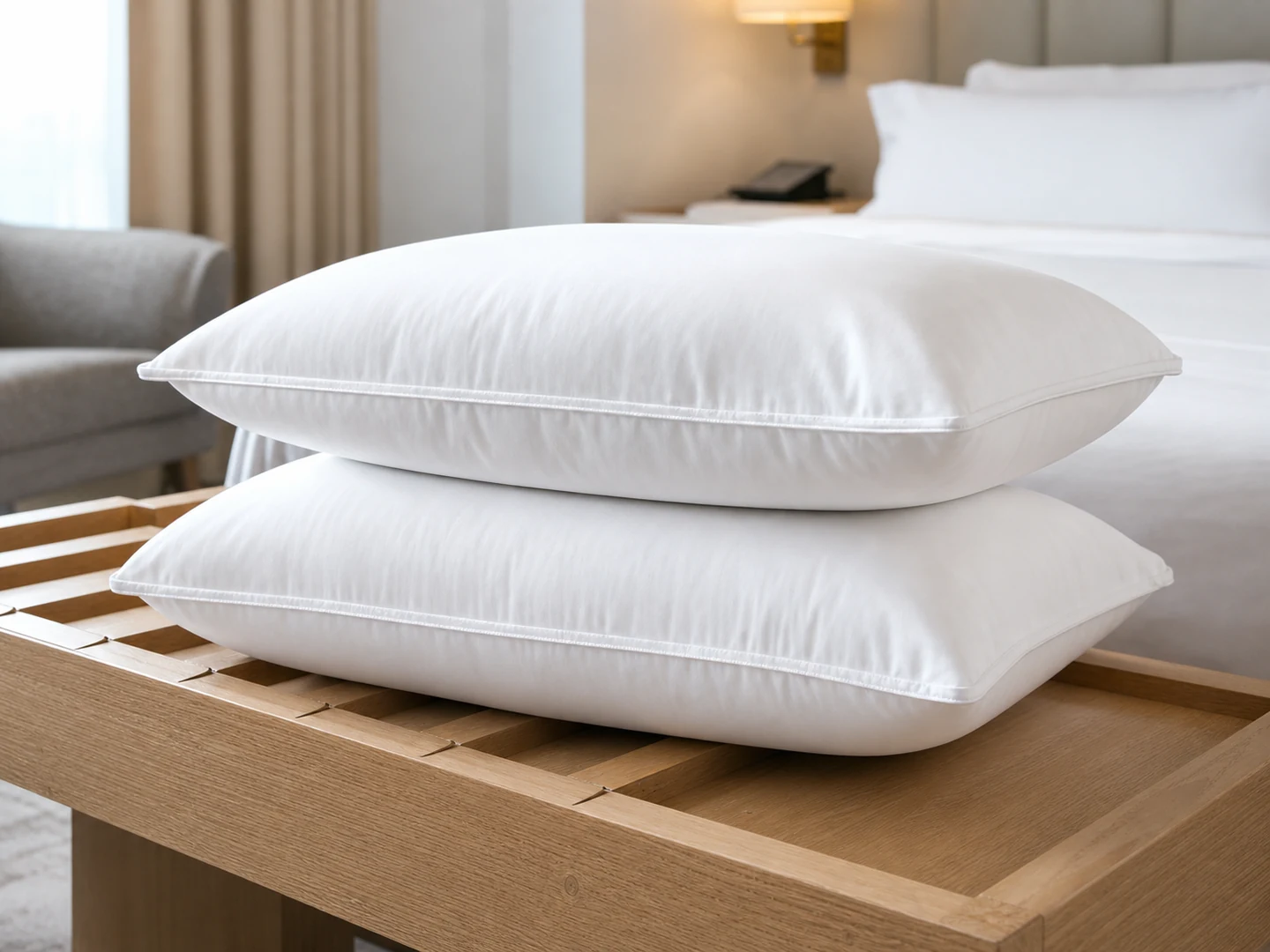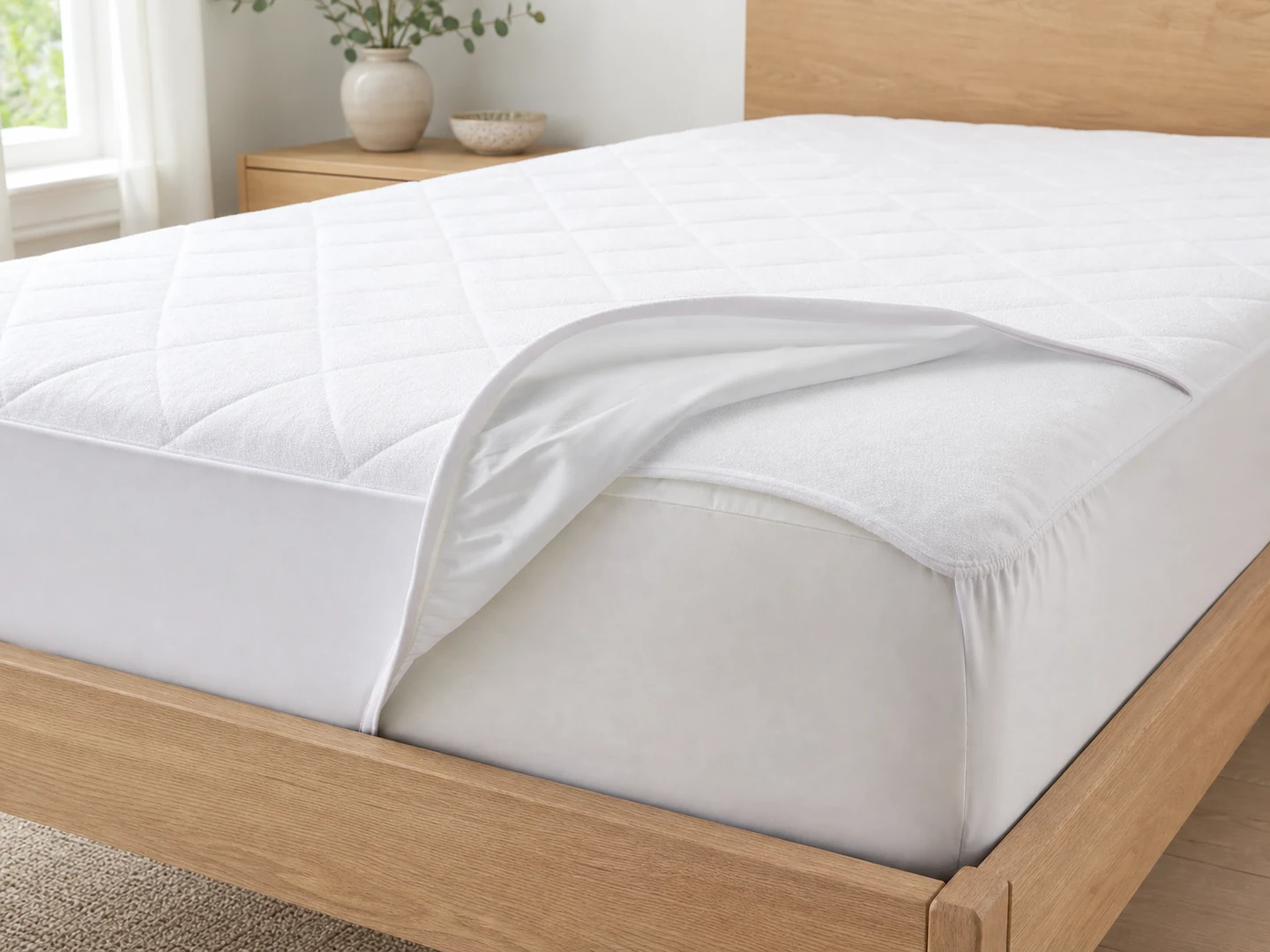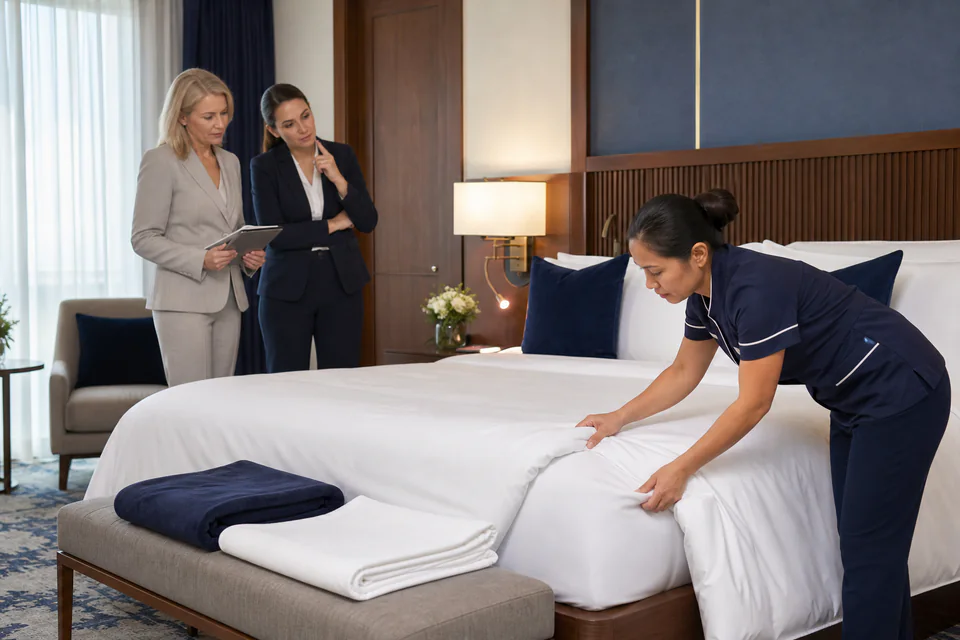
A bedding construction that looks attractive in a sample room can create extra handling steps across daily housekeeping. A time trial helps hotel buyers observe fit, alignment, lifting, closure and finishing under a controlled method. The result is not a universal productivity benchmark: property standards, room layout, mattress condition, team experience and service model all affect the outcome. A sound trial compares representative options with the same trained participants and records both time and quality, allowing procurement and operations to make a transparent tradeoff.
Define the decision question
Compare a real construction choice, not people
Choose the specific decision the trial should inform: duvet cover closure, sheet sizing, topper attachment, triple sheeting, pillow count or another confirmed program choice. The housekeeping-friendly design checklist can identify candidate features. Keep the question narrow enough that the product difference is visible. The trial should evaluate the bedding system and procedure, never rank individual employees or create surveillance evidence.
Agree which outcomes matter alongside time: finished appearance, corner fit, wrinkle control, closure security, safe handling, rework and consistency with the property standard. Assign procurement, housekeeping and quality owners. Set a rule for stopping the trial if a method feels unsafe or a sample is clearly the wrong size. A faster result is not useful if the bed fails the property鈥檚 approved appearance or creates unacceptable physical strain.
- Specific product decision
- Approved quality outcomes
- Non-personnel evaluation purpose
- Safety and stop rule
Standardize room and product conditions
Hold the environment steady before comparing options
Use the same room or equivalent mock-up, mattress, protector, topper, pillows and bed base for every option. Record mattress dimensions and actual depth, because fit differences can dominate handling time. The hotel linen size standardization guide helps identify property-wide variation. Condition and fold each bedding set through the same route, and stage items in the same location before the timing sequence begins.
Use production-representative samples with traceable size, construction and care state. New and repeatedly laundered samples should not be mixed without noting the comparison purpose. Inspect for obvious defects before the trial so a damaged zipper or mislabeled size does not distort the result. Keep room obstacles, linen carts and access consistent. Document any unavoidable deviation and exclude a run when it prevents a fair product comparison.
- Common room and mattress setup
- Traceable production-representative samples
- Consistent folding and staging
- Pre-trial defect and deviation check
Write an observable work sequence
Define start, finish and handling steps clearly
Break the task into practical stages: remove or stage old linen if in scope, fit protector or topper, place bottom layer, insert and close duvet, position pillows, align decorative elements and complete final review. Specify exactly when timing starts and stops. The duvet closure guide can identify construction steps worth observing. Avoid prescribing an unfamiliar method solely to favor one product.
Let trained housekeeping representatives confirm that the sequence reflects property practice and safe ergonomics. Record additional actions such as turning the duvet, reopening a closure, walking around the bed or correcting a slipped corner. Note which step causes the difference. Aggregate results across suitable repetitions and participants; do not publish one person鈥檚 time as a general labor standard. Preserve qualitative observations in the same worksheet as the timing data.
- Defined start and finish point
- Property-approved work sequence
- Extra handling and rework log
- Multiple representative repetitions
Score finished quality and fit
Pair timing with an approved visual and functional review
After every run, use the same reviewer or calibrated review team to assess alignment, coverage, corner security, closure position and approved appearance. Include a short fit observation before styling so decorative finishing does not hide a product issue. The fitted sheet fit guide provides related measurement points. Photograph the completed bed from controlled angles without guests or personal items.
Classify rework and critical failures separately from minor aesthetic adjustment. A product that repeatedly releases from the mattress, exposes the insert or requires excessive force should be referred for design review. Capture user feedback from the housekeeping team in neutral terms: which step was easier, where reach or grip was difficult, and what training changed the result. Do not turn subjective preference into a performance claim without supporting evidence.
- Common finished-quality rubric
- Fit check before final styling
- Rework and failure classification
- Neutral housekeeping feedback
Make the procurement tradeoff
Connect operations, care, cost and guest presentation
Review timing distribution, quality pass rate, rework and participant observations together. Consider product price, expected care route, replacement strategy and room standard as separate confirmed inputs. The hotel wash and lifecycle guide can add laundering evidence. Do not project a sample-room time difference directly into annual savings without property-specific occupancy, staffing and operational analysis.
Document the selected construction, reasons, rejected alternatives and any follow-up sample changes. Buyers can share a room setup and bedding decision brief to plan representative prototypes for an operational trial. If the property chooses different constructions for different room types, preserve the approved room matrix and training implications. The trial should make a purchasing decision clearer while respecting real operations and avoiding unsupported productivity promises.
- Timing and quality reviewed together
- Care and replacement inputs
- No unsupported annualized savings
- Approved construction and room matrix
Use a bed-making trial only when room setup, participants, sequence, quality standard, product identity, repetitions and exceptions are controlled and documented.