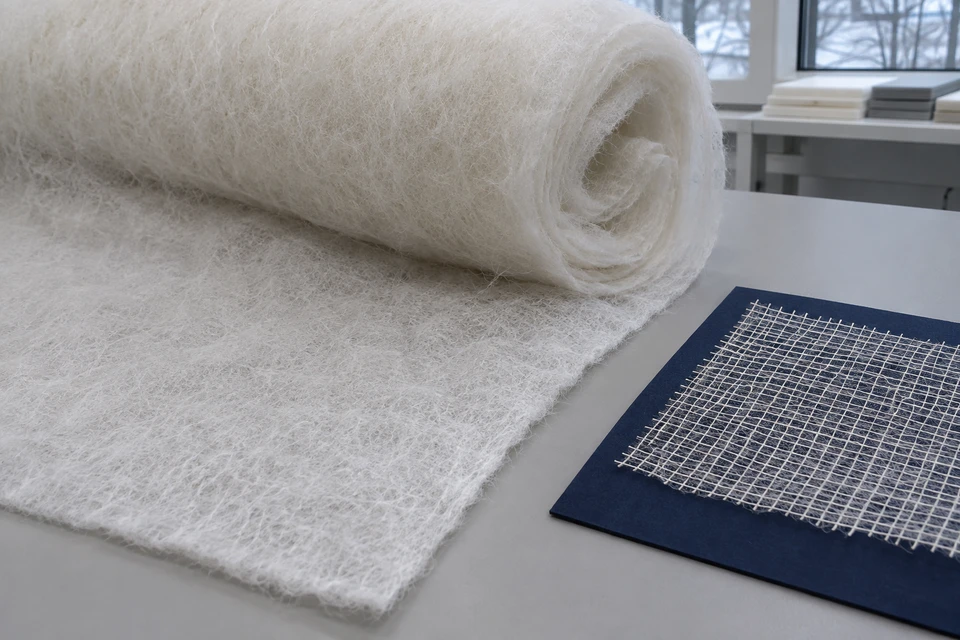
Needle-punched describes a way of consolidating a fibre web, not a complete declaration of everything inside quilt batting. A buyer who reads the term as binder-free, scrim-free or chemical-free may approve a material that was never described that way by its manufacturer. Ask separate questions about the fibres, bonding route, supporting layers and finishing. Then connect those answers to the actual batting reference proposed for the quilt, rather than to a generic nonwoven sample.
- 1. Start with the web and its consolidation route
- 2. Request a component description in ordinary purchasing language
- 3. Keep manufacturing descriptions separate from marketing claims
- 4. Inspect the offered batting without inventing a proof test
- 5. Evaluate the proposed batting inside the intended quilt
- 6. Release the material description with the sample approval
Start with the web and its consolidation route
Mechanical bonding does not describe the whole product
EDANA distinguishes mechanical bonding through physical fibre entanglement from other nonwoven bonding routes, including chemical and thermal methods. Its overview also separates web formation, bonding and finishing. That framework is useful for procurement because one processing term cannot answer every composition question. Ask the batting supplier to identify the route used for the offered material and disclose whether the product combines processes. The purpose is a clear material description, not an instruction to operate needling machinery or reverse-engineer the manufacturer's production settings.
Keep needle-punching distinct from the later quilting stitches that connect the face, filling and backing of an assembled quilt. Both may involve needles, but they are different construction stages with different approval questions. A sample of finished quilting cannot by itself establish how the batting web was bonded. Likewise, a mechanically consolidated batting reference does not tell the buyer which quilting arrangement is suitable for the proposed article. Resolve the input material identity first, then assess the finished assembly through its own development plan.
Request a component description in ordinary purchasing language
Make binder and scrim explicit questions
Ask for the declared fibre composition and a separate statement about any binder or supporting scrim included in the offered batting. If the supplier uses a trade term, request an explanation of what it means for that product. Do not turn silence into a negative declaration. A quotation that lists a main fibre but says nothing about support or bonding additions has left a question unanswered; it has not necessarily stated that no other component exists. Keep the distinction visible in the comparison between suppliers.
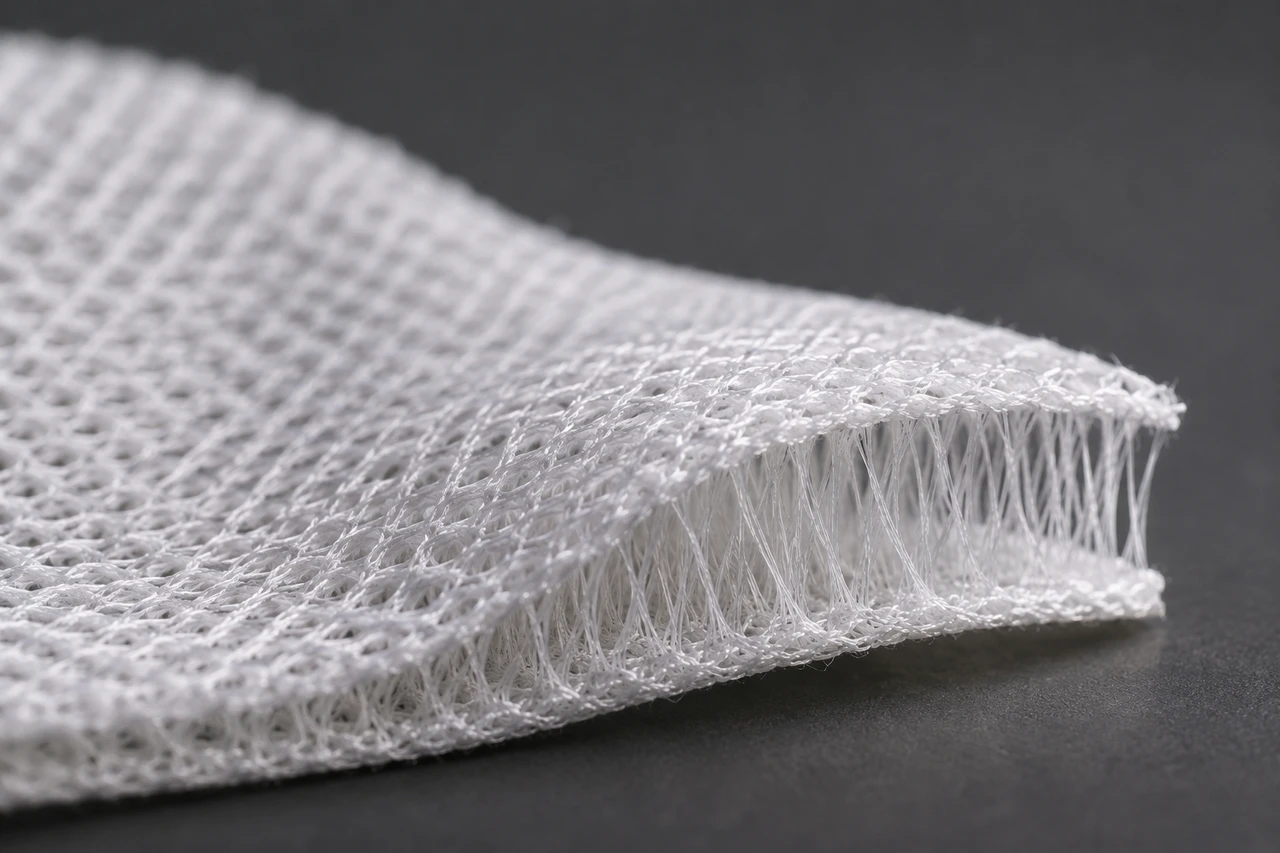
A scrim, where used, is a supporting structure that should be identified separately from the surrounding fibre web. Request its description and how it is incorporated, without assuming that all needle-punched batting contains one. The separate mesh specimen in an editorial illustration is not evidence of any particular product's construction. If a supplier says the material has no scrim, record that statement against the exact offered reference and ask what supporting documentation is available. Avoid presenting a general explanation of scrim as a claim about FY Bedding's current materials.
Keep manufacturing descriptions separate from marketing claims
A process name cannot certify absence
Do not derive chemical-free, adhesive-free or a similar broad public claim from the phrase needle-punched. If a buyer wants a specific absence statement, define exactly what substance or component is at issue and ask for appropriate product-specific evidence and competent review of the wording. Different parties may use binder to refer to different materials or functions. A narrowly supported component statement should not be expanded into an unrestricted health, environmental or legal assurance. The public claim must stay within the evidence actually available.
The same restraint applies to sustainability and certification language. A supplier's material document may cover a fibre input, a manufacturing site or a specific nonwoven product, each with different scope. Confirm the named entity, product reference and relevant validity before relying on it. This article does not offer a certification shortcut and does not claim that a particular bonding route is inherently sustainable. Where evidence is missing, keep the claim out of public copy and list it as an unresolved purchasing requirement rather than filling the gap with an attractive adjective.
Inspect the offered batting without inventing a proof test
Use observations to formulate the next question
Request an identified physical sample and the relevant product data. Record thickness or mass information only under the agreed measurement conditions, since informal handling can change how a soft web appears. Note visible layers, cut-edge structure and differences between the two surfaces, but do not use a photograph to declare hidden chemistry or exact composition. If the observation seems inconsistent with the supplier description, ask for clarification or appropriate specialist assessment. Do not improvise destructive or chemical experiments to force a yes-or-no answer.
Keep sample orientation and identity available when sending observations back. For instance, a buyer may see a regular structure near one face and ask whether it is an intentional support layer. That is a useful documented question, not yet a confirmed identification. A supplier response should address the actual marked specimen rather than attach an unrelated generic brochure. If a sample was supplied only to illustrate a concept and does not represent the quoted batting, say so before using its appearance or handling behaviour to approve the purchase.
Evaluate the proposed batting inside the intended quilt
Input identity and finished performance remain separate
Once the batting description is clear, build the relevant quilt sample with the intended shell, backing and assembly proposal. Agree the care and use assessments appropriate to that finished article. The batting's bonding route alone does not establish how the complete quilt will behave after handling or laundering. Keep any test result tied to the combination actually assessed. A successful sample made with a different backing or a substituted filling should not be used to approve the proposed construction without the required comparison and review.
This stage may identify a need to change the batting or another component. Record which variable changed rather than combining the best observations from several prototypes into an imaginary final version. If a supplier proposes a different bonding route or adds a support layer, ask whether that alters the declared composition, customer-facing wording or relevant assessment requirements. The decision is project-specific. Do not promise that eliminating a binder or adding a scrim will automatically improve durability, drape or care performance without evidence for the resulting assembly.
Release the material description with the sample approval
Make a reorder comparison possible
The purchase file should connect the batting supplier reference, component declarations, bonding description, available evidence and approved quilt sample. Include unresolved conditions and the person responsible for closing them. Ask how a proposed material change will be communicated before production or a reorder. A familiar trade name is not enough if its construction changes. Keep the document trail proportional to the claims being made, but detailed enough that a future reviewer can understand which batting was actually accepted and why.
For a FY Bedding quilt enquiry, send the intended use, shell and backing proposal, current batting description and any specific binder or scrim requirement. Ask what can be proposed and what evidence would support the response. Do not assume stock, a minimum quantity, certification or a delivery date from this general guide. The immediate purchasing task is to replace a broad process label with an identified material proposal; the next task is to assess that material in the actual quilt construction before release.
Ask separately about fibres, bonding route, binder, scrim and finishing; connect each answer to the offered batting reference, avoid unsupported absence claims and verify the proposed material within the identified finished-quilt sample.
Method references: EDANA: web formation, mechanical bonding and finishing.