Two bedding offers can both mention regenerated cellulose yet propose different named fibres. When one quotation specifies modal and another says viscose, a buyer should not erase that difference because the samples feel similarly soft. First clarify each supplier's exact description; then compare the fabrics and completed articles on the requirements that matter to the project. Material naming and finished-product approval are connected decisions, not substitutes for one another.
Clarify the exact comparison
Do not let a broad family name replace the offer
Ask each supplier to state the proposed generic fibre name, composition and material reference without relying only on a collection name. Keep modal and viscose entries distinct while any ambiguity is resolved. If a supplier uses viscose as a broad conversational description for several products, ask which specific fibre is being quoted. A purchasing table needs an answer that can be traced to the supplied material rather than an umbrella term that changes meaning between discussions.
Lenzing's TENCEL fibre information describes modal production as a modified viscose process. That relationship explains why the terms can appear together, but it does not make every viscose offer the same as a modal offer. Nor does it prove that a proposed fabric contains a particular producer's fibre. Use the source to frame the identity question, then obtain the supplier-specific evidence needed to identify the actual candidate.
Separate a fibre trademark from a generic name
A brand reference needs its own confirmation
If an offer uses a trademark, ask what specific fibre product it refers to and what supports that identification in the proposed supply route. Do not use the trademark alone as a synonym for one generic fibre. The producer's portfolio may contain more than one named fibre type. Keep the generic identity, any verified branded identity and the fabric supplier's code as separate fields so a buyer can see what each description contributes.
Request clarification before copying a commercial name into a product page, catalogue or care-information file. A public producer webpage is not evidence that an unrelated supplier's sample uses that source, and it does not establish a partnership with FY Bedding. Where the brand claim remains unverified, continue the technical discussion using the confirmed generic description. The purchasing team should not need to imply a commercial relationship in order to compare two fabrics.
Hold the fabric variables in view
A soft sample does not identify its fibre
Compare construction, fabric mass, yarn description and finishing state alongside composition. If a modal candidate is knitted and a viscose candidate is woven, note that the comparison changes more than fibre identity. The same applies to different finishes or blends. Such candidates may still be useful alternatives, but their differences should be disclosed rather than attributed automatically to the fibre name in the first column of a quotation.
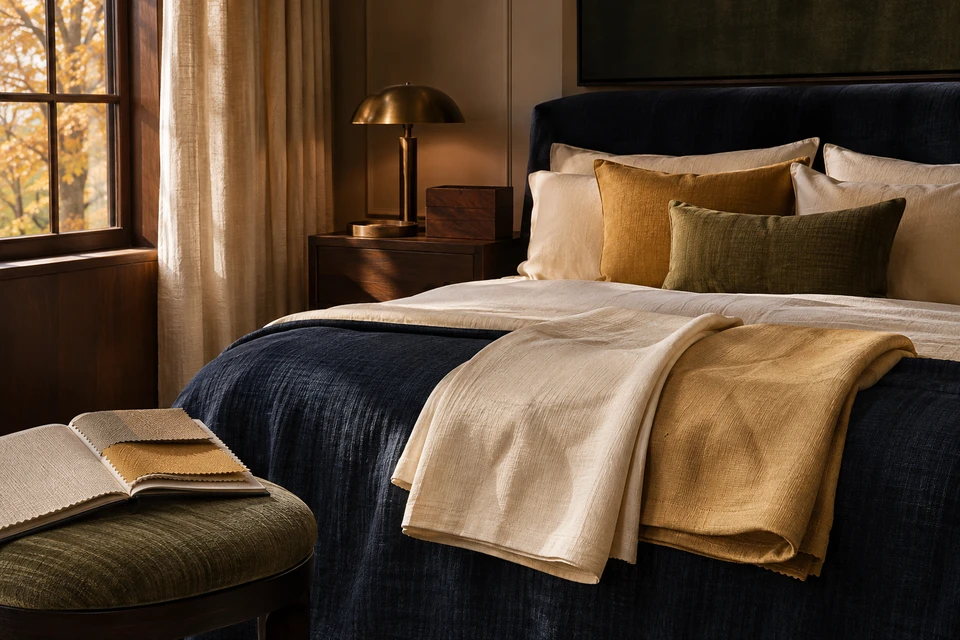
Review labelled physical samples under consistent conditions. Record the selected hand, drape, surface and opacity with a retained reference, without claiming that touch proves composition. Ask for the material evidence appropriate to the project where identification is uncertain. A photograph of flowing cloth can illustrate a bedding concept, but it cannot distinguish modal from viscose or validate a supplier's percentage declaration. Keep the visual approval and identity evidence together without confusing their purposes.
Compare complete articles for the intended job
Fibre identity does not settle the buying decision
Use representative sewn samples of the proposed bedding format. Examine seams, closures, turnbacks and the way the cloth behaves when arranged in normal use. State whether the programme needs a retail duvet cover, a fitted component or another identified article. Avoid ranking one fibre name as universally superior. The relevant offer is the actual fabric and assembly that can meet the buyer's defined appearance, handling and service requirements.
Agree any required care and performance evaluation with the responsible technical owner. Identify the tested sample, conditions and acceptance criteria before using results to select a candidate. Do not transfer a producer's general fibre statement to every fabric or finished article containing that fibre. If the two proposals require different care routes, make that difference visible in the decision. An apparently attractive material substitution may create an operating requirement that the intended customer has not accepted.
Keep substitutions separate from corrections
A revised name can mean a changed product
When a supplier changes modal to viscose in an offer, ask whether this corrects an earlier description or proposes a different material. Those situations require different follow-up. A correction needs a consistent explanation and supporting records for the sample already reviewed. A substitution needs an identified new proposal and the relevant sample review. Do not silently amend the purchase description while leaving the original approval photograph and material reference attached.
Record which components are affected. A face, reverse and accessory may have different compositions, so an amended cover fabric should not automatically change the description of the whole set. Keep quantities and price comparisons tied to the revised component list. Ask the supplier to explain any effect on sampling, minimums and timing. Neither material availability nor commercial equivalence can be concluded from the fact that both fibres belong to the regenerated-cellulose family.
Release one consistent material record
Align the quote, sample and public description
Before ordering, check that the quotation, fabric record, sample identification and proposed product description agree on the actual material. Have destination-specific labelling questions reviewed by the appropriate person using the confirmed composition; this guide does not prescribe legal wording for every market. Remove unresolved brand claims from the approved copy until they have suitable support. Keep technical identity decisions distinct from any separate marketing claim that has not been assessed.
For an FY Bedding enquiry, provide the intended article, the two candidate material descriptions and the features you need to compare. Ask for feasibility, representative samples and a quotation against the selected option. The result should be a clear choice between identified proposals, not a generic promise of softness. If the supplier later changes the fibre, blend or fabric reference, the purchase file should show why the existing approval must be revisited.
Resolve the specific generic fibre name, verify any branded identity separately, compare actual fabrics and sewn articles, and treat a modal-to-viscose change as an explicit approval question.
Method references: TENCEL: modal and related regenerated-cellulose fibre descriptions.