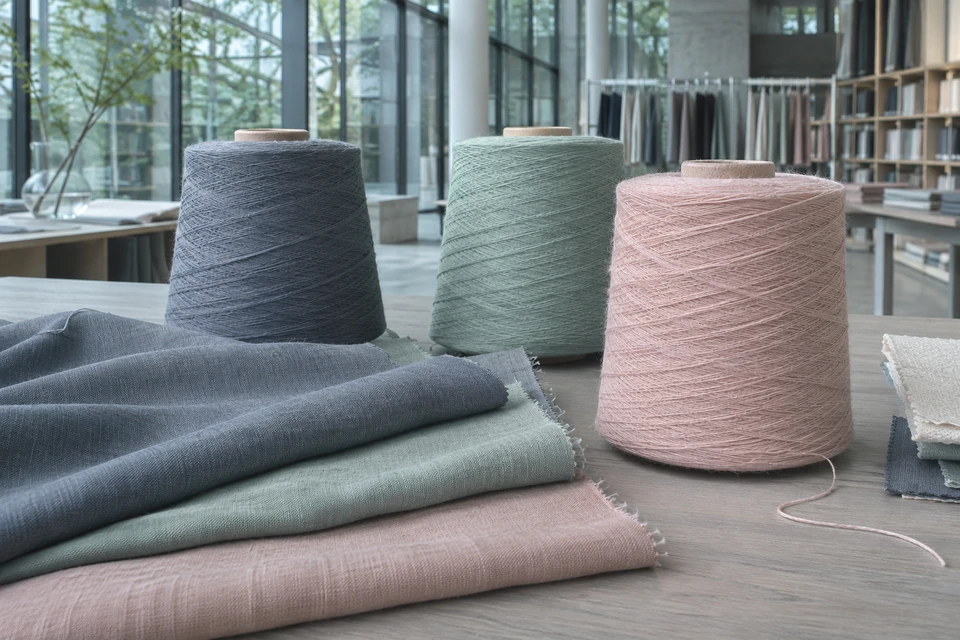
Solution-dyed polyester describes when colour is introduced, not simply how dark or even a fabric looks. For a buyer, that upstream colour decision affects which material must be identified and when a shade choice becomes a production commitment. Establish the actual route before comparing an offer with yarn-dyed or piece-dyed alternatives. A colour card by itself cannot show which process produced the fabric being quoted.
- 1. Locate colour addition within the proposed route
- 2. Separate a selected production colour from a new target shade
- 3. Follow the coloured material into the finished fabric
- 4. Confirm commitments at the point colour is fixed
- 5. Keep colour-process identity separate from performance claims
- 6. Release a colour-and-material identity that can survive reordering
Locate colour addition within the proposed route
Ask for a process description rather than a visual guess
The producer e.dye describes its solution-colour process as introducing colour before polyester is extruded into filaments. That limited technical example helps distinguish upstream coloration from colouring yarn or fabric later. It does not establish that a current sample uses that producer's material, and it does not transfer the producer's performance or environmental claims to another product. Ask the supplier to identify the actual offered route and material references.
If a quotation uses dope-dyed, solution-dyed or another related commercial term, request a plain explanation of what it means in that offer. Record the fibre type and the stage at which the colour is introduced. Do not substitute the most specific process name based on appearance or marketing language. A woven fabric may also contain more than one yarn or component, so establish which parts of the complete textile the stated route actually describes.
Separate a selected production colour from a new target shade
The development task can be different
Ask whether the chosen shade is an identified existing material option or a new colour-development request. For an existing option, obtain the supplier's reference and a physical example tied to the proposed material. For a new target, clarify the stage at which a trial can be made and what must be approved before a larger material commitment. A generic lab-dip request may not describe the relevant upstream development route precisely enough.
Keep the target colour, trial reference and accepted production material distinct in the file. A screen value or paper chip can communicate a direction, but the buyer should approve an actual textile representation under agreed viewing conditions. Do not assume an existing colour name means immediately available stock. Ask what quantity is currently confirmed, what would require a new production lot and which lead-time statement applies to each situation.
Follow the coloured material into the finished fabric
Yarn identity and fabric appearance are connected decisions
Request traceable references linking the proposed coloured filament or yarn to the fabric construction. Identify whether the same material is used in both directions of a woven cloth or in only one component. Keep other yarns, finishes and assembly materials visible in the specification. An upstream colour description does not tell the buyer the entire fabric composition, weave, mass or surface treatment, and should not replace those fields in a quotation.
Review the finished fabric at the size and in the presentation relevant to the intended product. Changes in construction, texture and finishing can change how a colour is perceived, even when the supplier identifies a common colour input. Compare the actual completed textile rather than accepting a yarn cone as the sole colour standard for a cushion or bedding article. Retain the upstream reference as traceability information, with the approved finished sample as the product-facing comparison.
Confirm commitments at the point colour is fixed
Minimums may belong to an earlier stage than sewing
Ask which quantity commitments apply to the chosen coloured material, fabric formation and finished-article assembly. A sewing minimum does not necessarily explain the material quantity needed for a new shade. Request the actual relationship for the proposed supply route without inventing a universal solution-dyed minimum. If unused material would remain after the order, clarify how it is identified, owned and handled in the commercial agreement through the responsible parties.
Before changing a colour late in development, establish what has already been approved or produced. Keep a planning forecast separate from authorization to make coloured material. A revised shade may require a new upstream decision rather than a simple correction at a later finishing stage. The buying team should obtain a documented change proposal with confirmed effects on sampling, quantities and timing instead of assuming that every textile can be recoloured at the same stage.
Keep colour-process identity separate from performance claims
No route name is a test result
Specify which colourfastness or other assessments matter to the intended use and ask for evidence on the actual offered textile. Do not infer resistance to light, washing, rubbing or transfer solely from the phrase solution-dyed. The relevant method, specimen identity and acceptance criteria should be agreed with the responsible technical provider. A manufacturer's claim about its own system is not a substitute for evidence that applies to the purchased construction.
Likewise, avoid publishing water-saving, emissions, permanence or other comparative claims without appropriate substantiation for the exact claim and supply scope. This guide makes no environmental comparison and no automatic fastness promise. Its decision is narrower: identify when colour enters and connect that material to the finished product. Keeping that boundary clear lets the buyer evaluate the route without using process vocabulary as a shortcut around evidence review.
Release a colour-and-material identity that can survive reordering
Preserve the connection between stages
The order record should link the accepted colour reference, actual material source or identifier, fabric construction and finished sample. Record which substitutions require notice and renewed approval, such as a different upstream material, another coloration route or a changed fabric finish. On a repeat order, compare the supplied references before relying on the old sample name. A visually similar textile made by a different route should be offered transparently as a revised proposal.
Share the intended article, colour target, quantity split and required evidence with FY Bedding to discuss the feasible development path. Ask for confirmation of the actual supply route rather than assuming a displayed product uses solution-dyed yarn or a named producer's system. A useful purchasing decision aligns the upstream colour commitment with the approved finished textile, while keeping availability, price, performance and delivery as separately confirmed project facts.
Can the supplier trace the stated colour-addition stage to the quoted yarn and finished textile, and explain the approval and quantity commitments without relying on unverified performance or environmental claims?
Method references: e.dye: colour introduced before filament extrusion.