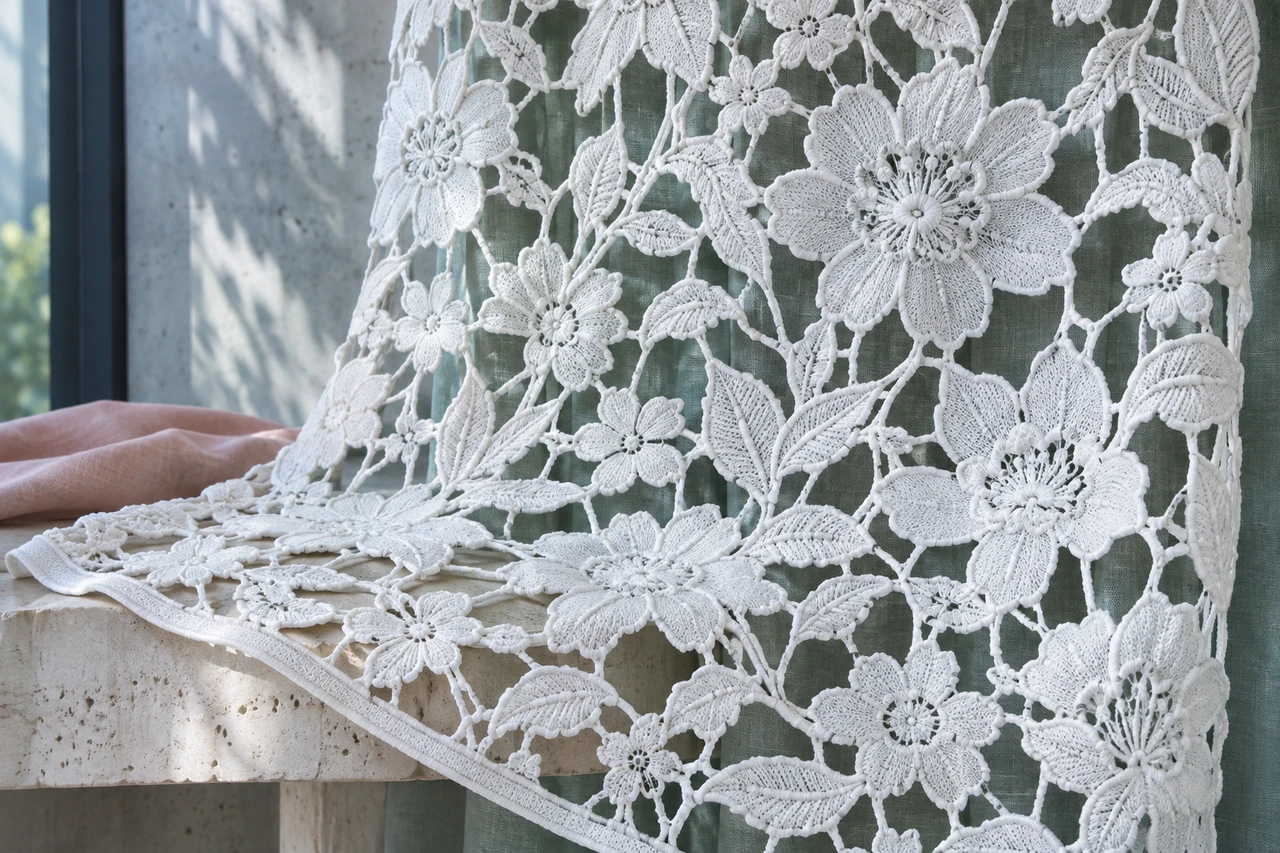
A polyester fabric can feel fuller and less slick than a buyer expects from a filament yarn. That tactile impression may lead to vague descriptions such as cotton-like, spun-like or soft textured. None of those phrases identifies the fibre content or the process. For an air-textured fabric offer, the buyer should connect the yarn description to the actual fabric and finished article before comparing quotations or deciding what may be said to a customer.
Ask what the yarn description means
Distinguish fibre identity from yarn treatment
Request a plain account of the offered yarn: fibre composition, filament or staple construction, the stated texturing process and the supplier's reference. Heberlein describes air texturing as a route used to create bulky yarns with a spun-like character. That technical vocabulary does not turn polyester filaments into cotton or establish that a particular sample used the process. The supplier still needs to identify the material in the actual offer.
If the quotation says only textured polyester, ask which process is meant rather than substituting a more specific term yourself. Air texturing and air interlacing should not be treated as interchangeable labels merely because both involve air. Nor should a fibre-content description be inferred from handle. Keep the purchasing record factual: what is declared, what supporting information is available and what remains to be confirmed. This avoids carrying an attractive but ambiguous sample-room phrase into a formal specification.
Separate yarn bulk from the fabric recipe
One yarn feature cannot describe the whole cloth
Ask how the yarn is used in the proposed fabric: in which direction or component, with what other yarns, and in what construction. Record any relevant yarn specifications supplied by the manufacturer without assuming that a single count explains every tactile difference. The same broad yarn family can be incorporated into different fabrics. Compare like-for-like candidates where possible so that a change in weave or finish is not casually attributed to air texturing.
Request a small comparison set with clear identities. Include the quoted finished fabric and, if useful and available, the supplier's yarn or intermediate reference. A loose yarn bundle can help a discussion but is not the purchasing standard for the finished cushion cover or other article. The approval must return to the fabric in its actual completed state. Avoid accepting an unspecified substitute simply because it feels similarly full when squeezed in the hand.
Describe the intended handle through use
Turn subjective impressions into a sample decision
Agree how the fabric should behave in the intended product: the desired drape, surface character and fullness should be shown by a retained reference. Compare samples at the same size and in the same presentation, then assemble a representative article. A cloth that feels attractive as a small folded swatch may look different when spread over a larger panel or wrapped around a proposed filling. The finished use makes the buyer's preference more concrete.
Use words such as cotton-like only as clearly limited descriptions of a tactile impression, if they are needed at all. They must not imply cotton content, a natural-fibre origin or an unverified performance advantage. Record the actual composition separately and keep public wording unambiguous. A supplier should be able to explain the proposed yarn and construction without relying on a resemblance to another material. That explanation helps the buyer understand what is being priced.
Inspect the surface at more than one scale
A full handle is not permission for unwanted variation
Review the cloth flat, draped and close up. Look for unintended changes across a representative length or between sampled panels, and ask the supplier to identify what is normal for the approved construction. Do not confuse an intentionally textured surface with every loose loop or visible irregularity. Equally, do not require a completely smooth appearance if the accepted design relies on texture. The physical reference should show the intended character and the areas that need attention.
Where snagging, pilling, abrasion or another performance issue is relevant, agree a suitable assessment and acceptance criteria with the responsible technical provider. Do not infer those results from the yarn's bulk or from the name of the process. Any report should identify the tested fabric and finished state. A visual inspection and a performance test answer different questions; both should stay tied to the same offered reference rather than being used to approve unrelated alternatives.
Review finishing and care as separate contributors
Preserve the history of the approved sample
Ask whether the finished handle includes additional treatments or mechanical finishing beyond the stated yarn construction. The purpose is not to demand proprietary machine settings, but to understand whether a major contributor to the sample's feel is represented in the proposed production route. If a trial and a bulk-intended sample differ in finishing, make that difference explicit. Do not attribute all softness or fullness to the yarn name when the fabric's history is incomplete.
Review a representative article after the agreed care procedure where care is relevant to the product. Retain a control, identify the procedure and record changes in surface, drape and assembled appearance. An informal comparison should remain an observation, not be presented as a standardized test. If the supplier proposes a different finishing route to reproduce the handle, request a new finished reference before treating it as equivalent. The buyer is approving an article, not a vocabulary list.
Make the commercial comparison traceable
Identify what may change and who approves it
Compare quotations using the declared composition, yarn description, fabric construction, finishing scope and approved article reference. Ask which variables drive the quoted minimum order or sampling requirement, and whether the proposed yarn is actually available for the project. A machine manufacturer's process description is not evidence of FY Bedding's equipment, capacity or delivery date. Obtain the supplier's current project-specific commitments without turning general technical information into a factory capability claim.
For repeat orders, record the changes that require notice and review: a different yarn source or process, altered construction, revised finish or a new assembled sample. Request suitable evidence before using the same approved description for a changed offer. Keep the consumer-facing composition and the internal tactile target distinct but consistent. A well-described air-textured fabric can be evaluated on its own merits, without pretending that a familiar handfeel proves a different fibre or guarantees performance.
Release only when the fibre composition, actual texturing description, fabric recipe, finished-article reference and permitted claim wording agree; route any changed yarn or finish back through sample approval.
Method references: Heberlein: bulky air-textured yarn production; Heberlein: air texturing and air interlacing are distinct processes.