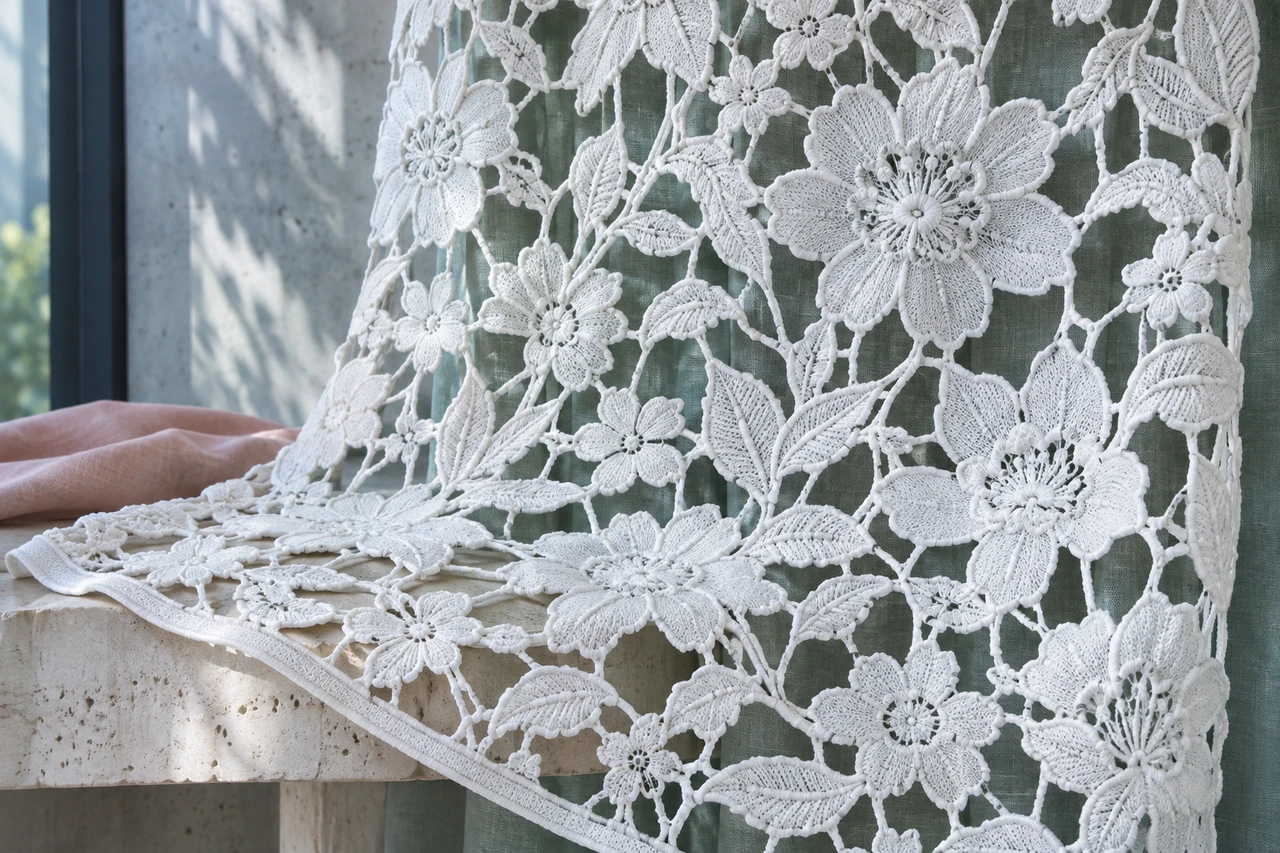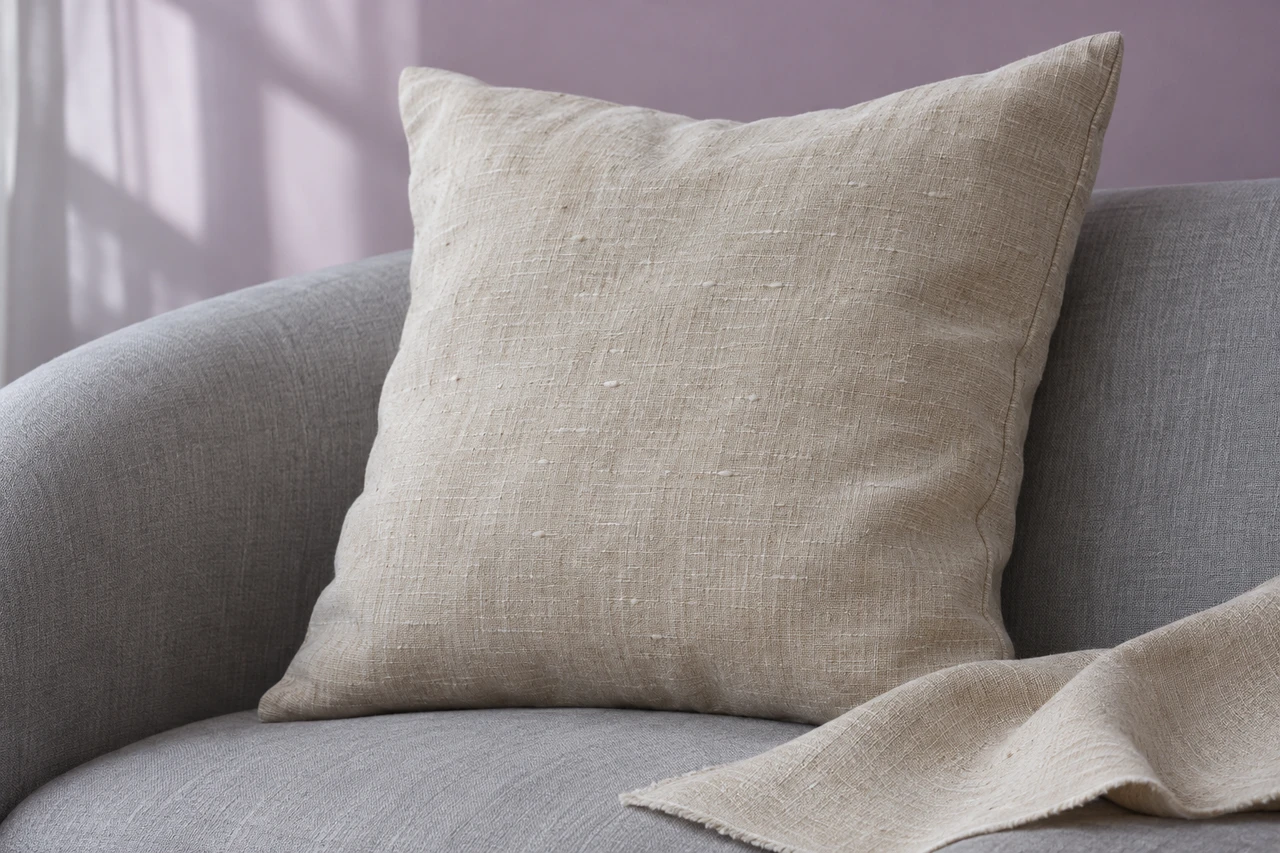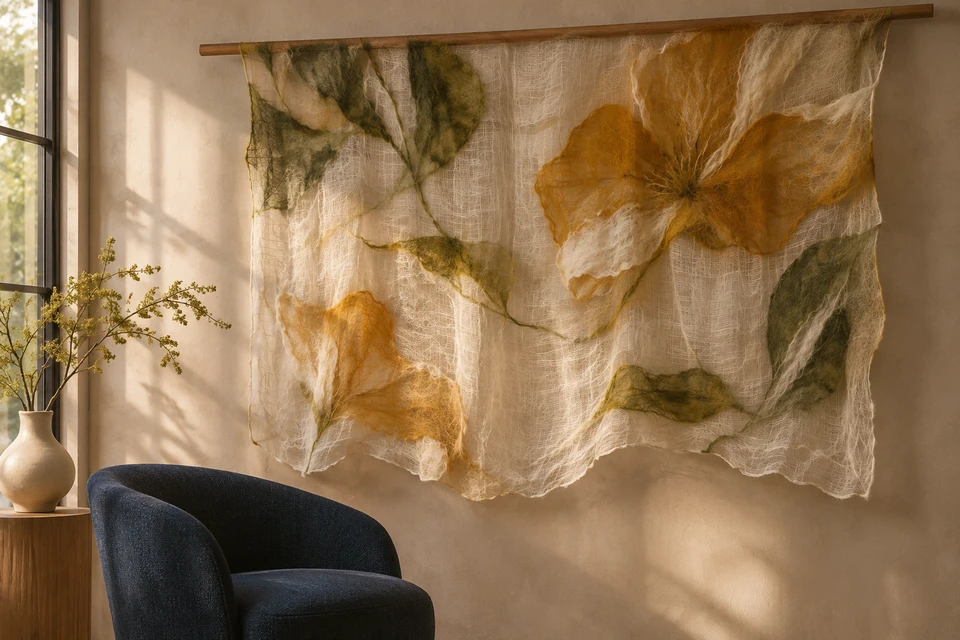
A floral Nuno panel is not simply a printed flower with a fuzzy surface. The buying decision concerns how areas of felted fibre and visible fabric work together in the finished piece. For a proposed cushion face, decorative panel or wall textile, define where the ground remains exposed and where the floral fibre layer should dominate. Approve that relationship after the making and finishing stages, not from a loose arrangement of fibres.
Define the combined textile
Name the fabric and the fibre contribution
Living Felt describes Nuno felting as wet felting that incorporates fabric as a base or embellishment. This limited definition is useful when clarifying an offer: the buyer is reviewing an integrated fibre-and-fabric proposal, not necessarily a solid sheet of felt. Ask the maker to identify the ground fabric, the added fibres and any further layers. Do not assume that every Nuno proposal uses the same silk ground, wool type or manufacturing sequence.
Separate the construction description from the floral artwork. A photograph might show attractive blossoms but cannot confirm how the layers are combined or which fibres are present. Obtain the actual sample reference and the maker's description of the supplied state. If a printed cloth or a sewn felt applique is proposed instead, record it as a different route. Neither alternative should inherit the approved Nuno identity just because the colour arrangement resembles the initial concept.
Mark the exposed-ground areas
Negative space is part of the specification
On the authorised artwork, identify the flower and leaf fields, their transitions and the areas intended to remain visibly open. Explain whether the fabric should be clearly seen between motifs or whether a light haze of fibre is acceptable there. Avoid an ambiguous instruction to cover the panel evenly when the intended design relies on a translucent or visibly woven ground. Ask the maker which parts of that layout can be reproduced within the proposed process.
Use a finished physical range to establish acceptable coverage. An example with almost hidden ground and another with very open spacing can each be attractive but belong to different design directions. Record why the preferred balance was chosen, including the visibility of petals at the intended viewing distance. Photographs should locate the areas under discussion; they should not replace the retained textile when fine fibre density, translucency or touch determines the decision.
Review the finished shape and transition
A loose fibre layout is not the delivery reference
Ask for samples after the intended felting and finishing, with their status clearly identified. Compare the resulting motif position, outline and overall panel geometry against the proposal. Record any intentional puckering or irregular edge character with physical references. Do not specify a universal reduction factor from a preliminary layout: the maker needs to establish how the selected fibre, fabric and route produce the agreed finished dimensions and appearance.
Inspect the transitions from dense floral areas into exposed cloth from both faces. Note isolated lifting, loose material, unexpected bare patches or a boundary that differs from the accepted sample, then seek a technical explanation. These observations do not by themselves diagnose a process fault or prove long-term integrity. If the intended application needs a defined attachment or durability assessment, agree that work separately with the responsible specialist and connect it to the actual construction.
Place the panel in its intended assembly
Backing can change the visual result
Review a representative assembled item. A pale lining may reduce the contrast of an exposed fabric field, while a dark backing can make the same opening more prominent. On a cushion, filling and curvature can also alter how the floral areas are seen. On a wall panel, the hanging arrangement and nearby light become part of the presentation. Approve the combination that will actually be offered rather than transferring a free-hanging swatch approval to every format.
Mark seam allowances, closure positions, hanging supports or other relevant assembly features on the panel drawing. Decide whether a flower can enter a seam or needs a clear margin. Ask for the proposed edge finish and inspect it in the complete sample. The purpose is to protect the agreed layout and ground visibility, not to claim that one panel construction suits all products. A change from wall textile to washable bedding requires a new suitability discussion.
Keep care and surface expectations specific
A decorative technique is not a care guarantee
Request the proposed care route for the whole assembly, including ground, added fibres, lining and trims. Agree which samples and conditions will be evaluated, retaining an identified reference before treatment. Compare the floral coverage, ground visibility, dimensions and edge condition afterward. Record the actual observations and procedure. Do not turn an informal demonstration into a standardized result, a commercial-laundry claim or a promise that the panel will never change.
If the maker expects visible variation between pieces, define its acceptable range before ordering. Keep that range separate from unresolved loose-fibre or assembly concerns. The receiving team should know which irregularity belongs to the design and which finding needs review. A broad description such as handmade character cannot settle every difference. Likewise, a care instruction for the ground fabric alone should not be copied onto a product with additional fibres and components.
Quote the approved panel format
Coverage, size and assembly must stay connected
Provide the actual finished dimensions, coverage references, backing choice, edge finish and intended product quantity in the enquiry. Ask how those decisions affect sampling, minimum order quantities and production planning. If a smaller format or a different ground is suggested, request a separately identified development sample. The visual relationship between fibres and fabric may change, so a shared floral collection name is not enough to establish that two offers are equivalent. The FR-01 collection reference communicates botanical styling, not evidence of Nuno felting or a particular fibre.
For an FY Bedding discussion, send the authorised botanical direction and identify whether the request is for a loose decorative panel or a finished article. Ask for feasibility and sample confirmation without assuming a listed floral reference uses Nuno construction. Keep the approved finished textile, coverage map and assembly record together. This gives a future reviewer a concrete basis for recognising the intended mix of floral fibre and exposed ground rather than relying on a vague impression of texture.
Identify both textile components, map the intentionally exposed ground, approve the finished coverage range and recheck that relationship in the actual backing and product assembly.
Method references: Living Felt: Nuno felting combines fibres and fabric.