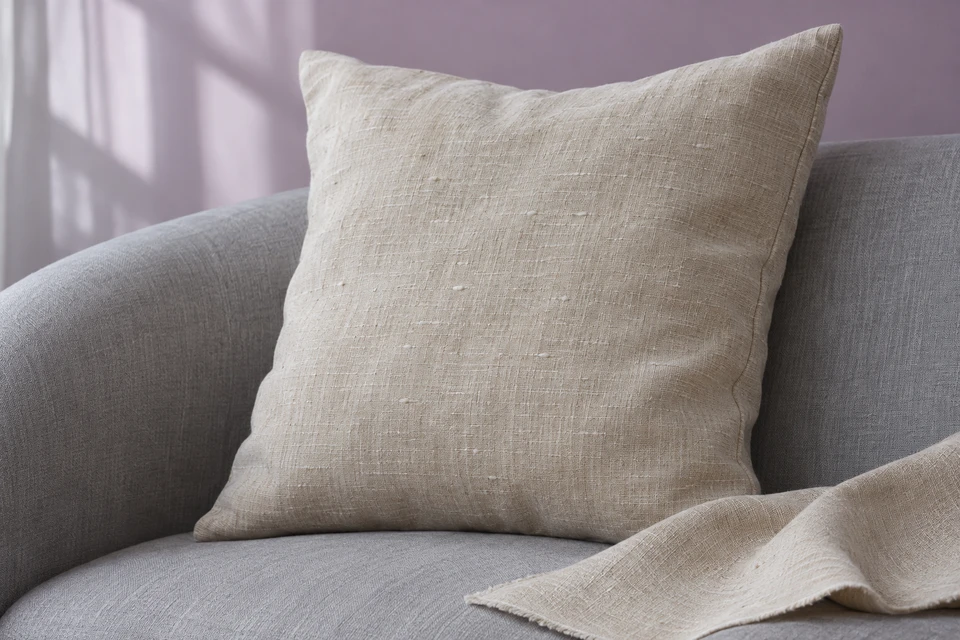
Silk-noil cushion covers are sometimes selected from a photograph because their matte texture feels less formal than shiny silk. That visual preference is useful, but it is not a material specification. A buyer needs to connect the proposed surface to an identified spun-yarn fabric, a supported composition declaration and a finished cover that can be approved.
Define what the supplier means by silk noil
Ask about the yarn, not just the sales name
FAO's silk-processing manual describes noil as a by-product of spun-silk processing that can be reprocessed into yarn for textured fabrics. This provides a starting point for a material conversation, not proof of the content of a supplier's cushion sample. Ask whether the proposed fabric uses silk-noil yarn throughout, in one yarn direction or as part of a blend, and request the corresponding material declaration.
Terms such as raw silk, textured silk and natural silk may appear alongside noil in sales material. Do not treat them as interchangeable without clarification. Write the intended material description into the purchasing brief and ask the supplier to resolve any difference between the sample label, quotation and technical sheet. This is particularly important when a brand plans to use a short, prominent material claim on its product packaging.
Separate visual texture from material identity
Keep the photograph in its proper role
A matte appearance and small irregularities can help the design team communicate the look it wants. They cannot establish the fibre content, the spinning route or whether two fabrics use the same feedstock. Ask for a physical reference and evidence appropriate to the proposed declaration. If the identity remains unclear, keep the material claim provisional rather than filling the gap with assumptions drawn from a close-up image.
Once the material is identified, review its appearance as a separate approval. Compare the amount and distribution of visible texture on a full cushion face, not only a tiny swatch selected for attractive detail. The purpose is not to erase every natural-looking irregularity or to import a linen-slub standard. It is to decide whether the particular spun-silk surface meets the collection's visual brief and to retain a representative approved reference.
Record both yarn directions and any blend
Make similar-looking alternatives comparable
Ask the supplier how the fabric is constructed and which yarn is used in each direction. A proposal with one silk-noil component should not automatically inherit the description of a different fabric made entirely from the same yarn type. Record the declared overall composition on the appropriate basis, with supporting information for the actual material supplied. Do not calculate a saleable fibre statement from a visual estimate of the face.
When comparing alternatives, give each its own sample code. Put the quoted composition, weight, width, finish and intended supply stage beside that code. If a supplier proposes a more uniform spun yarn or a different blend to meet the budget, consider it as a new option rather than silently replacing the approved material. The buyer can then make a conscious choice between material identity, appearance and project cost.
Develop the cover, not only the cloth
Check how the selected material reads after sewing
Use the actual proposed fabric for a cushion-cover sample with the intended seams, closure and insert arrangement. A loose fabric piece can look appealing while the finished cover presents the surface differently under tension or at a seam. Review the front, back, corners and closure area under ordinary room light. Ask for clarification if the front and back panels are deliberately different materials.
Request a project-specific care proposal and evidence for the completed cover. Avoid assuming that the word silk establishes a universal cleaning method or a particular resistance to wear, colour change or seam movement. Where the intended use requires testing, define that requirement with the supplier or laboratory before production. Keep observed sample appearance distinct from measured performance, and do not turn a satisfactory visual review into a technical guarantee.
Keep by-product language separate from broader claims
Ask for traceable evidence before making promises
A description of noil as a processing by-product does not by itself substantiate recycled-content percentages, environmental benefits, ethical sourcing or a particular origin. These are separate claims with separate evidence requirements. If the retail concept depends on one of them, ask precisely what documentation exists for the proposed supply path and material. Remove unsupported wording rather than implying that every silk-noil product automatically qualifies.
The same care applies to terms such as handmade, artisan or local. A visibly irregular surface cannot verify how or where a fabric was made. Use neutral material language until the relevant facts are confirmed. This keeps the buying decision grounded in the actual offer and protects the development team from discovering late in the process that a planned packaging story cannot be supported by the supplier's records.
Freeze the approved material before quantity commitments
Link the commercial offer to the sample
The final purchasing file should identify the fabric reference, material declaration, finish, colour, completed-cover sample and proposed care information. Ask how the supplier will notify the buyer of yarn or fabric substitutions. Record minimum quantities and sampling requirements for that exact option; a minimum quoted for a different spun-silk fabric may not apply. Confirm a realistic delivery plan separately from the visual approval.
For a silk-noil cushion-cover enquiry with FY Bedding, share the desired surface character, dimensions, front-and-back arrangement and intended market. Request confirmation of available development routes and the evidence needed for the material wording you intend to use. This makes it possible to evaluate a defined spun-silk proposal without claiming that an illustrative cushion image proves fibre content, current stock or a particular manufacturing capability.
Approve silk-noil cushion covers only after the sample, yarn description, composition evidence, completed-cover construction and commercial quotation refer to the same material revision.
Method references: FAO: spun-silk processing and noil by-products.