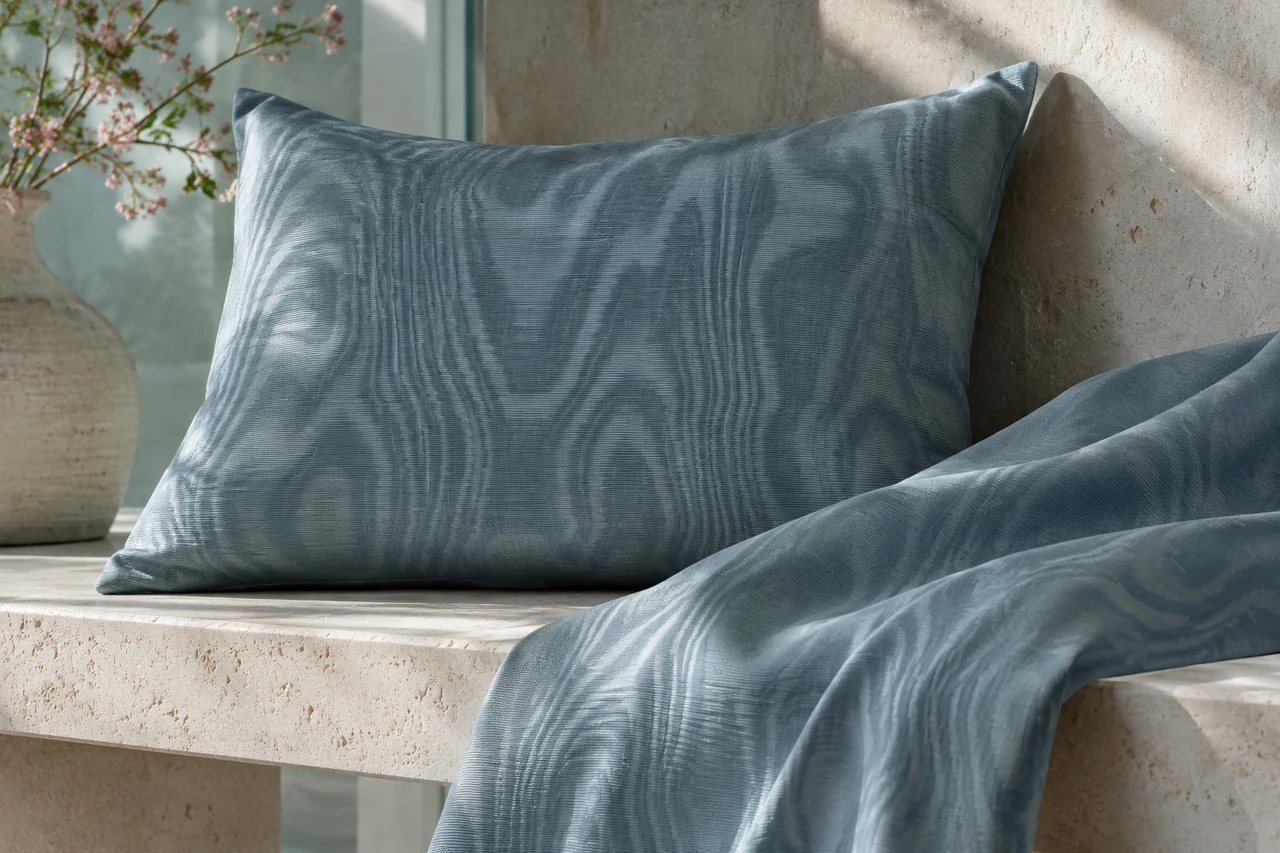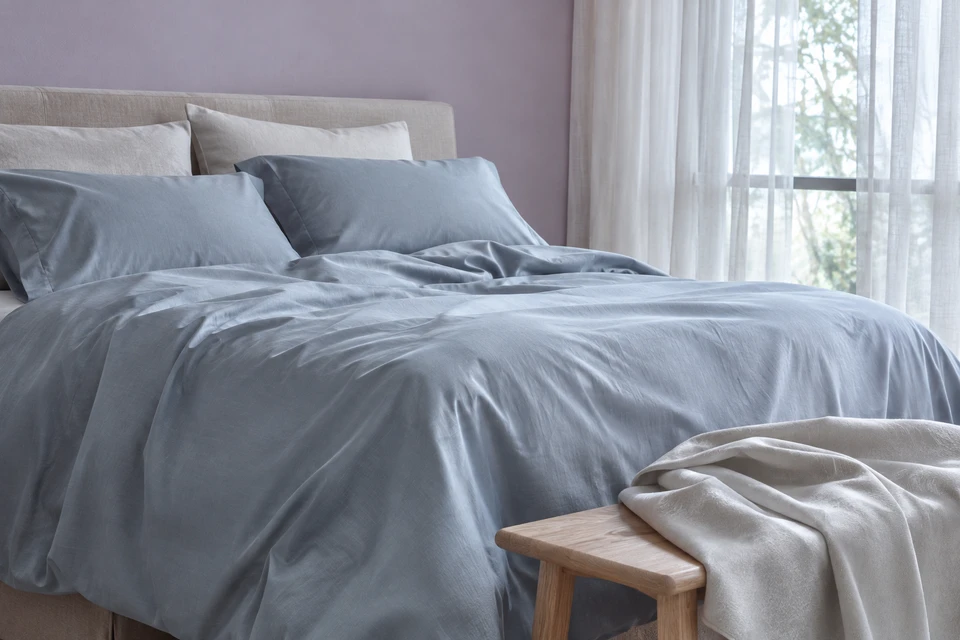
A lyocell composition statement does not tell a bedding buyer exactly how the finished surface should look. A smooth, softly lustrous cloth and a deliberately peach-like surface can represent different development targets. Buyers need to identify the offered fibre and finishing route, then approve a physical surface reference in the intended product. The useful question is not whether lyocell is universally smooth, but what this supplier proposes to deliver and maintain through the agreed care review.
Name the surface before judging it
Replace a broad adjective with a shared reference
Start with the appearance the collection needs: clear woven structure, a subdued matte face, or an intentionally fine surface effect. Avoid treating soft as a complete specification. Two people may agree that samples feel soft while disagreeing about visible fuzz or sheen. View the same cloth flat and draped, face and reverse, in ordinary room light and in angled light that reveals the surface. Mark which side and which viewing condition inform the decision.
Keep an approved physical reference with its sample identity. Photographs are useful for locating an area but cannot reliably convey touch, fine surface change or directional reflection. Ask the supplier to describe the intended finish in words that relate to the reference. Do not approve a broad material name and expect a particular finish to follow automatically. A clear target makes an alternative offer easier to assess without implying that a different appearance is inherently defective.
Identify the fibre actually offered
Grade and product construction are separate facts
Lenzing's published lyocell fibre information illustrates that its portfolio includes different fibrillation characteristics and that finished appearances can vary with construction and finishing. This is a reason to request the offered grade, not evidence about an unidentified bedding sample. Ask for the fibre producer and grade, stated composition, yarn and fabric reference, and the supplier's account of the finishing route. Record unavailable information as an open question instead of supplying an assumed brand identity.
If the quotation uses a fibre trademark, ask for the evidence supporting that use in the proposed product and supply path. A branded fibre document does not establish that every fabric in the quotation contains that fibre or may carry the same claim. Nor does a grade description, by itself, approve the finished textile. Keep identity evidence and physical surface approval as linked but separate records. This article does not make an environmental, certification or performance claim for any FY Bedding product.
Discuss fibrillation at the right level
Ask how it relates to the proposed finish
Ask the finishing specialist to explain whether fibrillation is intended to contribute to the offered surface, is controlled as part of the route, or is an unwanted appearance change in this particular brief. Do not infer the answer from a photograph of a fuzzy patch. The fibre grade, fabric construction and processing history belong in the discussion. The buyer's role is to define the wanted finished result and request an explanation supported by the actual sample history.
A useful development comparison holds the fabric identity constant while showing the proposed surface options or processing stages. Label each piece so that a softer or more matte candidate cannot accidentally replace the quotation reference. If different base fabrics are being compared, disclose that difference rather than attributing every change to finishing. Avoid prescribing a universal treatment recipe or demanding a process setting taken from a different mill. Agree who is responsible for translating the approved result into the supplier's controlled route.
Examine the assembled bedding sample
Include seams, folds and visible panels
Review a sewn pillowcase or other representative article, not only a loose square. Turnbacks, seam areas and folds may show the surface differently from the centre of a panel. Arrange the sample as it will be presented in a retail photograph or on a bed, then inspect it closely without changing the lighting between candidates. Record whether any variation is part of the approved character or requires another sample. Do not let attractive styling substitute for inspection of the cloth.
The reverse also needs a decision if it is exposed during normal use. Compare panels from the same proposed set, checking that their appearances belong together even where their constructions differ. Ask the supplier to identify which samples are development pieces and which represent the planned production route. A finished surface can only be an effective purchase reference when the quoted components and the sample's identity remain connected. Do not transfer an approval to an unreviewed blend merely because its shade is similar.
Review the appearance after agreed care
Distinguish a starting finish from its acceptable evolution
Agree the intended care instructions and a representative review plan with the responsible supplier or testing provider. Retain a clearly identified unwashed control and compare the cared sample under the same lighting after the agreed conditioning. Look at surface evenness, visible changes around folds and seams, and the relationship between face and reverse. A single photograph taken before shipment cannot establish how the product will look after the customer's care routine.
Record the actual procedure and observations. Do not label an informal wash demonstration as a standardized test or infer a universal service-life guarantee from it. If the surface changes, ask whether the change falls within the agreed appearance reference and what evidence explains it. The decision may be to revise the finish, revise the product description or decline the offer. That is more useful than arguing over the undefined promise that lyocell always stays smooth.
Carry the surface reference into ordering
Make substitutions visible before approval
The purchase file should connect the offered fibre identity, composition, fabric reference, finishing description, approved sample and care-review outcome. Request separate quotations for materially different grades or finishes rather than accepting one description that covers several routes. Ask how the minimum order and sample lead time apply to the selected option. Neither availability nor a repeat-order date should be inferred from a material brochure. Obtain the current commercial position for the actual project.
For replenishment, identify which changes require renewed approval: a different fibre grade, construction, finishing route or significant surface reference. Request a comparable finished sample when such a change is proposed. Keep the consumer-facing wording tied to what has been established for the final article. A disciplined surface specification does not need exaggerated promises; it needs a buyer and supplier who can recognize the same acceptable cloth and trace the offer back to it.
Before release, confirm the offered fibre identity, the finished-face reference, the representative sewn article, the actual care-review record and the approval route for a changed grade or finish.
Method references: Lenzing: published lyocell fibre-grade and surface-finish information.