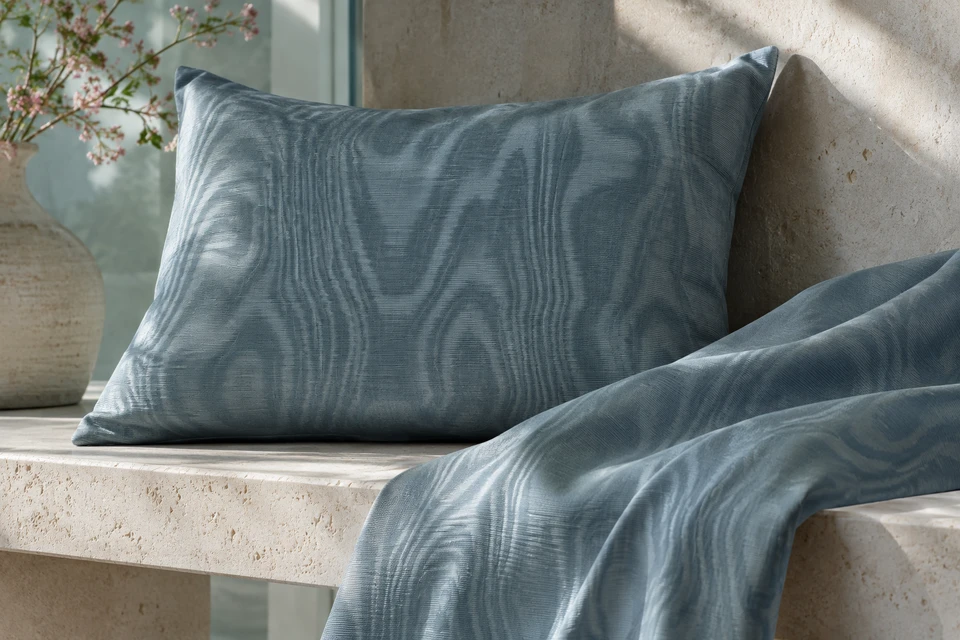
The word moiré can describe a deliberate watered effect in a fabric, but it is also used for unwanted interference patterns in photographs. A buyer sourcing a moiré cushion must establish which effect is actually present in the material. Approve the intended surface in person, then decide how that pattern moves across a cut panel and a filled cushion. A striking image alone cannot identify the finished textile.
- 1. Confirm that the watered effect belongs to the fabric
- 2. Describe the intended flow over a useful sample area
- 3. Compare panels in the planned assortment
- 4. Put the finish over the actual cushion form
- 5. Review crease and care changes against an untouched reference
- 6. Make the approved effect visible in the purchasing record
Confirm that the watered effect belongs to the fabric
Do not approve an image artifact as a finish
CottonWorks describes moiré as a surface effect created through calendering, with differences in compressed areas producing the watered appearance; it also describes a layered-fabric calendering route. This technical terminology does not identify every fabric sold under the name. Ask the supplier to describe the actual material and finishing route proposed. A printed imitation or another patterned textile should be labelled separately from a deliberately calendered surface effect.
View the physical sample without a camera, then compare it with photographs taken at different distances and angles. If a pattern appears only in one image and changes dramatically with the camera position, investigate the photographic effect rather than attributing it immediately to the cloth. Conversely, do not demand removal of a real watered pattern when it is the intended finish. The buyer and supplier first need a common description of what is being approved.
Describe the intended flow over a useful sample area
A small swatch can hide the character of the pattern
Request enough finished material to see how the watered effect develops across the proposed panel dimensions. Observe whether the pattern has an obvious direction, broad changing waves or a more local effect. Mark the intended cutting orientation on a separate layout. A tiny sample may show sheen without revealing the flow that will dominate a complete cushion. Keep the material reference and finishing state attached to this larger appearance sample.
Decide which aspects of the effect must remain consistent across the collection and where visual variation is acceptable. Do not assume two cushions must have identical wave positions unless that requirement is feasible and explicitly agreed. Equally, do not accept unlimited variation under the word moiré. A small set of approved examples can communicate the intended range more usefully than an undefined request for an elegant watermark or a demand based on one unusually attractive corner.
Compare panels in the planned assortment
Direction can make neighbouring pieces look unrelated
Place representative cut panels together before sewing and orient them as intended in the retail display. Check whether their light response and broad pattern direction form the desired pair or group. If front and back use the same material, show both orientations in the construction brief. If the back is plain or different, identify that choice rather than allowing the sample-room presentation to imply a two-sided effect that is not included in the offer.
For more than one cushion shape, review the pattern placement separately. A long lumbar panel and a square face may show different parts of the same finish. Ask the maker to propose a cutting approach and clarify whether a particular orientation or placement affects material use. The buyer can then choose between a deliberately matched arrangement and a more variable assortment with a clear commercial understanding, rather than discovering the trade-off after fabric has been cut.
Put the finish over the actual cushion form
Curvature changes what the viewer sees
Assemble a representative cover with the intended insert and examine it in ordinary room light. View the centre, curved sides, corners and closure area as parts of one surface. A highlight that reads as a flowing watermark on a flat panel may look different over a fuller cushion. Record the accepted insert arrangement for the sample review, even if the final sale is cover-only, so later comparisons are not distorted by a different filling shape.
Move around the cushion instead of selecting only its most reflective view. Decide whether the range should have a restrained sheen or a stronger decorative effect, using the physical reference to show that preference. Avoid claims about permanent gloss, fibre composition or durability based on appearance. A moiré effect identifies a visual finish, not a complete material or performance specification. The quotation still needs the actual composition, construction and finishing description.
Review crease and care changes against an untouched reference
An intentional pattern should not hide unintended damage
Inspect the sample after the proposed folding and packing sequence. Identify whether visible lines are part of the original watered effect, ordinary folds or unwanted changes introduced during handling. Keep the original material and a packed sample available for comparison. Do not automatically describe every surface mark as part of the design. A deliberately variable finish still needs boundaries that the supplier and receiving team can apply consistently.
If the product includes care instructions, agree an appropriate evaluation of the complete construction and compare the same areas afterward. Record the procedure and resulting appearance separately from any standardized performance evidence. The finish name does not establish washability or ironing suitability. If a supplier changes the finishing route to improve the agreed result, request a new complete reference rather than combining the initial appearance of one sample with the care behaviour of another.
Make the approved effect visible in the purchasing record
The reference should work outside the original showroom
Ask the quotation to identify the material, finish, colour, cutting orientation, panel arrangement and final assembly. Include photographs that explain the surface under ordinary viewing conditions, but retain the real material as the controlling visual reference. If the marketing team encounters camera interference, solve that photographic problem without silently replacing the intended fabric finish. The product page should represent what a customer can actually see in the supplied article.
Send FY Bedding the target cushion shape, desired watered character, preferred colour and quantity split to discuss a suitable development route. Request confirmation of material availability, sample scope and delivery rather than inferring them from a design reference. Release the finished material and assembled cushion as one identified choice. That keeps intentional moiré separate from both a generic shiny fabric and an accidental pattern introduced only by the camera.
Is the watered effect physically present, its acceptable variation and cutting direction agreed, and the completed cushion reviewed through normal light, packing and any supported care procedure?
Method references: CottonWorks: the calendered moiré effect.