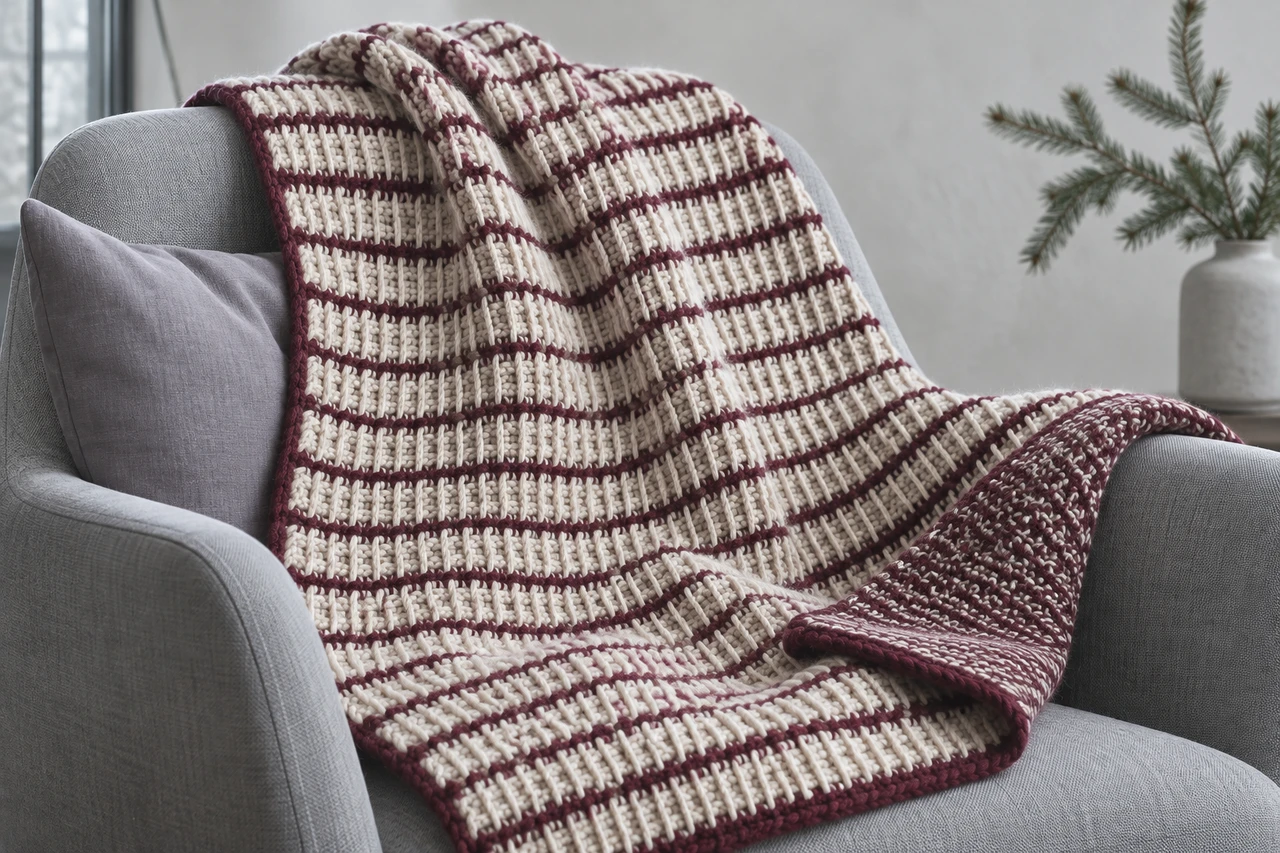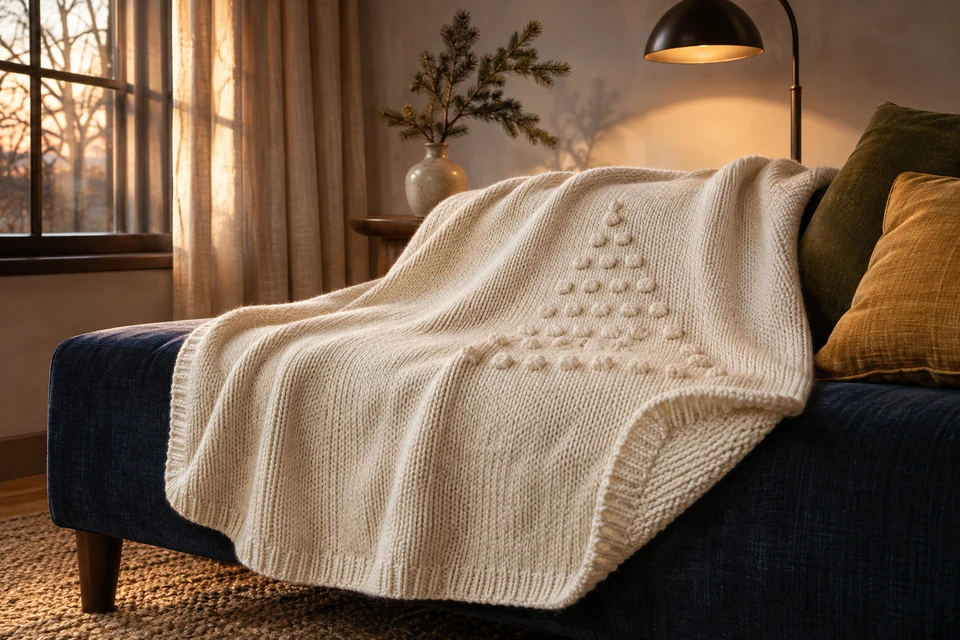
A raised dot on a Christmas throw might be part of the knitting or a separate decoration attached later. Those are different constructions, even when they look alike in a small product image. Before approving a bobble-knit collection, identify how the bumps are formed and review them on the complete throw.
Ask whether the bump is worked into the knitting
Do not use bobble as a catch-all trim name
Purl Soho's garter-bobble tutorial illustrates a bump created by working additional stitches and bringing them back into the surrounding knitting. This example supports the distinction between an integral knitted feature and a separately attached ball. It is not a mandatory recipe for every supplier's bobble. Ask the maker to describe the actual proposed construction and show where the raised feature connects to the ground stitches.
Keep attached pompoms, sewn knots and embossed plush effects separately named if they are offered as alternatives. Their appearance may suit the design, but they should not inherit the specification of a worked knit feature. The purchasing team needs to know whether it is approving a knitting operation, an additional component or a different surface process. That answer affects the sample questions and the scope of the quotation.
Record the bobble field as a placement pattern
A festive silhouette needs more than an overall size
For a tree-shaped arrangement, identify the rows containing bumps and the plain areas around them. Show the top, lower edge and relation to the throw's border. Approve the layout at the intended finished dimensions rather than judging a small swatch enlarged on screen. The spacing between bobbles may be as important to the tree's readability as the height of the individual bumps.
Ask the supplier to mark any changes made to adapt the design to its proposed knitting construction. A sample may contain fewer bobbles, a shifted row or a wider plain field than the original artwork. Decide those changes explicitly. Where several throw sizes are proposed, do not assume the whole field can be stretched proportionally without altering the knitting. Request the actual placement plan for each offered size or an agreed common field.
Compare relief in ordinary handling
Establish the intended raised appearance without a performance claim
Lay the throw flat, drape it over the proposed retail display and fold a section in the way the customer is likely to handle it. Observe which bumps stand out, flatten, turn or disappear in the folds. Keep the accepted relief visible in photographs taken from more than one angle. A strongly raking studio light can exaggerate depth and should not be the only record of the sample.
Describe the desired visual range using physical references, not a vague instruction that every dot must be perfectly round. If a particularly uneven feature is unacceptable, mark its location and state why it differs from the approved sample. This review does not establish abrasion resistance, attachment strength or a safety rating. Any such claim needs a defined evaluation appropriate to the actual construction and intended market.
Turn the throw over before approving it
The reverse is part of the customer experience
Inspect the back of several worked bobbles and the surrounding ground. Ask the maker to explain any hollows, loops or local thickening associated with its method. Do not assume that a front-facing photograph describes both surfaces. A throw may be folded back, draped over a shoulder or shown with its reverse visible on a display, so the reverse appearance belongs in the buying decision.
Review the feel of the completed sample in the intended context and record the team's observations without making universal comfort claims. If a backing is proposed, assess that as a separate construction option with a declared material and finishing method. It may change drape, weight and the way the relief is perceived. The buyer should see the complete alternative rather than accept an unseen extra layer as an automatic improvement.
Assess the finished state and packing pressure
A display sample and a compressed parcel are not identical
Identify the yarns and finishing state used for the approval throw. Ask whether the submitted sample has been shaped or arranged specifically for photography, and which preparation the delivered product will receive. Evaluate the bobble field after the proposed care review and after ordinary unpacking from the intended retail pack. Retain the same marked rows for comparison so changes are not confused with a different section of the pattern.
Agree any supported settling instruction before it is added to customer copy. Do not promise that every compressed bobble will recover to a photographed shape within an arbitrary time. If the package presses heavily across the decorative field, compare a revised fold or pack arrangement on a physical sample. The decision should connect the accepted surface to an achievable delivered presentation, rather than depend on extensive hand styling by the retailer.
Separate knitting complexity from a generic throw price
Order the construction that was actually approved
Give each proposed colourway a named yarn and placement reference, along with the intended dimensions and selling-unit contents. Ask how the number of worked features, the knitting route and any backing affect sample stages and minimum quantities. Compare quotations on the same construction. A price for a plain throw with added decorations is not directly equivalent to a price for the integral bobble arrangement described in this brief.
Share the authorised Christmas layout, front-and-reverse sample expectations and target retail presentation with FY Bedding. Request confirmation of the proposed materials and construction before approving manufacturing milestones. No relief pattern establishes stock availability or a guaranteed holiday arrival. A useful order pack lets the next reviewer identify both the worked bumps and the plain ground that support the design, without relying on the seasonal name alone.
Confirm integral construction, map the bump rows, view the reverse, and compare the finished bobble field after the proposed care and unpacking review before releasing the retail offer.
Method references: Purl Soho: a bobble worked within the knitting.