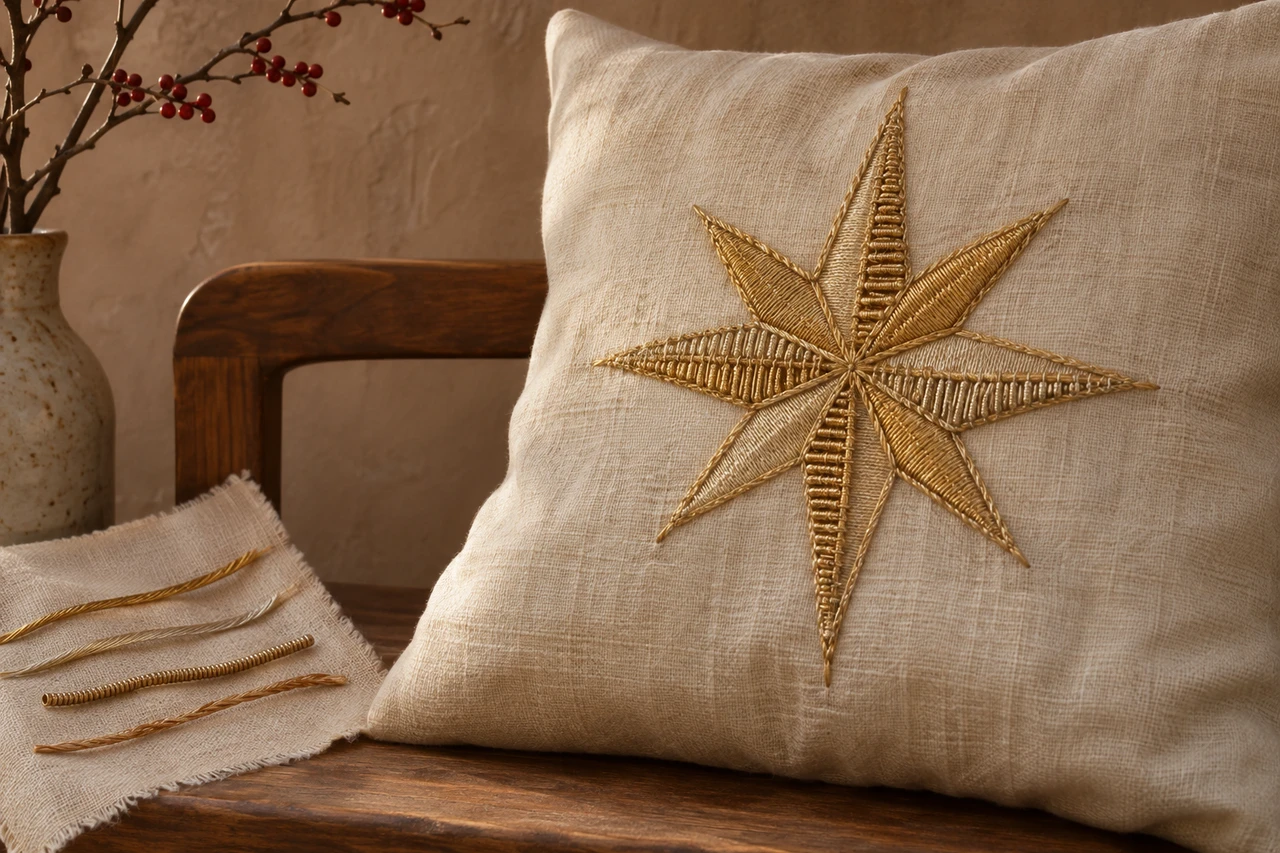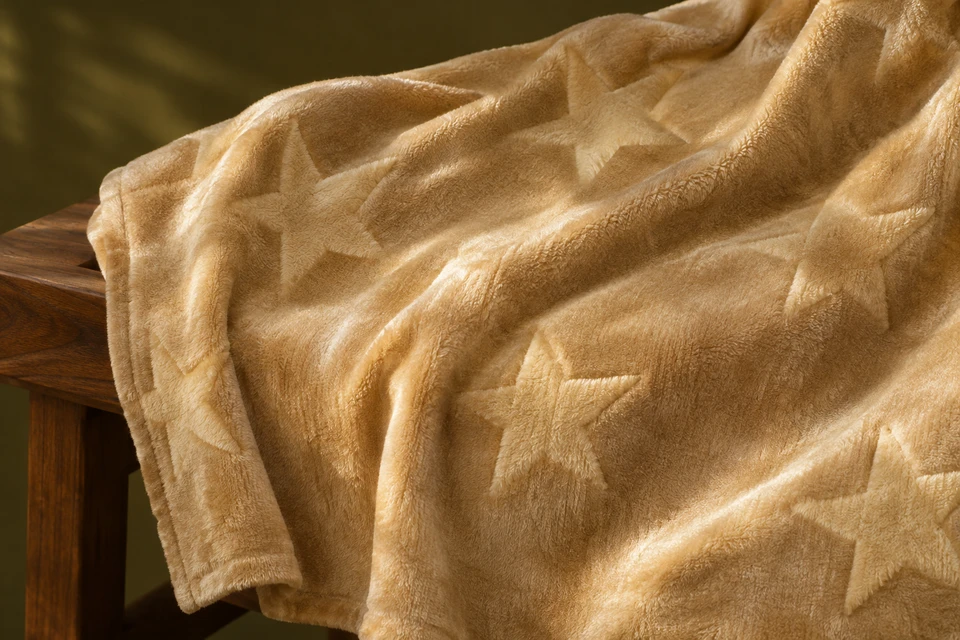
A star on a Christmas throw may be a coloured print, an embroidered addition or a change in the pile surface itself. Those are not interchangeable quotations. If the proposed design depends on embossed relief, a flat artwork file is only part of the specification. The buyer needs a reference that explains which parts of the surface are higher, lower or differently oriented and how the motif should read on the completed throw. Start by buying the intended surface, not merely the outline of a star.
Name the relief as part of the product
A motif drawing does not describe its construction
Describe the offered effect in plain terms and ask the supplier to identify the proposed manufacturing route. Keep colour printing, embroidery, cut-pile variations and embossing separate even when they create similar Christmas imagery. Do not specify a particular machine, temperature or pressure from a photograph. The supplier's technical proposal should explain how the accepted relief will be produced on the actual proposed base fabric.
Shannon Fabrics presents embossed plush as a distinct fabric category. That is a useful reminder that a textured surface is a purchasing variable, not evidence that any supplier offers the same material or equipment. For an FY Bedding enquiry, request an independently described base, surface route and sample. Confirm composition, mass and intended use separately; an attractive relief pattern does not establish fibre content, warmth, wash durability or suitability for children.
Build a three-dimensional motif reference
Identify the high and low areas without relying on colour
Alongside the authorised artwork, mark the parts intended to be raised or recessed. For a star, this may include the centre, five points, outline and background. Use an enlarged physical reference or close photographs taken with useful side lighting. Name which reference controls the shape and which controls the surface. A dark shadow in one photograph should not become an accidental requirement for a darker dye shade.
Include both an isolated motif and a field containing several complete repeats. The first helps reviewers judge a point or edge; the second shows how the motif behaves across the throw. If an outline appears connected in the drawing but broken in relief, resolve that detail before accepting the sample. Do not tell the supplier simply to make the embossing deeper. Ask which feature is insufficiently defined and request a revised physical comparison.
Compare proposals under the same viewing conditions
Turn the sample before deciding that the design differs
Place the candidates in the same relaxed state, on the same support, with a consistent viewing direction. Examine the motif in ordinary room lighting and then use side lighting to see the surface structure. Turn each specimen in a controlled way. Record which view was used for an approval photograph so a later reviewer can reproduce the comparison instead of chasing a shadow created by a different camera angle.
Use a small comparison record with separate observations for outline, relief boundary, background texture and colour. For example, a star point may be recognisable but its boundary may merge into the surrounding pile. That is a different finding from an incorrect repeat size. The physical master should remain available alongside the photographs. A screen image cannot fully communicate the tactile distinction that caused the buyer to choose the design.
Test the artwork at the intended scale
Large stars and small stars are separate development decisions
Do not approve a cushion-sized trial as the only reference for a much larger throw motif, or assume a successful large star can simply be reduced. Request the intended motif dimensions on the proposed production fabric. Inspect narrow features, closely spaced motifs and transitions into the background. Where several sizes form a Christmas collection, identify which scales need their own trial rather than treating all files as one approval.
Ask how the proposed surface pattern aligns with the cutting plan. A repeat may legitimately end at a bound edge, but the customer-facing layout still needs a decision about cropped stars and visible blank areas. Record the chosen placement rule for each finished size. This is not a demand for identical motif placement on every unit unless that requirement has been expressly agreed, costed and supported by the offered process.
Inspect a completed throw, not only the surface swatch
Later operations remain part of the proposed construction
Request the accepted relief on the actual finished assembly, including its reverse, any lining and the intended edge finish. Compare it with the development master after the supplier's proposed finishing steps. A pre-finishing swatch and a saleable throw are different evidence states. Record any change in motif definition and ask the maker to explain it before deciding whether to accept, revise or decline that construction.
Agree any care and handling evaluation required by the intended market with the responsible technical team. Keep the method, specimen condition and observed result together. Do not infer a durable relief from an unwashed showroom piece or announce a test result that has not been produced. Packaging appearance is a separate review: the surface master should first define what the intended design actually is, before the team investigates any later presentation issue.
Release a texture decision that another team can follow
Keep the relief master linked to the purchasing file
The release record should identify the fabric proposal, final motif file, physical relief master, finished-size layout and accepted completed sample. Note any variation deliberately allowed in the surface. If the supplier offers a different base or process after approval, ask for a fresh comparison rather than assuming the original master transfers automatically. A new material name is not enough to establish that the Christmas design will retain its accepted character.
Send FY Bedding the artwork you are authorised to develop, the intended relief description, quantities by size and the market presentation you want to achieve. Ask which development evidence can be supplied and what remains to be confirmed before order release. Keep minimum quantities, sampling costs and delivery dates as project-specific questions. The purpose of the brief is to obtain comparable proposals for a defined textured throw, not to imply existing stock or a guaranteed holiday arrival.
Before approving an embossed Christmas throw, identify the relief route, mark high and low motif areas, compare physical samples in matched viewing conditions and retain the accepted finished construction.
Method references: Shannon Fabrics: embossed plush as a fabric category.