Deep ribs alone do not identify a brioche-knit throw. For a Christmas collection built around a rich two-colour knit, the buyer should confirm the construction behind the surface before approving the colour story. The critical distinction is the paired stitch structure, followed by the way each face, border and finished edge presents it. A familiar ribbed appearance is only the beginning of that decision.
Ask the maker to identify the paired structure
A yarn-over belongs to the stitch it accompanies
Purl Soho's brioche explanation describes a slipped stitch accompanied by a yarn-over, worked together as a pair. That is the limited technical distinction useful here: a buyer should not identify brioche only by counting visible ribs or interpreting every loop as an independent ordinary stitch. Request an identifiable sample and the supplier's construction description. Similar-looking rib, tuck or other knitted effects should remain separately named proposals until their actual structure is confirmed.
The purchasing team need not prescribe a knitting tutorial. Ask the technical maker to demonstrate the proposed repeat on a sample large enough to distinguish the paired construction. Record whether the offer is hand or machine produced only when the supplier confirms it; appearance is not proof of either. If a development swatch and a bulk-intended construction differ, label the difference openly rather than using the more appealing technique name for both versions.
Choose a colour role for each face
Reversible appearance does not mean identical appearance
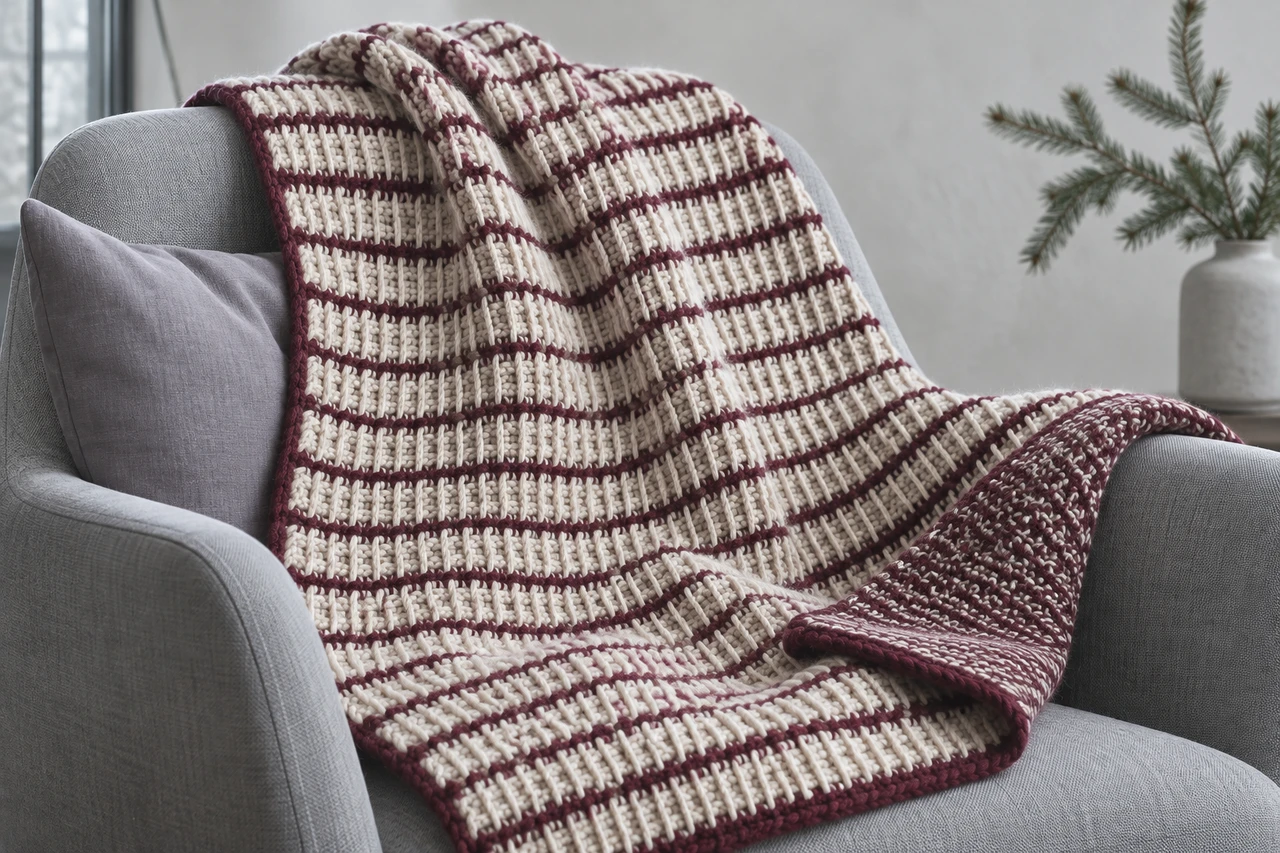
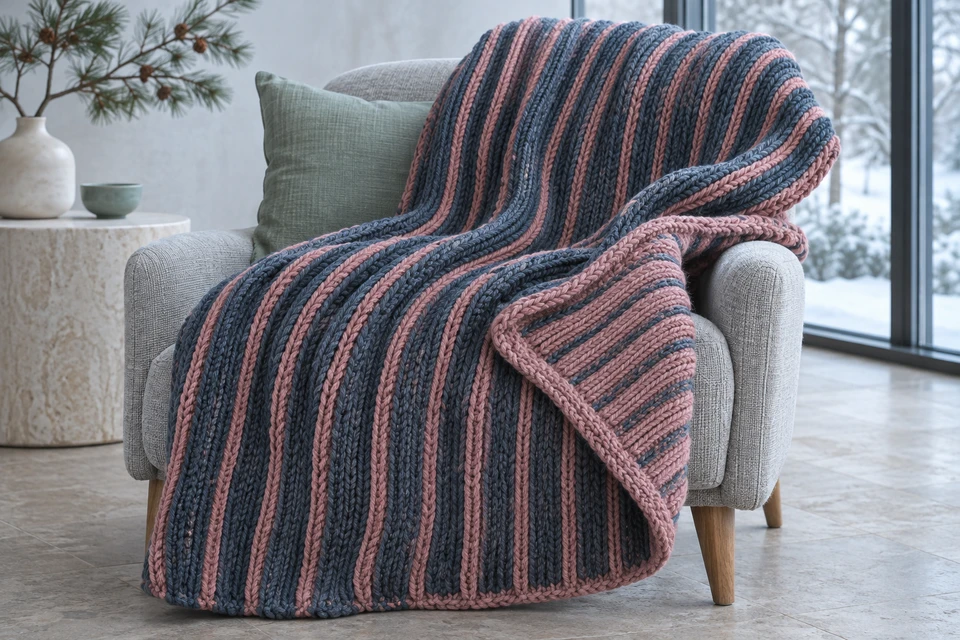
For a two-colour proposal, examine both faces next to each other using a folded sample. Purl Soho's two-colour brioche example shows how colour can be presented differently across the two sides. Decide which face leads in the Christmas display and whether the other is also intended to be seen. A rich dark face paired with a lighter reverse can be the design's advantage, but the retail brief should explain that relationship accurately.
Ask the maker to identify the yarn reference assigned to each colour role. Review the actual pair together rather than approving two isolated yarn cards. A change in colour contrast can alter how strongly the ribs read, even if both shades separately seem acceptable. Keep one neutral-light photograph showing the two faces as a communication aid, and retain the real sample. Do not let a heavily styled festive image become the only record of the approved colour balance.
Follow the rib field into the borders
The edge should be resolved in the same sample
Inspect where the main pattern meets side borders, starting edges and finishing edges. Decide whether the border deliberately changes stitch structure, colour dominance or apparent thickness. Ask for an edge sample that includes a corner instead of accepting a narrow central strip. The corner makes it easier to see whether the intended frame belongs visually to the ribbed field and whether an abrupt transition was planned or remains a development issue.
For a collection with more than one throw size, show how the pattern is arranged at each boundary. Do not assume the smaller layout can simply be enlarged without affecting the border relationship. Identify any joining seams or panels used to achieve the offered dimensions. If a seamless appearance is requested, the supplier must confirm the actual route; a photograph with a fold over the join is not sufficient evidence. Keep these construction choices attached to each quotation line.
Examine an irregularity before classifying it
A paired construction needs an informed inspection reference
Review the finished surface at a comfortable viewing distance, then examine areas that interrupt the expected rib rhythm. Have the maker explain whether a visible loop or local opening is part of the pattern, an edge transition or an unintended dropped or mishandled element. Record representative acceptable construction views for the receiving team. A visual defect list borrowed from a plain knit can lead to inconsistent decisions when it ignores the structure being purchased.
Where an issue is disputed, compare the sample with the identified reference and the maker's explanation before deciding on correction. Avoid pulling isolated loops aggressively to see whether the fabric fails. Any required strength, snagging or other performance assessment needs an agreed method and appropriate technical interpretation. Neither the name brioche nor the apparent loft establishes a test result, a thermal rating or suitability for a vulnerable user's bedding.
Approve the throw in its finished and packed condition
Loft must be assessed after the proposed preparation
Drape the complete sample as it will be presented, then lay it out in the agreed relaxed state. Record the finishing and conditioning state used for approval. Review whether the colour roles, borders and rib rhythm remain clear after the proposed care procedure, if applicable. Keep observations distinct from standardized results and do not make a care promise solely because another brioche item used a similar yarn.
Open the proposed retail pack and examine how the throw is unfolded and displayed. A package that exposes only one tiny rib segment may fail to communicate the two-face design. Choose a fold that reveals the intended colour relationship without making the customer infer that two separate throws are included. If an insert card uses a close-up, pair it with an accurate overall product image and clear unit scope. The packaging decision should represent the actual completed article.
Compare complete constructions in the buying review
Do not buy a technique name without a defined sample
Request quotations that identify yarn composition and references, the stated knitting route, colour roles, dimensions, borders, finishing and pack format. Ask whether minimums apply per colour combination or across a shared yarn programme. Sampling time and production milestones must be confirmed for the offered route rather than copied from a plain rib throw. The visual complexity of a Christmas collection does not establish either capacity or a guaranteed delivery window.
Send FY Bedding the desired two-face palette, target throw dimensions, border preference, intended user and quantity split to discuss a specific development proposal. Keep an ordinary rib alternative as a separate option if it better suits the project; it should not be silently substituted under the same approval. Release the identified paired-stitch construction and its completed sample together, with a record of what changes require another review.
Has the maker confirmed the paired-stitch construction, both colour faces, all borders and the finished pack, with performance and delivery claims kept separate from the name brioche?
Method references: Purl Soho: brioche paired stitch structure; Purl Soho: two-colour brioche faces.