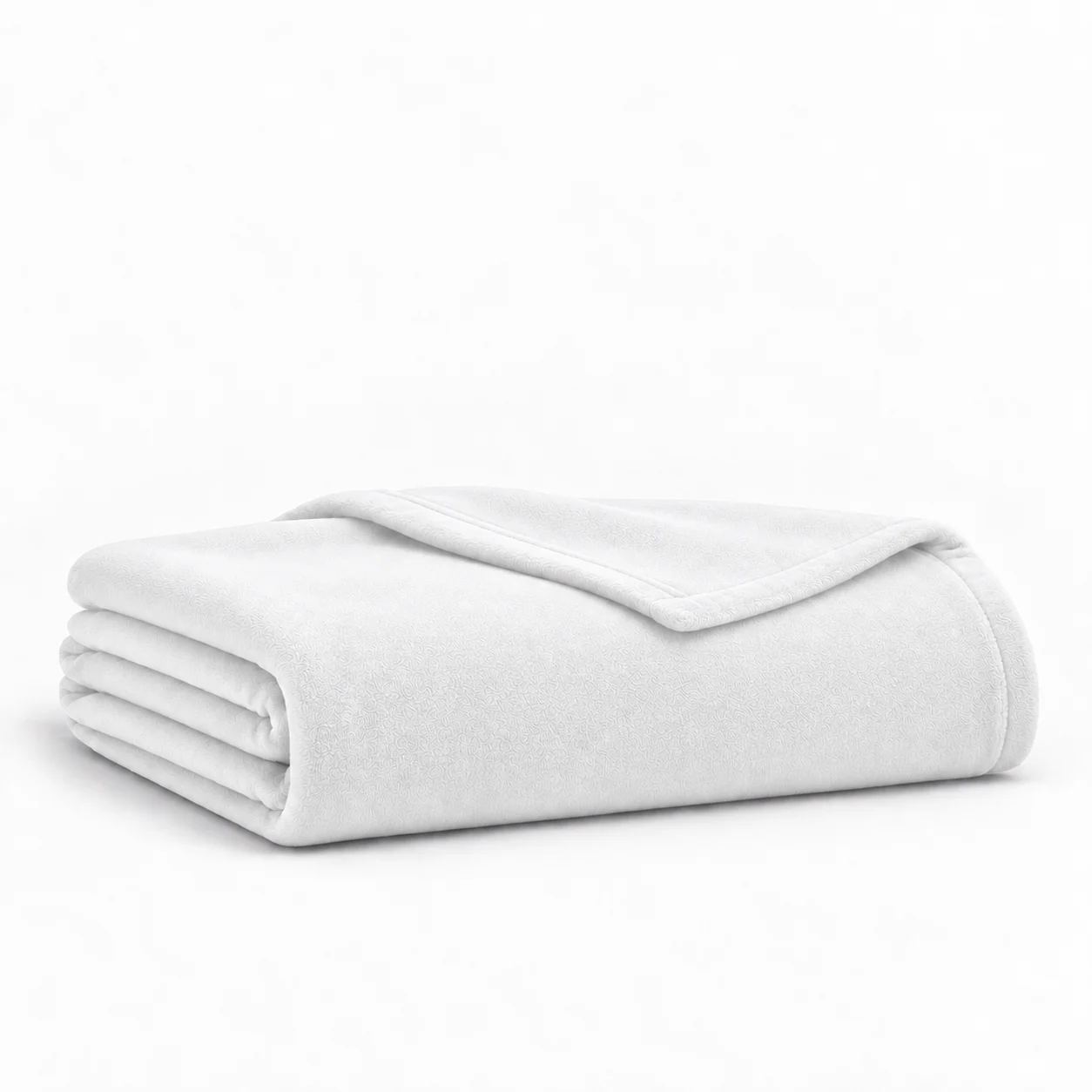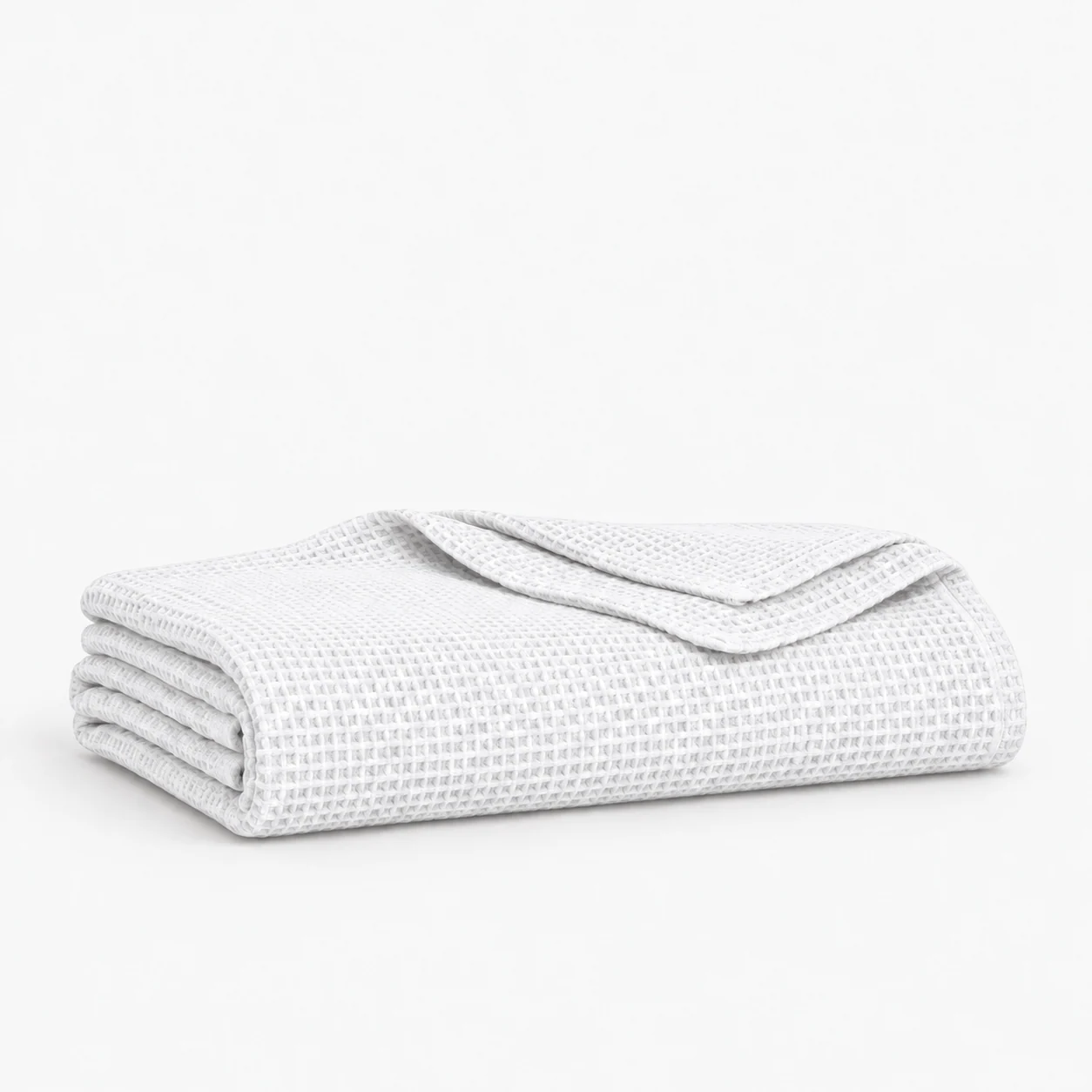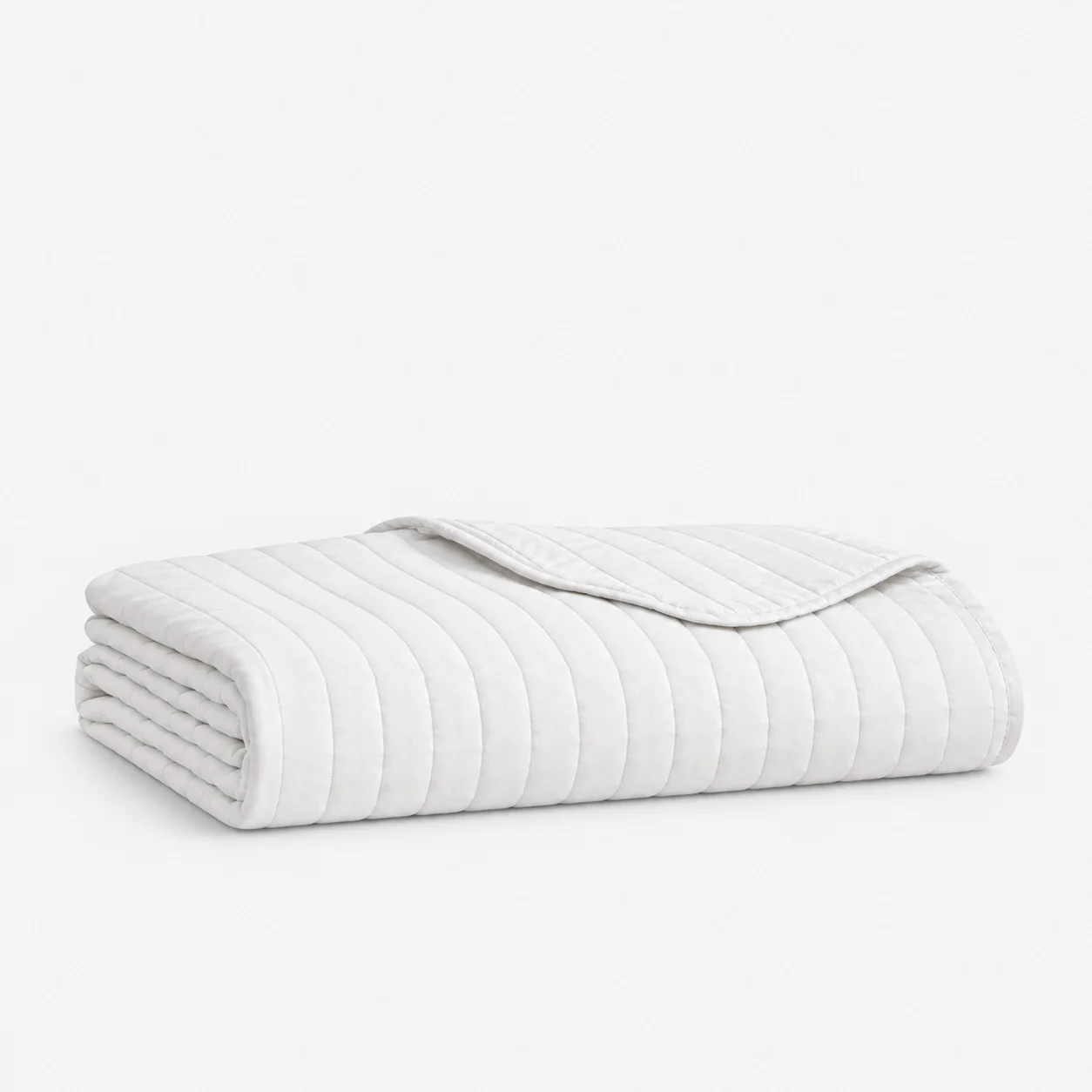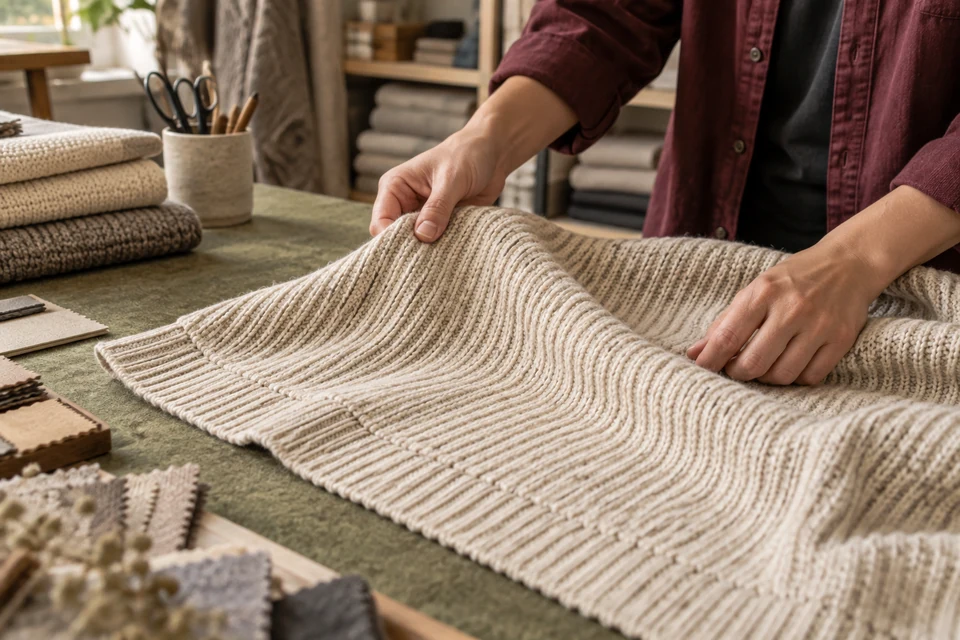
A rib-knit throw brings a different visual rhythm to a retail range than a smooth blanket or a woven patterned throw. Its appeal depends on the actual ribs, the way the textile falls and how it feels when handled, not simply a chunky-knit photograph. Buyers need to connect that design choice to a repeatable construction, an honest size description and a workable assortment. This guide addresses adult home-decor throws; it does not establish infant-use suitability, thermal performance or the availability of a particular FY product. Cotton content also needs a supplier declaration, not a visual guess.
Identify the knitted rib before naming the range
A raised stripe is not a sufficient construction description
CottonWorks explains basic rib knits through alternating face and back wales, with the structure opening as it stretches across the width. Its learning material also distinguishes finer and chunkier rib constructions. These are useful structural ideas, but they do not give every finished throw the same extension, recovery or appearance. Ask the maker to identify the proposed knit and yarn rather than copying a performance statement from a general explanation.
Compare both sides, rib direction and border treatment. Record declared composition and any different edge yarn in the technical pack. Distinguish rib-knit from a woven rib effect and the broader blanket-and-throw category; these are not interchangeable descriptions.
Give the throw a clear retail role
Choose a texture customers can understand in the assortment
Decide whether the item is a quiet coordinating texture, a prominent sculptural accent or a giftable layer within the collection. Place it beside the actual cushions, upholstery colors and other throws planned for the display. A coarse-looking rib may be the focal point in one range and compete with every adjacent texture in another. This is a merchandising choice to approve with samples, not a claim that one rib scale is inherently more premium.
Review the throw open, casually draped and in its selling fold. Ask whether the intended rib character is visible at the normal viewing distance. If the design only reads after a stylist stretches and arranges each line, decide whether that presentation can fairly represent the retail item. Preserve ordinary views as well as the styled image so buying, photography and store teams share a realistic reference.
- State the role within the collection.
- Compare rib scale beside the actual neighboring products.
- Show an ordinary drape as well as the styled view.
Make relaxed size comparable
Record the state in which width and length are assessed
A stretchy textile is easy to make look larger by pulling it across a measuring surface. Agree how the finished throw is prepared, laid out and measured without tension before comparing dimensions. Record the direction of the ribs and whether the stated size includes the border. The sample-conditioning guide helps establish consistent handling; it does not supply a universal rest time or tolerance for every knit.
Handle the throw as an adult customer might, then observe its shape after the agreed recovery period. Keep that observation separate from the original relaxed measurement. If recovery needs a numerical claim, ask the technical owner to define the method and conditions through the product testing plan. Do not borrow mattress-fit or elastic-retention criteria from a fitted-sheet specification: this item has neither that geometry nor that use.
Review the edge and care experience
Keep appearance, handling and evidence distinguishable
Follow the full perimeter of the sample. Look at how the border meets the rib field, how corners sit and whether the intended edge appears consistent when laid flat and draped. Ask the maker to identify any linked, sewn or separately attached section. The aim is a clear finished-product description, not instructions for changing knit machinery or guessing why a particular sample is distorted.
Agree the care route appropriate to the offered construction and repeat the important size and display observations afterward. Ask which snagging, pilling, dimensional-change or color checks are relevant to the intended customer use. The surface-damage guide provides a separate evidence discussion. A successful sofa display is not a durability result, and the word cotton should not be used to imply hypoallergenic, sustainability or easy-care benefits without support.
- Describe the border and its junction with the rib field.
- Separate post-care observations from unwashed approval.
Build colors around the offered yarn route
Resolve minimums before multiplying variants
Ask what is fixed in the proposed construction and what can change: yarn choice, color, knit arrangement, finished size, weight and border. Request the actual minimums by relevant variable, including whether an existing yarn color and a custom color follow different commercial routes. A general assortment framework can organize the options, but only a confirmed proposal establishes the quantities and costs for this throw.
A smaller, coherent opening range may be easier to explain than many shades with untested demand. Make that a commercial decision using your own forecast, not an assumed bestseller claim. Identify the sample needed to approve each material or construction change, and ask which color differences can be reviewed through the supplier's proposed sampling sequence before committing all sizes.
Protect the presentation through delivery
Unpack a real retail sample before approving the pack
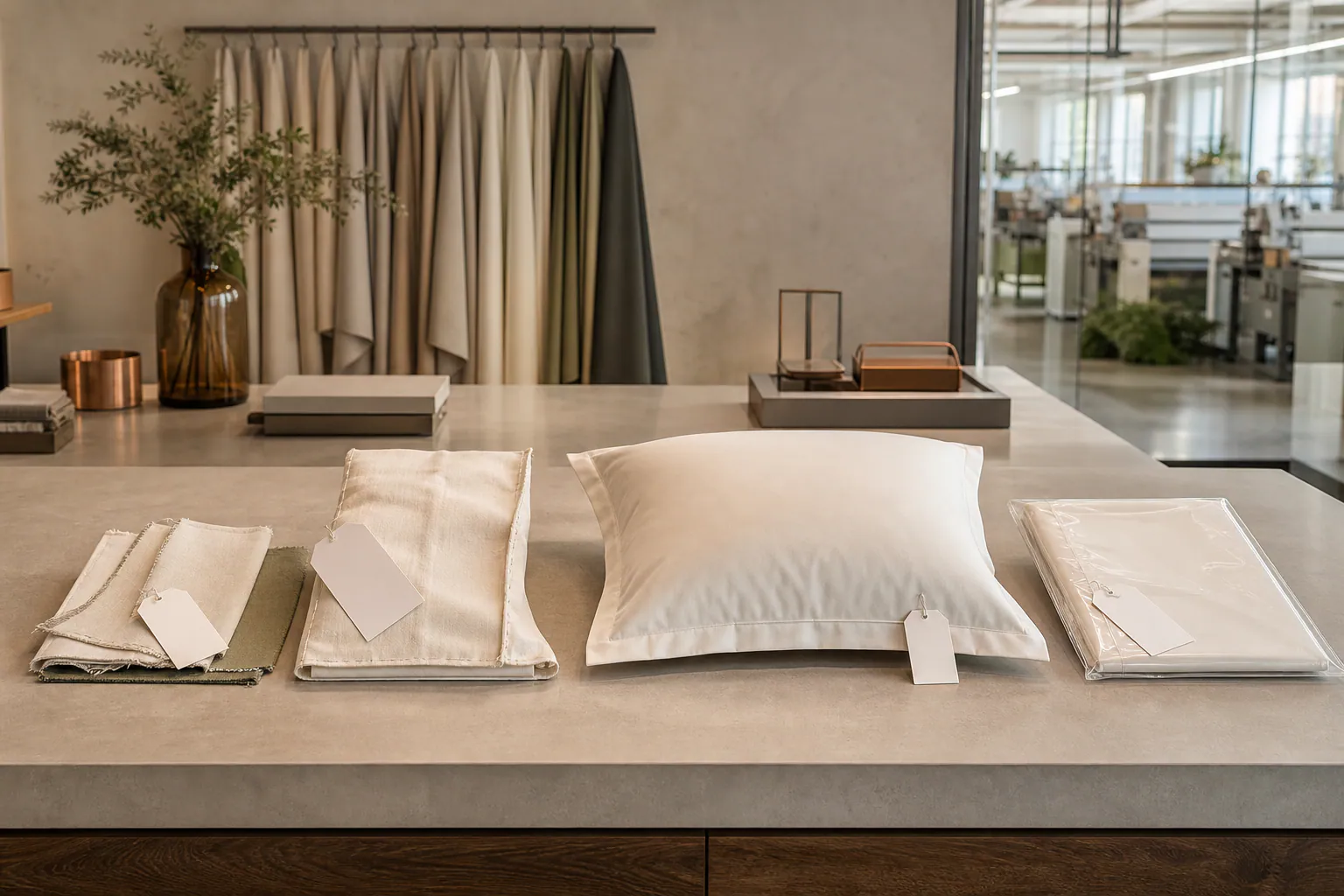
Try the intended band, bag or box around the agreed fold, then unpack it and review the ribs and edges without disguising marks through extra styling. Show both the packed dimensions and the relaxed product size in their proper places. Use the pack approval checklist to keep barcode, color name and product description attached to the same variant.
Include pack approval, production and transport in the requested delivery sequence. State where goods should arrive and whether launch stock must be allocated by store or warehouse. Send FY Bedding a retail development brief with the intended texture, quantities and sample decisions. A physical sample request can then clarify feasibility before the range is advertised or its arrival is promised.
Buy the rib-knit throw as a specific relaxed structure with an agreed display role. Keep size, recovery, care, yarn allocation and the unpacked retail presentation visible before expanding the assortment.
Method references: CottonWorks rib-knit structure and extensibility.