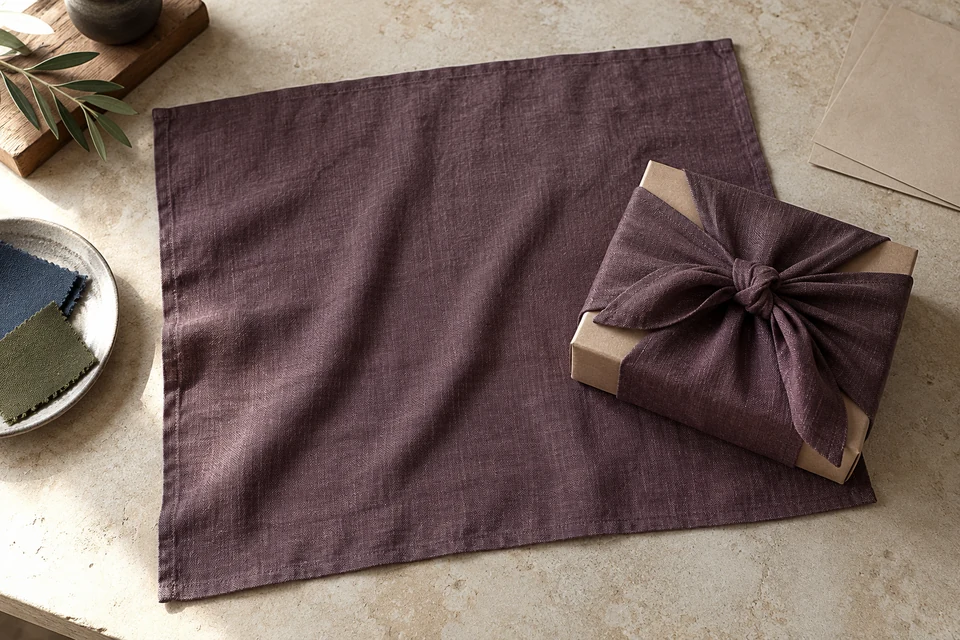
A wrapping cloth can add a tactile layer to a home-textile gift program without being the protective shipping pack or the product's storage bag. Its dimensions, fabric direction and folded presentation need to work around the actual sold unit. Before treating it as a sustainable upgrade, a brand should decide what reuse it expects and which statements it can support. This guide considers a textile gift-wrap development brief, including full-pack samples and honest commercial comparison. It does not assign a carrying capacity, guarantee environmental benefit or claim that a reusable cloth makes the complete retail package recyclable or certified.
Give the wrap a defined role
Presentation, containment and transit protection are different
Identify the retail unit to be wrapped and the packaging that remains underneath. Decide whether the cloth is a decorative outer layer, an included reusable accessory or the primary presentation enclosure. State which existing components it replaces, if any. The packaging approval checklist helps document that scope. A photograph of a tied cloth around a folded quilt does not prove that the same arrangement protects the product through the intended delivery route.
Describe the brand's intended second use in practical terms, without assuming every customer will reuse the cloth or estimating an unsupported environmental saving. If a claim about reuse, fiber origin, certification or packaging reduction is proposed, use the claim-substantiation matrix to identify the required evidence. Keep the cloth's material evidence separate from the complete package. An accessory may be reusable while the box, labels or shipping protection still follow different disposal and care routes.
- Define the cloth's role and the packaging retained.
- List any components it actually replaces.
- Describe intended reuse without assuming customer behavior.
- Assess material and whole-package claims separately.
Size the cloth around real pack variants
Approve the folded unit, not a flat square alone
Measure the actual box or approved folded product, including its depth and the parts that change between sizes. Ask the packaging designer to choose and document the wrapping method. Trial the proposed cloth sizes on each relevant retail variant, noting how much fabric remains available for the accepted folds or knot. Do not derive a universal cloth size from a box's longest edge. The folded-pack dimension guide provides useful underlying references.
Check the complete presentation from front, side and reverse. Observe whether corners remain exposed, whether the fold covers required information or whether excess bulk changes shelf placement. Treat a tied presentation as decorative unless a separate carrying function has been designed and appropriately assessed. Record how the wrap can be removed without damaging the underlying retail unit. A more dramatic knot may look attractive in a studio but create a pack height or handling requirement the store has not accepted.
- Trial every controlling retail-pack variant.
- Record the actual wrapping method and cloth dimensions.
- Review all visible sides and information access.
- Do not infer carrying strength from a decorative knot.
Design for folded visibility
Fabric direction and edge finish determine the presented design
Mark the intended cloth face, fold direction and design landmarks. A central motif on an opened square may disappear inside the finished knot, while a border may become the dominant visible feature. The pattern-placement guide can help the designer connect the flat artwork to the folded presentation. Review real cloth samples around the released retail unit before signing off artwork or ordering printed yardage for the entire collection.
Specify the edge finish and inspect its appearance after folding and unwrapping. Rolled, hemmed or another offered edge construction must be evaluated as the actual sample, rather than selected from a name alone. Consider fabric opacity, hand and fold bulk together, keeping performance claims separate from the styling review. If the wrapping method relies on a specific hand or construction, a visually similar substitute should return for another pack trial. The artwork-version guide helps keep that change from bypassing design approval.
- Map artwork to the finished folds, not only the flat cloth.
- Approve the actual offered edge construction.
- Review opacity, hand and pack bulk as one presentation.
- Repeat the pack trial after material or artwork changes.
Make unwrapping and reuse understandable
Information should distinguish the accessory from the enclosed product
Ask the brand team to decide what information accompanies the cloth: material, care, intended reuse and any limitations relevant to the offer. Keep that information consistent across the pack, ecommerce listing and included instruction. A gift recipient should understand whether the cloth is included as an accessory and whether its care differs from the product inside. The care-information checklist supports the review but does not provide a universal legal labeling rule for every market or packaging role.
Run an unwrapping demonstration with people who have not watched the designer assemble the pack. Observe where they pull, whether the underlying product is easily identified and what instructions they need. If a reuse demonstration is part of the retail story, use the actual released cloth and describe only the function the brand has approved. Do not present the sample as a load-bearing bag or guaranteed protective cover without the appropriate separate design and evidence. Retain failed or confusing observations rather than filming only the best demonstration.
- Distinguish cloth and enclosed-product information.
- Review claims consistently across pack and online listing.
- Observe an unassisted unwrapping demonstration.
- Limit reuse statements to the function actually assessed.
Compare the total retail program
Material price alone leaves assembly and variants invisible
Request a quotation for the finished wrapping cloth with the released dimensions, edge finish, print or color, pack variant quantities and delivery preparation. Identify who wraps the retail unit and whether assembly labor is included. Compare material utilization and minimums across the actual size and design family. The component-minimum guide can inform consolidation discussions, but sharing cloth does not automatically remove finished-item, printing or assembly minimums.
Preserve the wrapped approval unit, unwrapping observations, artwork revision and any substantiated claims with the purchase record. Reassess compatibility when the retail box dimensions or folded product change. Buyers can share a wrapping-cloth development brief showing the enclosed unit, design intent, retained packaging and quantities. The appropriate material and supply route should be reviewed project by project, and the cloth should remain a clearly described accessory rather than a shortcut to unsupported environmental or protective claims.
- Quote finished cloth and retail assembly separately where needed.
- Confirm minimums for actual sizes, print and edge construction.
- Retain the complete wrapped approval unit.
- Recheck packaging changes before repeating cloth quantities.
Approve fabric gift wrap as a complete retail presentation with documented dimensions, fold method, unwrapping and supported reuse information. Do not let a decorative textile layer imply transit protection or an unproven environmental benefit.