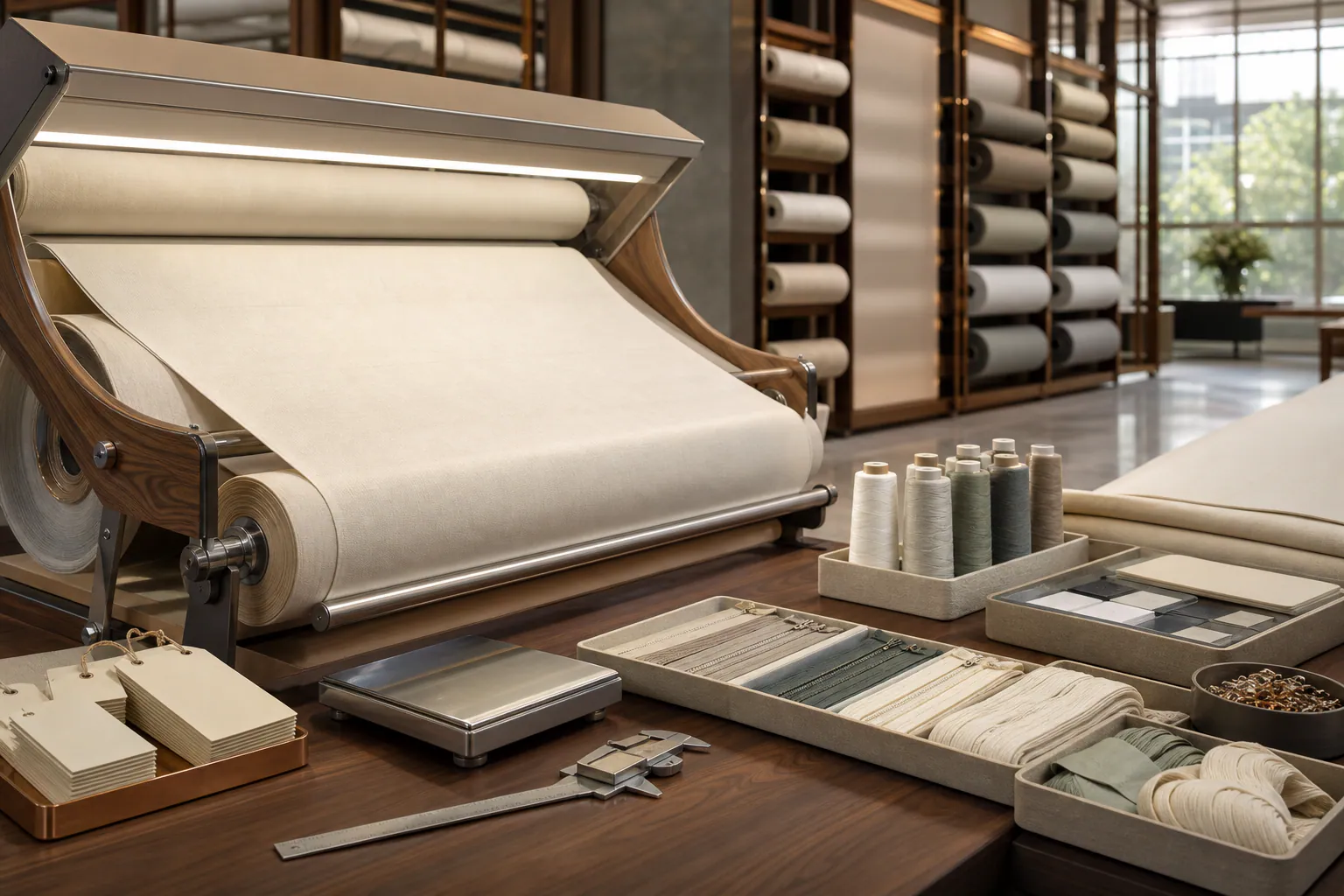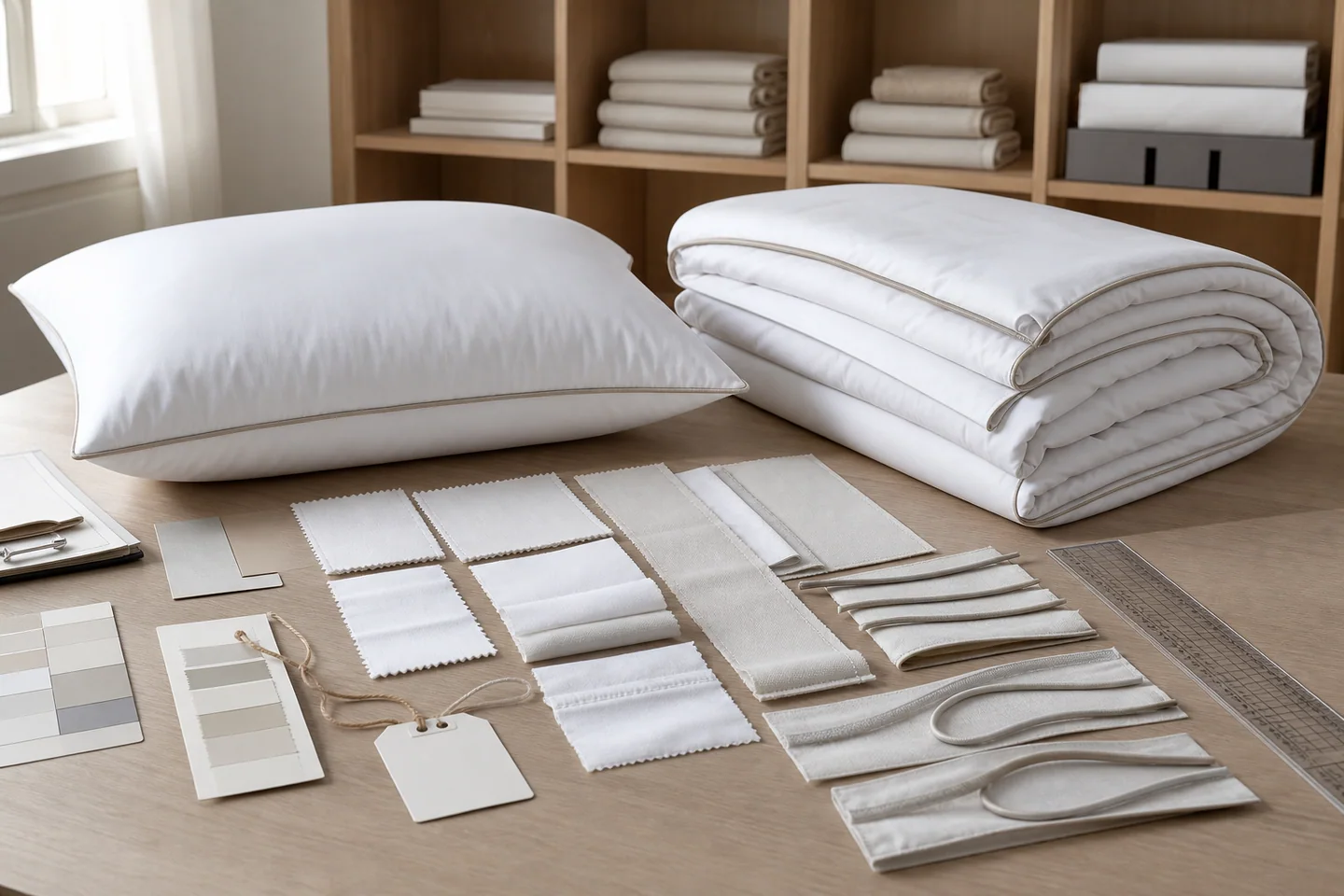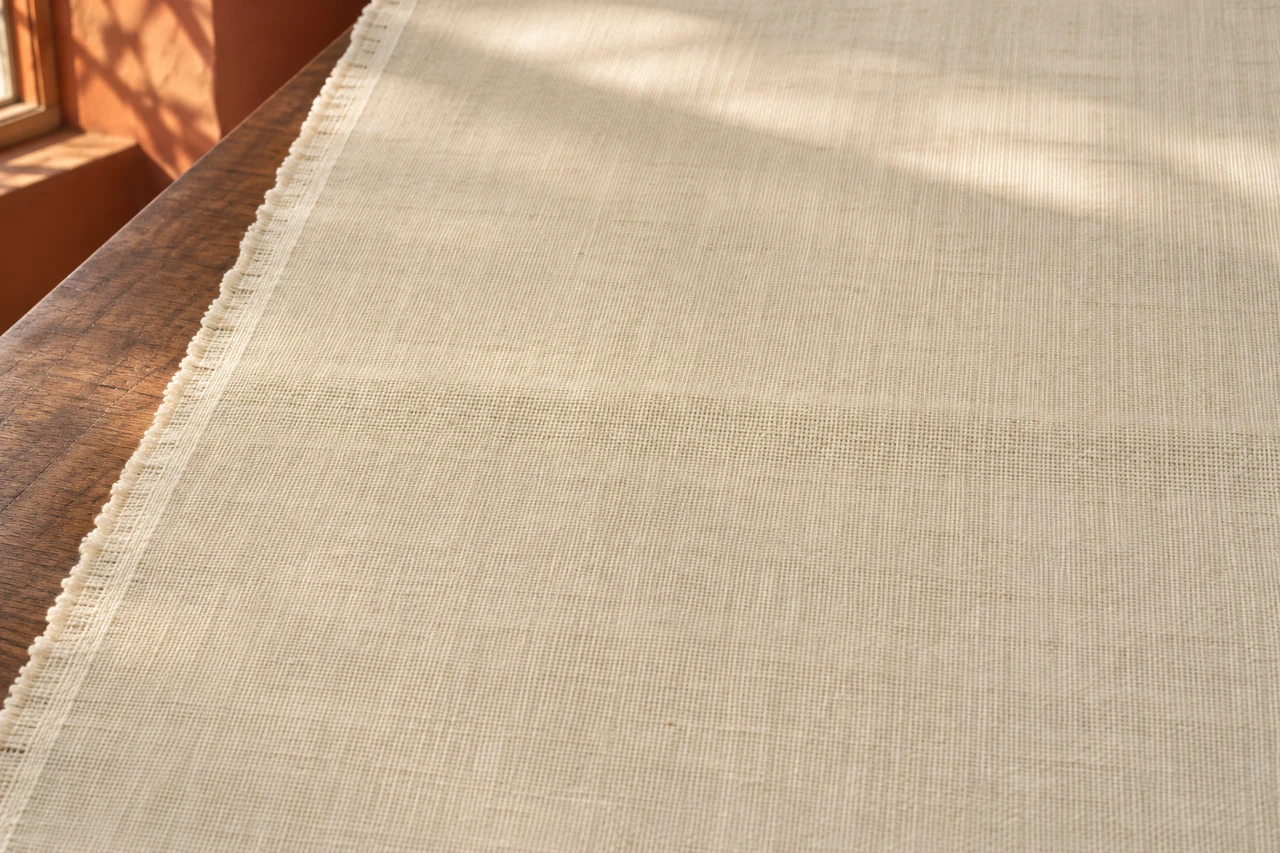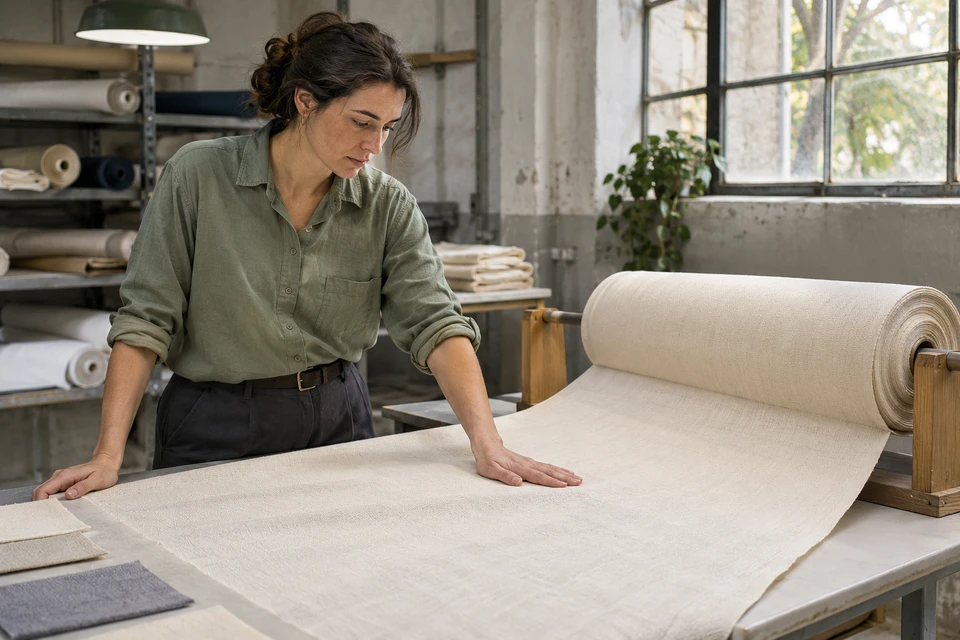
An easily reached roll-end cutting is convenient, but its convenience does not make it representative of the whole roll. When a buyer requests bulk fabric samples, the request should identify where the pieces come from and what decision they are meant to support. Otherwise, several apparently independent samples may all describe the same short section of cloth.
Define the sampling question first
Different decisions need different locations
State whether the sample is for visual comparison, construction review, laboratory testing or investigation of a reported variation. The position needed for one purpose may be unsuitable for another. A targeted cutting from a visibly affected area can help investigate that issue, but it should not be presented as an unbiased representation of the entire delivery. Keep routine selection and fault investigation separately identified.
Agree the selection plan with the relevant inspector or laboratory where a formal test method is involved. Do not invent a universal number of samples, distance from the end or sampling frequency. Those choices depend on the lot, material, purpose and applicable method. The procurement requirement is that the agreed rule is explicit and the actual sample origin is recorded accurately enough for later review.
Use a location record that another person can understand
Along-roll and across-width positions are separate
Identify the roll using its controlled receiving reference, then state which end is used as the distance datum. Record the location along the roll in the agreed unit and describe the position across its width. A note saying middle is ambiguous: it can mean halfway along the length, halfway across the width or simply away from the outermost exposed turn. Use an annotated sampling map where that removes uncertainty.
Record whether the distance was measured during controlled unwinding, obtained from an existing verified marker or estimated. Do not turn an estimate into a precise-looking measurement. If a roll has been rewound or its accessible end has changed, update the location explanation. The number is only useful when the reviewer knows the direction and starting point from which it was established.
Preserve the production consequences of cutting
A sample removal changes the available cloth
Before cutting, agree whether the sample can be taken from a designated allowance or whether it will interrupt usable production material. Record the removed piece size and its position so the remaining cloth can be managed correctly. A sample taken from the centre of the width may create an exclusion area for a later cutting layout; the production team should not discover that hole after the roll has entered a lay.
Keep existing splice, defect and exclusion marks intact and distinguish them from sample-removal marks. If access to an agreed position requires substantial unwinding, discuss the handling plan and who is responsible for restoring the roll. Use the site's approved equipment and procedures. A buyer's sampling request should not encourage unsupported heavy-roll handling or improvised access simply to obtain a photograph at the desired location.
Check whether the submitted set follows the plan
Quantity alone is not coverage
Compare the sample identifiers with the agreed location map before sending them for review. Confirm that the requested rolls and positions are represented and that replacement cuttings have not silently been taken from the same convenient end. If a planned position was inaccessible, record that exception and obtain a decision on the alternative. Do not mark the set complete merely because the envelope contains the expected number of pieces.
For a visual review, keep location information available even if the first comparison is conducted without supplier names. For laboratory work, follow the laboratory's specimen and identification requirements and retain the location map with the submission record. This complements, but does not replace, the chain of custody after cutting. One record explains where the material originated; the other explains how that identified material moved through the review process.
State what the evidence can support
A location map does not prove uniformity
Read the results in the context of the selection plan. Consistent observations at a few recorded positions do not by themselves prove that every part of every roll is identical. Conversely, a difference found in a deliberately targeted problem area should not be described as the average condition of the entire order. Ask the technical reviewer whether further inspection or sampling is needed before making a release decision.
Include the sampling purpose, roll references, position rules, cutting dimensions and exception process in a request to FY Bedding when discussing a fabric-based project. Confirm any associated sample allowance and handling arrangements before the work begins. The result should be a traceable set of actual cuttings that supports a defined decision, not an attractive collection of swatches with an uncertain origin. No inspection outcome or laboratory conclusion is assumed in this guide.
Record the roll, reference end, along-roll distance, across-width position and removal area for each sample. Check coverage against the agreed plan and keep targeted investigation cuttings separate from representative selection.