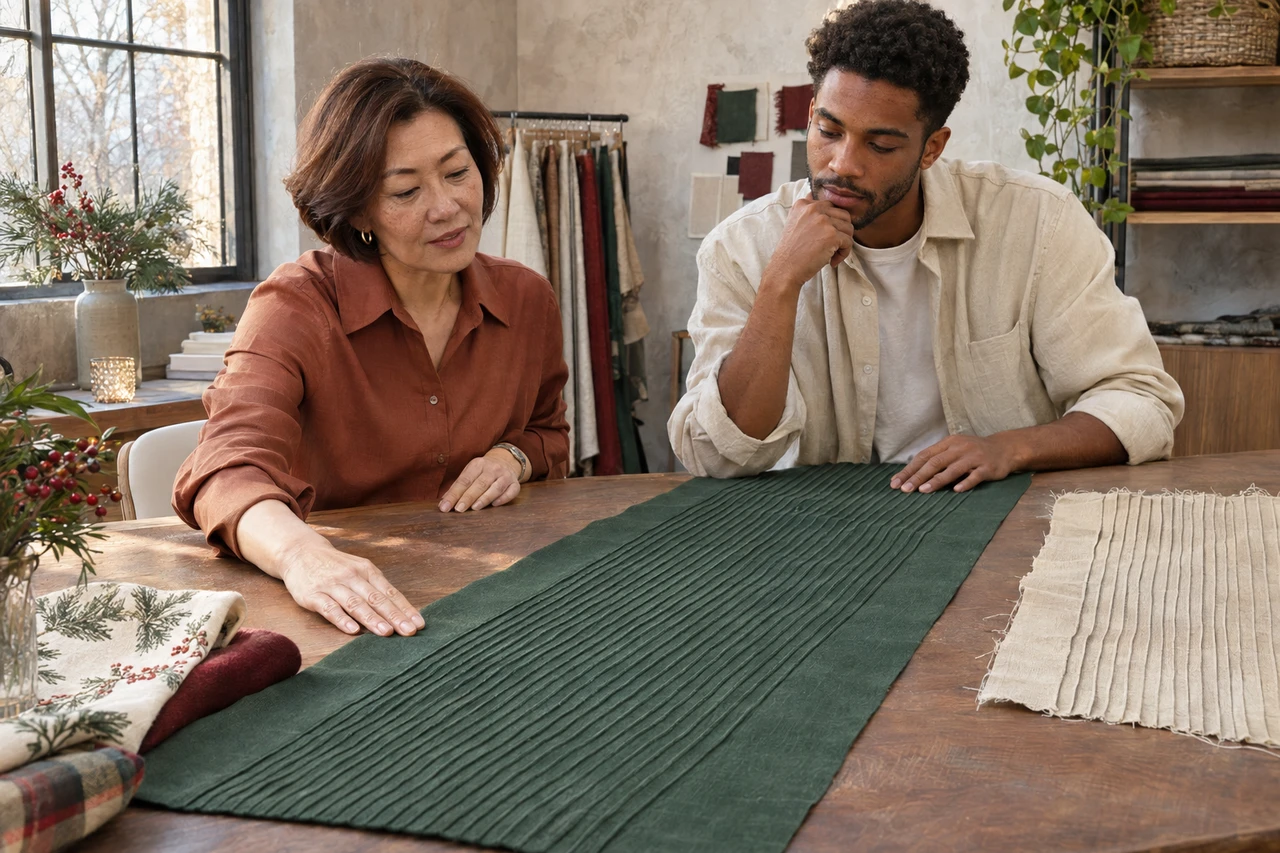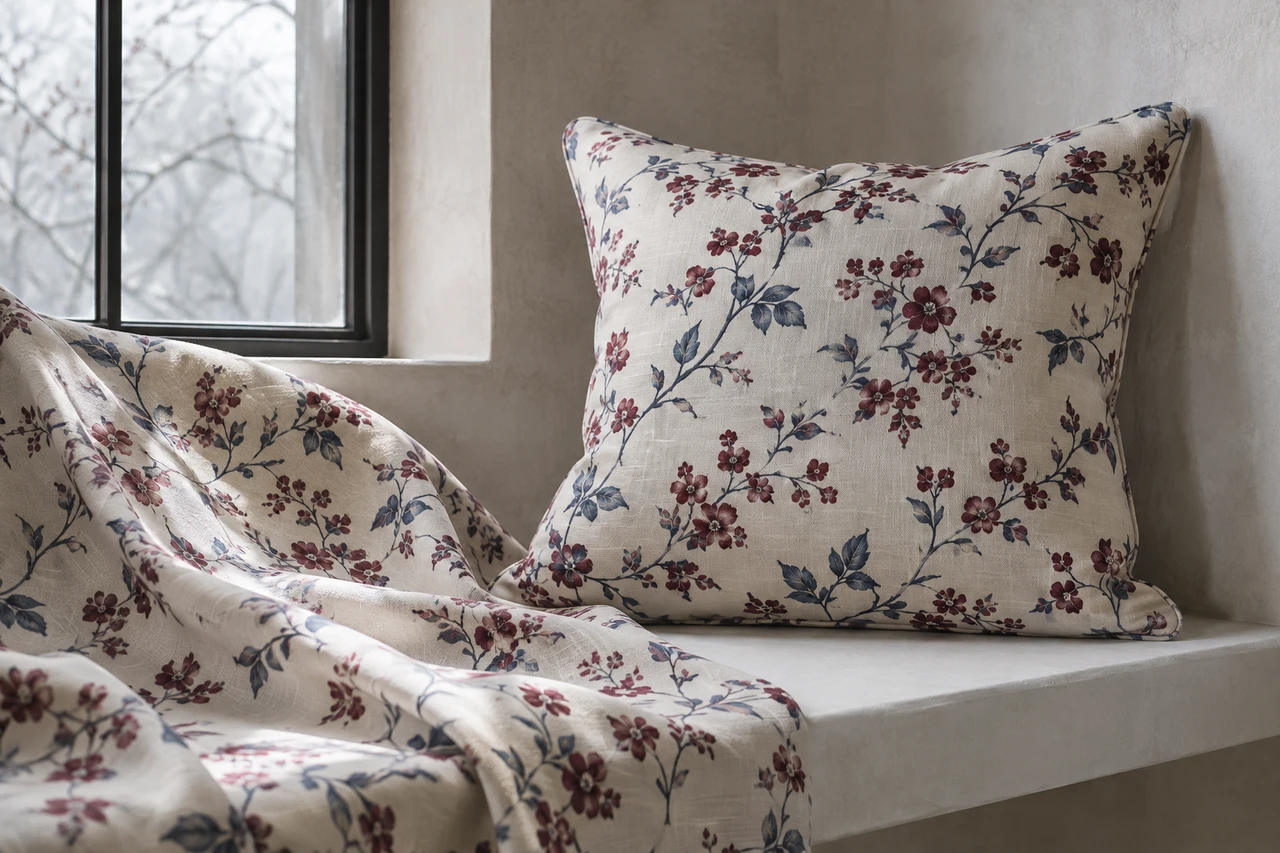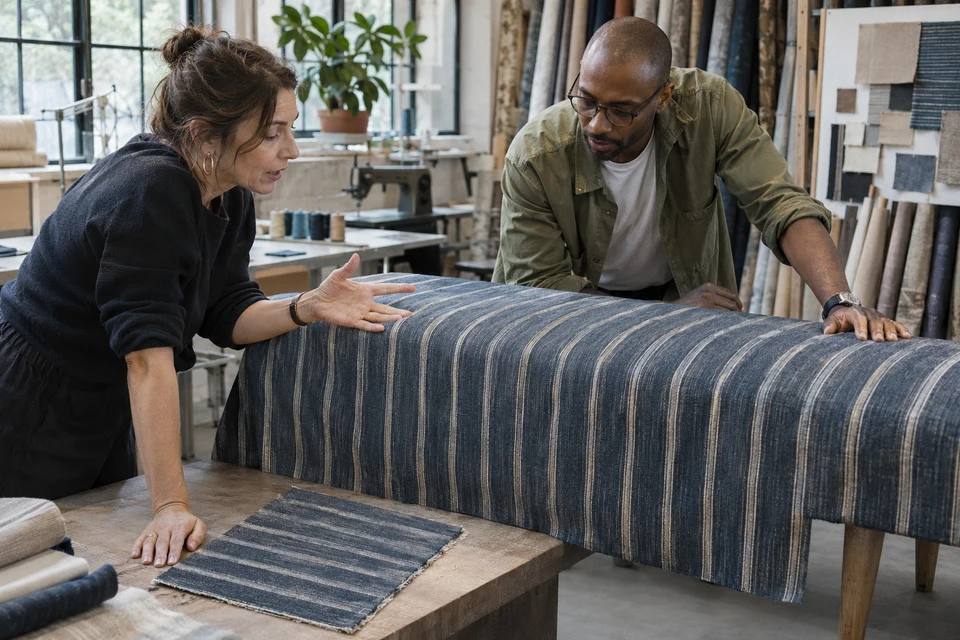
On a wide upholstered surface, a fabric's orientation can determine whether the intended pattern runs along the seat or across it and whether a visible join is needed. Railroading is therefore a design and purchasing decision made before cutting, not simply an instruction to rotate any available cloth. Buyers should compare the proposed orientation on the actual panel dimensions and confirm that the supplier considers the fabric suitable for that use. A convenient layout must not override material, appearance or project-performance requirements.
Establish what the supplier means by direction
Start with a labelled roll reference
Ask for a diagram showing the selvedges, roll length direction and pattern orientation. Sailrite's explanation of railroaded fabric distinguishes pattern direction relative to the roll, which is useful when planning broad upholstery surfaces. However, the label alone is not a complete technical approval. Obtain the actual fabric article reference and a sufficiently large sample to see the repeat. Small swatches can conceal directional elements that become obvious over a full seat.
Agree which finished edge is the top or front of each upholstered component. A sofa back, seat and arm may require different shaped panels, so a single word such as horizontal is ambiguous without a furniture reference. Mark the proposed orientation on drawings of the complete piece. Keep any intended contrast between components explicit rather than allowing the cutter to choose directions independently for each convenient rectangle.
Compare two layouts on the actual width
Show the seam consequence rather than guessing
Prepare up-the-roll and across-roll proposals using the measured usable width and the required finished panel dimensions. Include allowances and construction constraints supplied by the upholsterer. Identify any join that each proposal requires and its intended location. Do not assume a rotated layout eliminates seams simply because the furniture looks wider than the sample. The calculation must use the real cloth and component dimensions, not a nominal catalogue width alone.
Review the appearance of each proposed join with the pattern in place. A seam through a quiet ground area may be less distracting than a seam through a strong stripe or motif, but the construction owner must confirm what is practical. Separate the aesthetic preference from the technical requirement. Record both proposals and the reason for selecting one so a later material substitution does not revive an orientation that the design team already rejected.
Inspect the rotated surface in room light
Pattern direction is not the only visible change
Drape a representative piece over a suitable mock-up and view it from the intended approach directions. Compare the original and rotated orientations under relevant room lighting. Look for changes in sheen, surface direction and the way the pattern relates to the furniture shape. A plain-looking cloth can still show directional appearance, while a stripe can become visually dominant when it runs across a large uninterrupted panel.
Include neighbouring components in the review. If a back is rotated but the arms are not, confirm that their relationship is intentional and acceptable. Do not digitally rotate a photograph and treat that as evidence of the physical cloth's appearance. Use the screen layout to plan the comparison, then retain actual sample views. The approved image set should identify fabric face, direction and component so it can guide both purchasing and later inspection.
Confirm material suitability independently
A good visual layout is not a performance report
Ask the fabric supplier and responsible upholsterer whether the proposed orientation is appropriate for the nominated construction and use. Request the evidence required by the project rather than assuming that the word railroaded proves all performance characteristics. Appearance approval does not replace requirements for durability, care, dimensional behaviour or any market-specific obligations. Keep those reviews attached to the same fabric article and revision.
If the technical team advises against rotation, return to the design options instead of treating the advice as a cutting inconvenience. Alternatives might involve a different fabric, a revised seam plan or an intentionally changed panel arrangement, subject to project approval. Record the decision before ordering volume. A cost or yield advantage should not be accepted by quietly changing the agreed material direction without the buyer's knowledge.
Release the selected orientation across the programme
Reorders need the same decision evidence
The purchasing package should include the fabric article, roll-direction diagram, component layout, selected seam plan and approved mock-up photographs. Ask the supplier to identify the quantities and preparation assumptions behind the quotation. Keep directional matching and repeat allowances visible, rather than comparing prices from layouts that use different amounts of cloth or promise a different appearance. Establish which changes trigger another layout review.
For a FY Bedding project discussion, share the furniture or panel dimensions, intended fabric direction and the technical scope needed, then confirm whether the requested supply is available. This guide does not establish upholstery production capability or stock for a particular article. When the material, usable width, repeat or furniture dimensions change, revisit the orientation decision before replenishment. An old photograph is not enough to approve a new cloth that happens to have a similar colour and stripe.
Choose the orientation from actual roll information, panel layouts and physical appearance, then obtain separate confirmation of material suitability.
Method references: Sailrite: Railroaded Fabric.