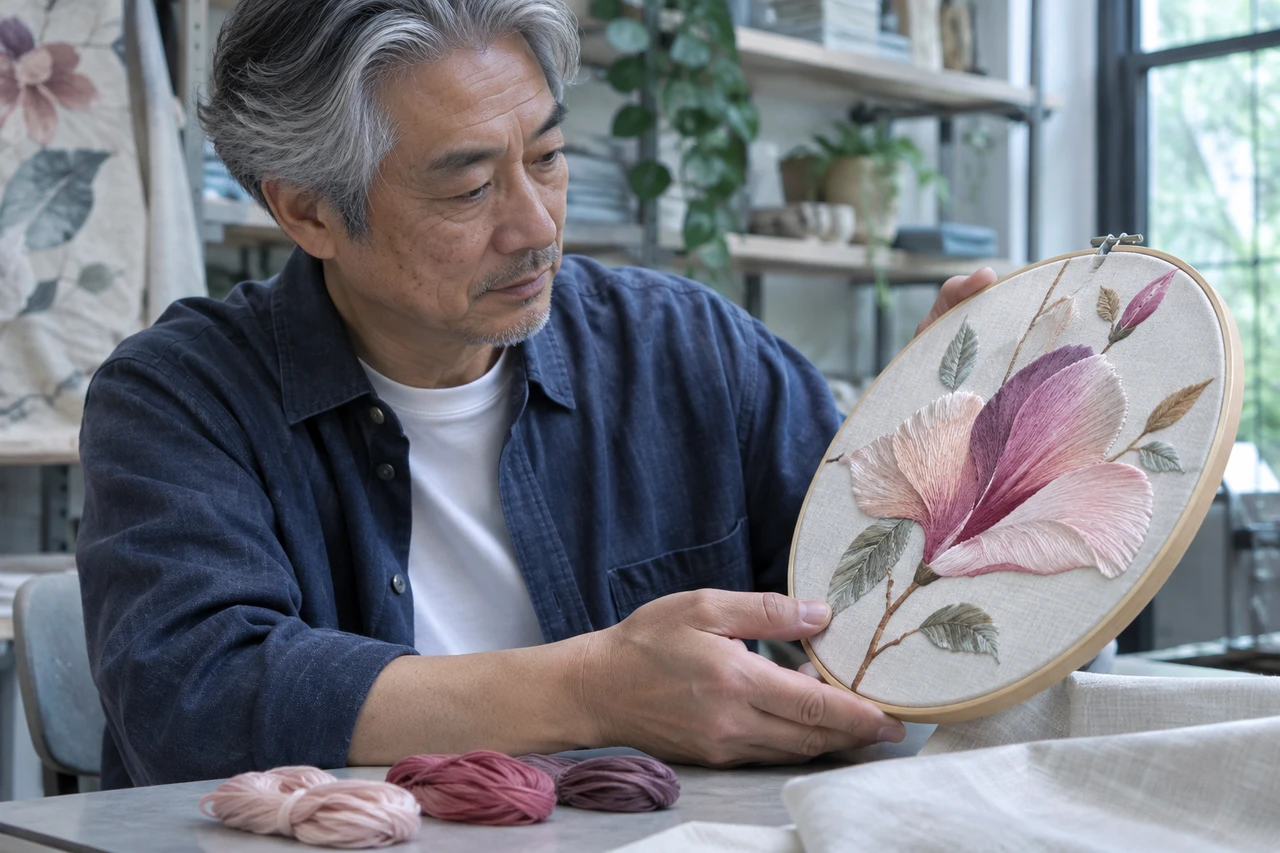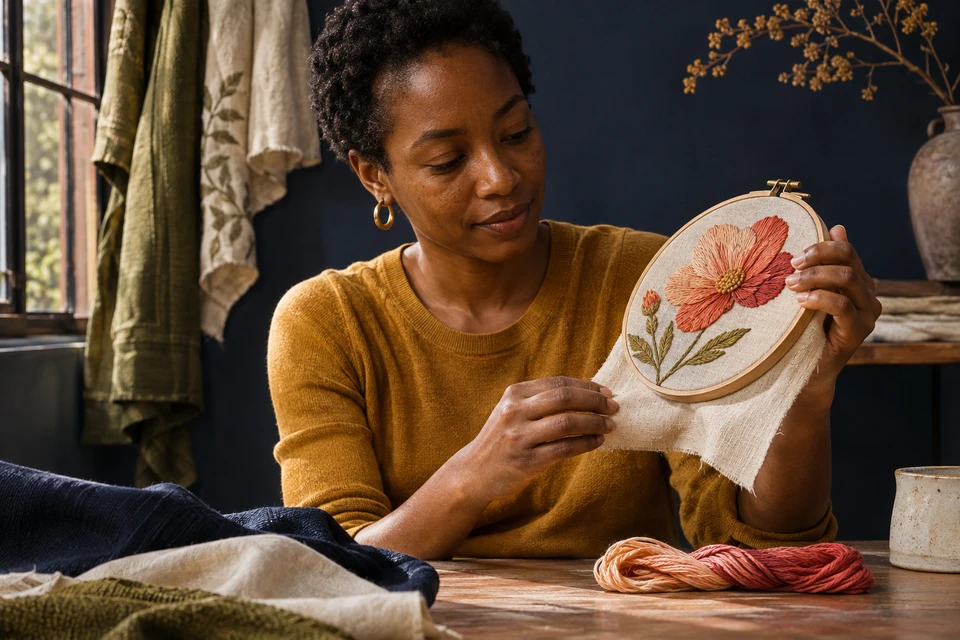
One variegated thread can create several colours inside a single embroidered petal. That makes the sample appealing, but it also creates a purchasing question: which changes are part of the design, and which must repeat across the order? The answer should be agreed before a beautiful one-off flower becomes a production reference.
Identify the colour change within the thread
A multicolour palette and a changing strand are different
DMC describes its Colour Variations thread as variegated, with changes within a colour family. This provides a concrete example of colour variation along a thread rather than several separately selected solid colours. Ask the supplier to identify the actual range proposed for the project and show a representative length of it. Do not assume that every softly shaded flower uses a variegated thread or that a supplier is offering the named example.
Keep the material specification separate from the visual effect. Record the declared fibre, thread construction and range reference, together with the proposed working strands where relevant. A similar-looking colour sequence in another thread is an alternative, not an invisible substitution. The floral artwork and a screen palette cannot establish the supplied thread's identity, availability or suitability for the finished textile's intended care.
Decide whether shade placement is controlled or variable
Write the rule for the petal, not only the colourway
Ask the designer which parts of the flower must remain light or dark. If a pale centre and deeper outer edge are essential, state that requirement clearly and ask whether the proposed thread and working method can deliver it consistently. If the intention is a more freely changing surface, define that as accepted variation. Do not approve a single specimen and leave the supplier to infer which interpretation the buyer intended.
Mark the relevant botanical areas on a sample photograph. Distinguish a colour that may appear anywhere within a petal from a colour reserved for a particular zone. The rule should be understandable without reconstructing the stitching sequence. Where a precise location cannot be achieved by the proposed approach, compare a separately controlled solid-thread solution or revise the design. Treat either choice as a development decision rather than a defect discovered after production.
Sample at the real petal scale
The same thread can read differently in a larger area
Request a stitched section containing the actual petal size, ground and proposed stitch arrangement. A small test flower may contain only part of the thread's colour sequence, while a larger petal may show several changes. Inspect the transition within the flower and the relationship between adjacent petals. A long strand laid on a colour card cannot predict those relationships on its own.
Ask the maker to document relevant handling choices, such as whether it deliberately starts a new petal at a selected part of the colour sequence or continues from the previous area. The buyer need not prescribe an entire embroidery recipe, but it should understand the choices that control the approved effect. If a method is too variable for the required layout, find that out during sampling rather than demanding exact copies of an accidental first result.
Compare several flowers before defining the range
One attractive sample cannot describe repeatability
Place several samples from the proposed working method beside one another. Look specifically at where the lightest and darkest segments occur, whether one petal becomes visually dominant and whether the botanical outline remains legible. Agree which differences are acceptable and retain examples of the boundary. Avoid using the word natural variation as a substitute for an actual discussion of what the retail collection should look like.
For paired pillowcases or coordinated cushions, decide whether the pair should have closely related shade placement or may intentionally differ. The answer can affect how the supplier selects and packs finished units. Do not imply that identical thread codes guarantee identical flowers. If the approved offer permits variation, customer photography and product descriptions should represent that range fairly rather than showing only one unusually balanced example.
Keep thread changes separate from optical changes
Diagnose the cause before changing the palette
When a stitched area appears darker, first determine whether a darker thread segment occupies that area or whether stitch direction and lighting are changing its appearance. Examine the same sample from agreed angles under consistent light. These are different causes and call for different corrections. Replacing the colourway may not solve an issue caused by the way the stitches reflect light.
Retain the original and revised samples with their thread and handling records. If the supplier changes the working strand count, stitch density or starting point in the sequence, review the resulting petal again. Evaluate the approved finished sample after the proposed care process as a separate question; a variegated colour description is not a washfastness guarantee. Any performance or certification wording needs evidence tied to the actual materials and completed article.
Quote the level of control the collection needs
Include selection and pairing in the delivered scope
Provide the authorised floral direction, actual-scale sample area, thread proposal and accepted variation rule. Ask the supplier to explain how deliberate shade placement, unit selection or matching pairs affects sampling, minimum quantities and the quotation. A freely changing effect and a tightly controlled petal sequence should not be compared as if they require the same work. Make the delivered pairing or assortment rule visible in the order file. The FR-01 floral direction supports a botanical design discussion, not confirmation of variegated embroidery on that product.
For an FY Bedding floral enquiry, send the design references and state which shade relationships are essential. Collection photographs can communicate a mood, but they do not establish the use of a particular embroidery thread or process. Request a physical sample that tests the real colour-placement question. The approval should tell a receiving reviewer whether two different-looking flowers are both within the intended range, rather than forcing a judgement from the colour name alone.
Identify the changing thread, define controlled versus variable petal zones, sample at full scale, compare several flowers and record the pairing rule before approving the collection.
Method references: DMC: colour changes within a variegated embroidery thread.