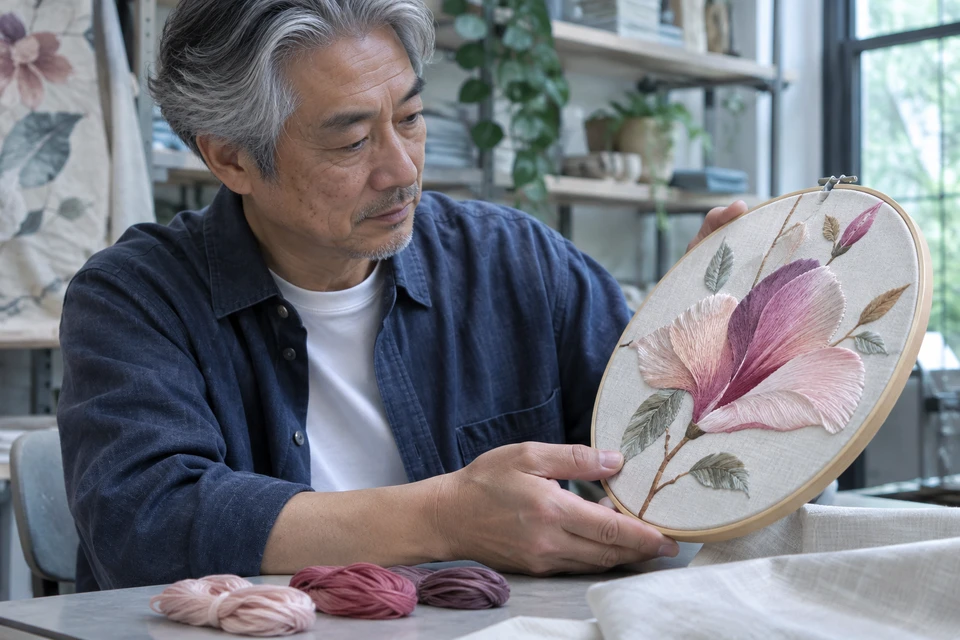
A softly shaded embroidered petal can be made by deliberately blending several selected thread colours. That is a different buying proposition from allowing one variegated thread to change colour along its length. For floral needle painting, the approval should describe the intended blend and the physical stitched result. A beautiful digital botanical image is not enough to tell a maker how much tonal transition the buyer expects in the finished textile.
- 1. Establish the technique and the actual thread material
- 2. Choose the solid shades before approving their transition
- 3. Judge the long-and-short transition at the final motif scale
- 4. Review a repeated floral arrangement as a whole
- 5. Resolve the embroidery within the completed textile
- 6. Match the quotation to the approved level of shading
Establish the technique and the actual thread material
Needle painting is not a fibre-content claim
The Royal School of Needlework's Stitch Bank describes silk shading as predominantly long-and-short stitch, using changes of thread shade to render the subject. It also notes that the technique can use cotton or synthetic thread rather than silk. Those distinctions matter in a quotation: ask separately for the proposed embroidery technique, thread composition and supplier references. Do not infer silk content from the traditional technique name or from a lustrous petal photograph.
Clarify whether the offer is a hand-worked proposal, a machine-developed interpretation or another stitched approach. The supplier should identify what can actually be supplied; neither the catalogue image nor the name needle painting proves a particular production method. If alternatives are being considered, retain separate sample codes and descriptions. A printed imitation can be a legitimate design option, but it must not inherit an approval that was specifically based on stitched colour blending.
Choose the solid shades before approving their transition
A colour card is a palette rather than a completed flower
Ask for the proposed solid-colour threads and identify their roles within the petal: highlight, middle transition, deeper area or outline if one is intended. Keep the colour references tied to a common thread range or explicitly identify differences between ranges. Compare the selected colours together under consistent light. A collection of individually attractive shades does not necessarily form the gradual transition the design needs when placed side by side in stitching.
Mark the broad tonal areas on a development drawing without pretending that every stitch can be approved from a flat colour map. Distinguish fixed design boundaries from places where the maker is expected to blend the shades. If a variegated yarn is proposed as an alternative, ask to see its effect separately. It changes the way colour placement is controlled and should not be treated as an automatic substitute for the selected sequence of solid shades.
Judge the long-and-short transition at the final motif scale
Small samples can conceal a different level of detail
Request a stitched petal or flower at the intended finished size on the proposed ground fabric. Look at where one colour enters another and decide whether the transition is deliberately gradual or visibly banded. Inspect it at close range and at the normal viewing distance for the product. The buyer should describe the desired result with retained examples, not simply ask for more premium shading or an undefined photographic effect.
Do not approve a large demonstration flower and assume it can be reduced without another sample. A small cushion corner motif and a broad decorative panel may need different levels of simplification. Ask the maker to show the final-scale interpretation and record any reduction in colour count or detail. The approved reference should match the product being purchased, including the amount of exposed ground around the flower, rather than a technically impressive but unrelated sampler.
Review a repeated floral arrangement as a whole
Consistency means preserving the agreed character
Place several representative flowers or petals in the intended arrangement. Compare the balance of highlights and darker areas across them while recognising any variation deliberately accepted in the production route. Decide which features must remain stable, such as the location of a deep petal fold, and which subtle differences are acceptable. A buyer should not discover late that the maker understood every flower as a unique interpretation while the range required a closely repeated effect.
Record acceptable and unacceptable examples with their sample identities. Keep stitch direction, which can alter reflected appearance, separate from actual changes of thread shade. If a petal appears darker from one angle, rotate the sample before asking for a different colour. That observation supports an informed review, but the main approval remains the deliberate long-and-short blend between selected threads. Do not solve an optical viewing difference by silently changing the entire palette.
Resolve the embroidery within the completed textile
The ground and reverse belong to the product
Examine the stitched field after the intended preparation and assembly. Note whether the ground sits as expected around densely shaded areas and whether the embroidery position still works at seams or folds. Request an appropriate description of any retained backing or stabilising material. The supplier need not disclose proprietary settings, but the buyer needs to know what remains in the article and what evidence supports the proposed finished construction.
Where care is relevant, assess the complete combination rather than borrowing instructions from the thread alone. Retain a control and compare the same tonal transitions, ground shape and surface after the agreed procedure. Any performance or chemical claim must be supported for its stated scope. A floral collection reference is a visual starting point, not proof that its displayed product contains this thread material, this embroidery route or a particular certified finish.
Match the quotation to the approved level of shading
More colours and more interpretation are scope decisions
Ask the offer to identify the motif size, placement, selected thread references, stated production route and approved stitched sample. Clarify what the sample fee covers and which changes require another development round. A simplified interpretation with fewer shades may be suitable for the project, but it should be priced and approved as that interpretation. Do not compare it directly with a more detailed proposal while treating the botanical illustration as if it made both offers identical. The FR-01 floral reference communicates botanical styling, not confirmation of needle painting or any thread composition on that product.
Use FY Bedding's floral collection to discuss the desired botanical direction, then send the chosen reference, target product, dimensions, quantities and shading expectations for confirmation. The project still needs its own material and sample decision. Before release, ensure the receiving reference includes a full-size flower and representative transition close-ups, with the actual accepted article available. That makes needle painting a defined visual and construction brief rather than a claim that every soft-looking petal was made the same way.
Are the thread materials, solid shades, intended blend, final motif scale and stated production route all represented by one accepted stitched sample rather than inferred from a floral image?
Method references: Royal School of Needlework: long-and-short silk shading.