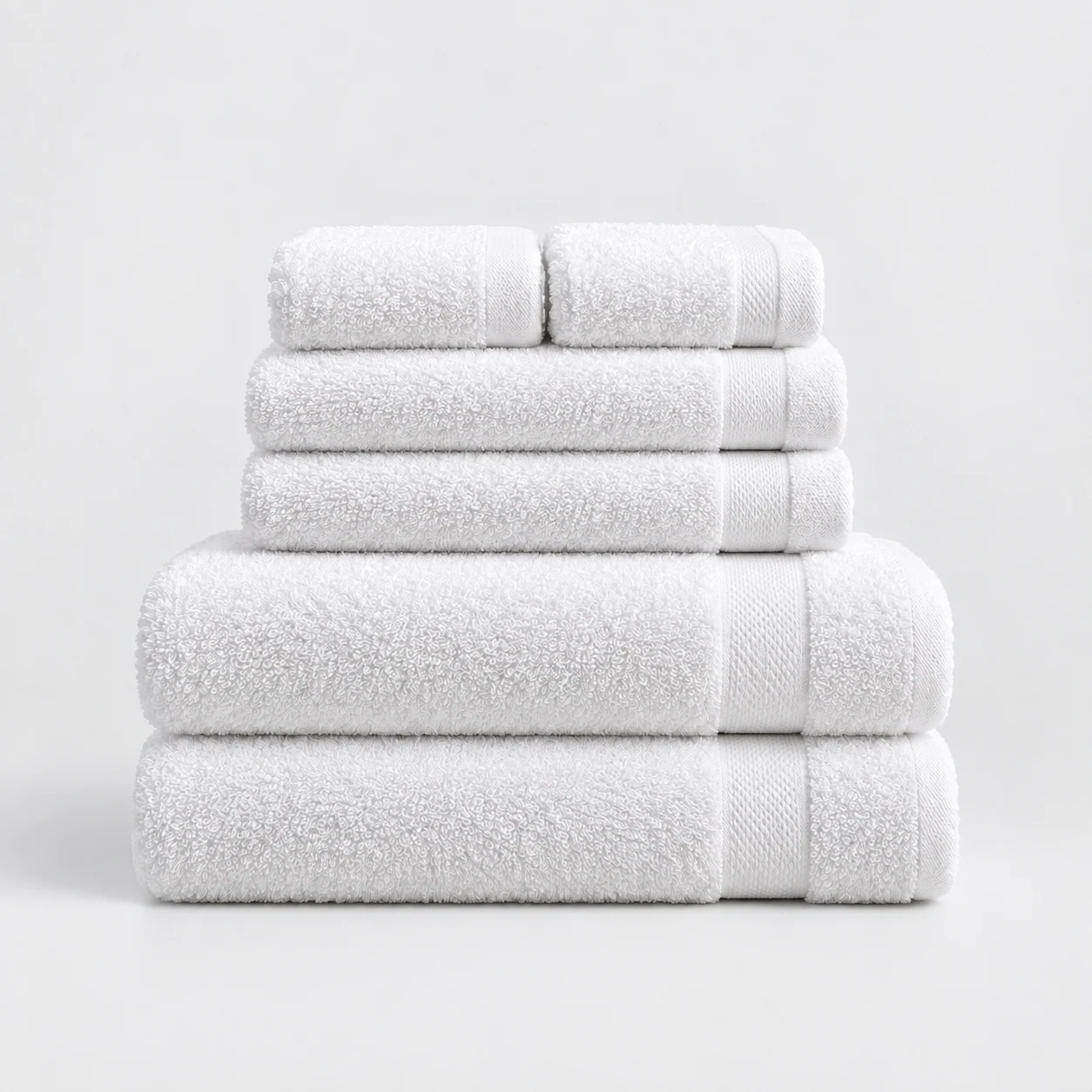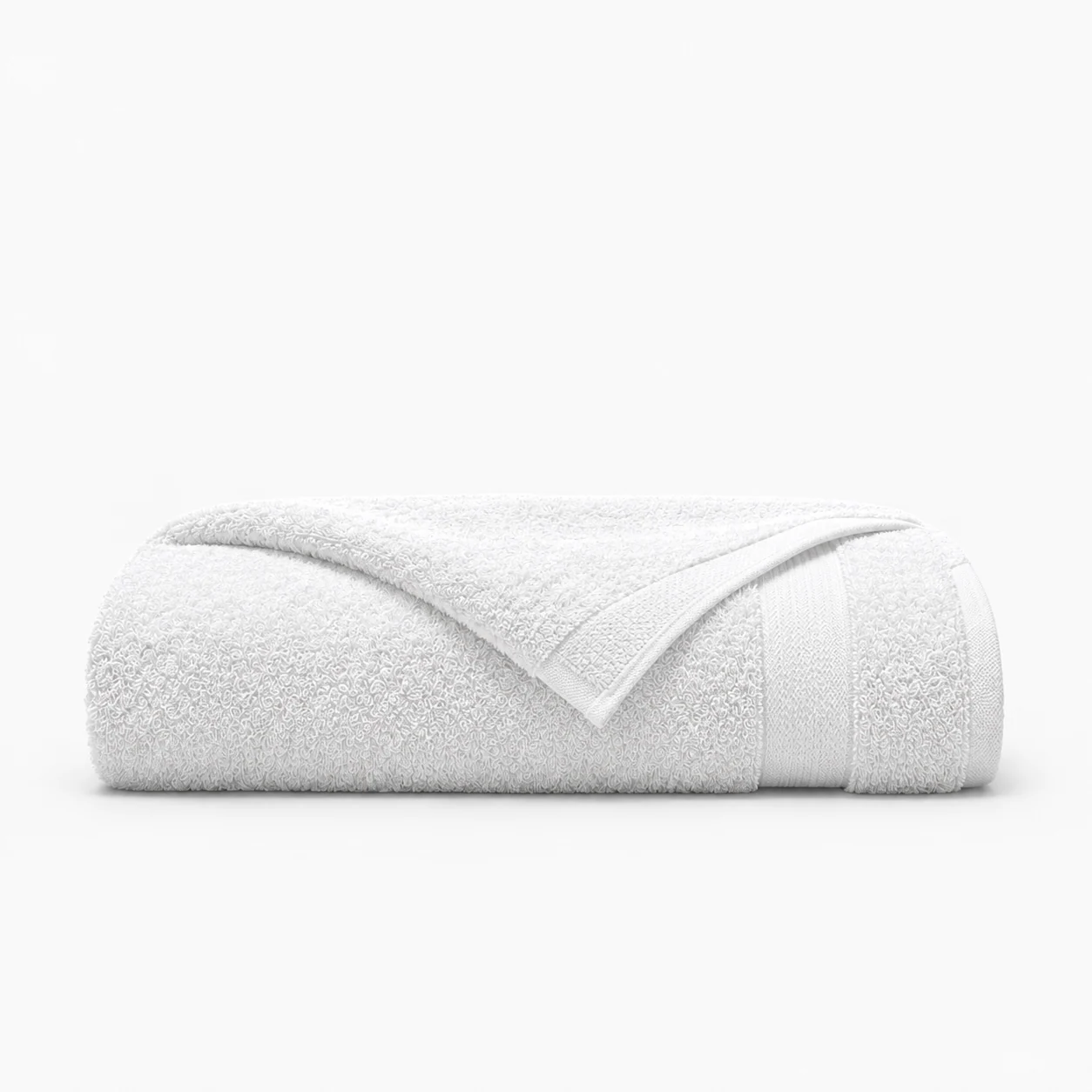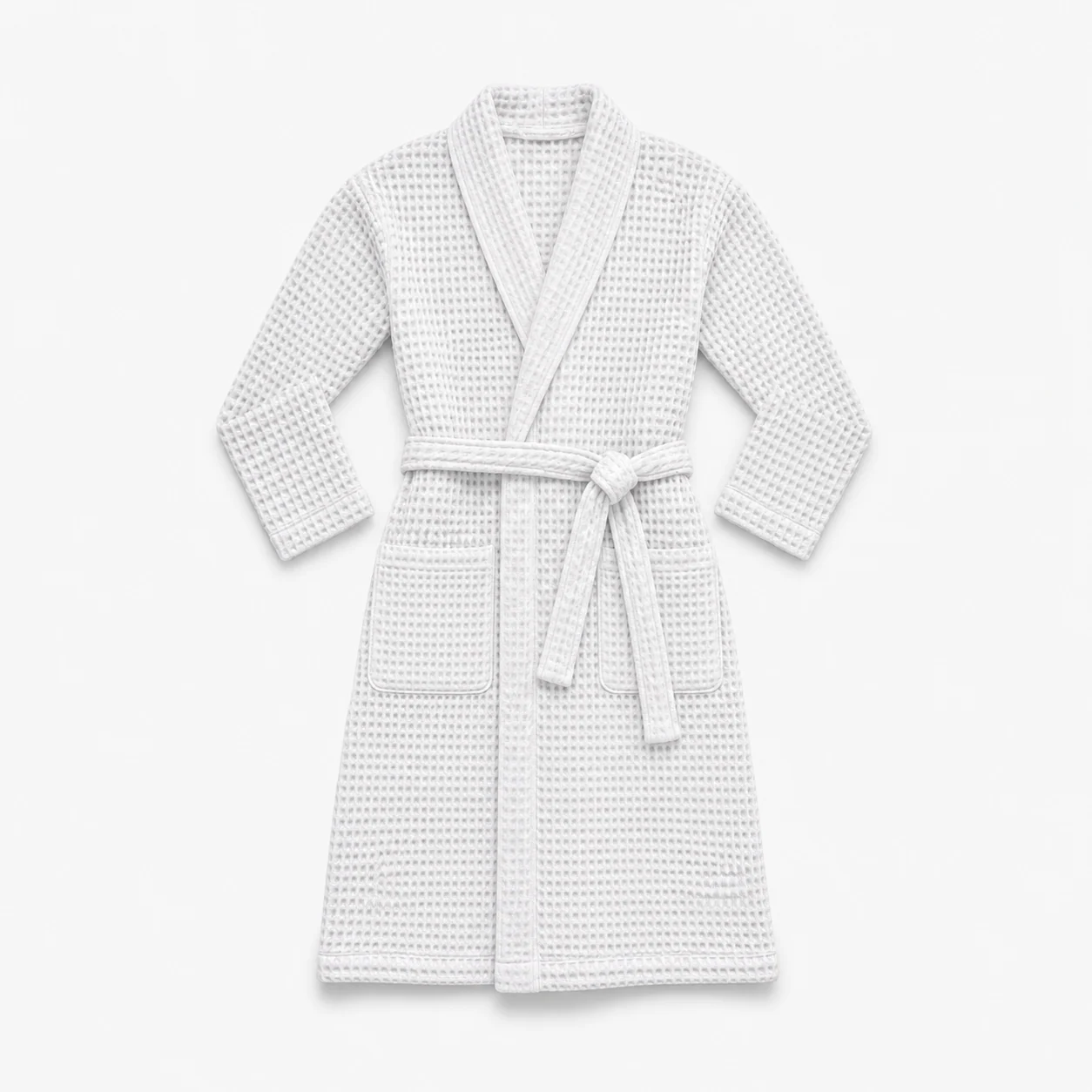
An adult spa body wrap combines a towel-like surface with a wearable overlap and closure. Its flat width is not the same as its useful fitted range. Purchasing teams should approve coverage at the adjustment limits and during the intended movement, then check the same questions after the proposed care process.
Define the adult service and the coverage expected
Avoid an untested one-size promise
Identify whether the wrap is intended for a spa changing area, a particular treatment routine or a retail home-use range. State that this development brief concerns adult body wraps, not children's garments or clinical products. Ask the operator to define the expected coverage and ordinary movements before selecting dimensions. A photograph on a dress form is useful for styling but cannot establish a fit range for real users.
Link the brief to the property's spa-linen program and decide who owns fit, care and service approval. Use defined size groups if the intended adult range cannot be supported by one pattern. Do not stretch the closure farther or change positioning simply to preserve a one-size label. Keep the limitations visible in the development record and decide how they will be communicated in the final product description.
- Name the adult service and expected coverage.
- Define the proposed range before commissioning fitting samples.
Measure usable overlap at both adjustment limits
Separate total width from the closed circumference
Record finished width, length, top-band construction and the closure positions on a drawing. Show how much front-panel overlap remains at the largest intended fitted position and what happens to excess material at the smallest. The closure may connect while leaving too little practical coverage below it. Review the full hanging panels rather than measuring only the top edge, and keep the intended front direction clear in the sample photographs.
The size-chart measurement process can help distinguish product dimensions from fit descriptions, although the wrap needs its own wearable measurement method. Agree how elastic is measured at rest and how the usable adjustment is assessed. Do not invent a universal stretch limit from the elastic supplier's description. The complete wrap, seam attachments and closure must support the fitted range being proposed.
- Record the minimum remaining panel overlap.
- Inspect the full drop at the smallest and largest intended settings.
Review the closure and terry as one assembly
Keep unused contact surfaces under control
Identify whether the design uses hook-and-loop, buttons, snaps or another closure, and record the actual components rather than a generic adjustable description. Inspect the inner contact face and any unused exposed areas at different settings. A closure that works well on a flat swatch may curl the top band or pull a corner when attached to thick terry. Review edge bulk, reinforcement and access without assuming that a larger closure is automatically better.
For hook-and-loop, the exposed-hook review provides related contact questions. Include the wrap's folded and stored condition as well as its fitted condition. Ask for appropriate evidence if attachment or performance claims are intended. Keep informal comfort observations distinct from skin-health, hygiene or medical assurances; softness and apparent absorbency are not substitutes for evidence supporting a special claim.
- Inspect unused closure areas at relevant settings.
- Review the complete top band, not detached closure samples.
Run a consented movement and care review
Document coverage without intrusive photography
Use the operator's approved fitting process with consenting adult participants and suitable privacy. Record sample identity, fitted setting and the agreed ordinary movements, such as sitting or reaching within the service routine. Stop or revise the sample if coverage is inadequate; participants should not need to hold the wrap closed to make the trial appear successful. Keep records focused on garment behaviour, with non-identifying diagrams or observations where photographs are unnecessary.
After the proposed care procedure, repeat the relevant fit and closure checks under the same review conditions. The hotel wash-trial framework helps connect dimensional and appearance observations to an identified process. Review elastic recovery, top-band rolling, panel length and overlap rather than treating an unchanged colour as a complete pass. Do not extrapolate a limited trial into a universal fit or unlimited service-life claim.
- Use consented adult trials with appropriate privacy.
- Recheck coverage and closure after the intended care route.
Order by approved size and service-ready condition
Make stock identification easy without changing fit
Assign a clear stock reference to each approved size, colour and closure revision. For hospitality, decide how clean pieces are folded, identified and issued without confusing adjacent sizes. Any size marker should be positioned and reviewed as part of the complete product. For retail, ensure the pack description distinguishes a single body wrap from a coordinated set containing a headband or other accessory. Styling images must not silently expand the supplied contents.
Use the pack-out completeness checklist to reconcile the order and sales unit. Confirm textile, size and colour minimums and plan sample approval before agreeing a delivery date. Send FY Bedding the adult service brief, requested fit range, care route and quantity split to discuss development. Feasibility and commercial terms need confirmation; this guide does not assert a tested fit range or existing product availability.
- Keep size and closure revision visible in stock records.
- Approve the actual folded and packed unit before release.
A useful wrap range preserves the agreed overlap and coverage at its intended settings before and after care. A closed fastener alone is not a fit approval.