A linen-like surface can make a nonwoven napkin feel familiar while leaving its material specification unclear. For airlaid table linen, buyers need to distinguish the way the fibre web is formed from the way it is bonded and from the claims made for the finished dining item.
Separate web formation from bonding
Airlaid is not a complete finished-product recipe
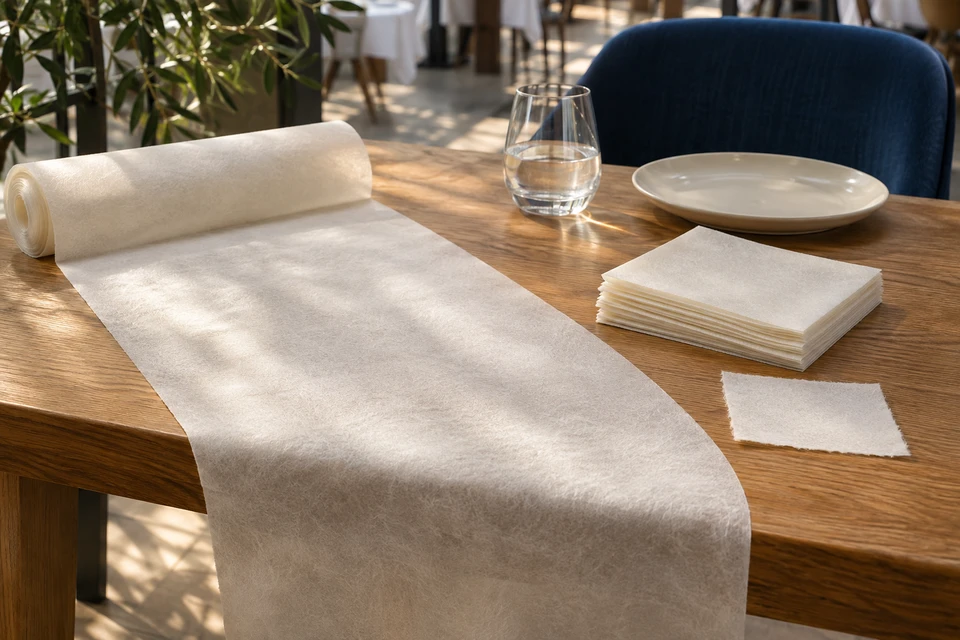
ANDRITZ describes airlaid formation as fibres carried by air and deposited into a web, with several possible bonding technologies in its portfolio. It also identifies napkins and tablecloths among airlaid applications. For procurement, the useful point is that the word airlaid does not by itself identify one composition or one bonding route. Ask the proposed supplier to name both for the actual material reference, together with any coating, colour treatment or other finishing relevant to the offered product.
Keep those declarations attached to the supplied item rather than a general machinery brochure. A maker may use purchased nonwoven material and convert it into napkins or runners; another may offer a different supply arrangement. Identify who is responsible for the material specification and who controls the finished format. Do not infer that FY Bedding operates an airlaid line or that every product described as linen-like uses this process. The enquiry should first establish the feasible source and the evidence available for the proposed reference.
Define the intended dining role
A napkin, runner and protective pad are different scopes
State whether the purchase is for a table napkin, decorative runner, table covering or another clearly named item. Identify expected handling and the operator's intended use cycle. Do not assume that a product is washable or reusable because it feels textile-like, or that a disposable description establishes any particular environmental outcome. The responsible buyer should reconcile the supplied material with its actual operation before comparing the style with woven linen or another nonwoven option.
If food-contact or other market-specific evidence is needed, define the requirement with the appropriate responsible reviewer and request documents for the actual finished product and intended conditions. A statement about the forming or bonding process is not that evidence. Keep hygiene, compostability, biodegradability and similar claims out of the product description unless appropriately supported for the precise offer. This buying guide does not determine regulatory compliance or transfer a material producer's broad marketing statements to a converted table-linen product.
Compare samples on a named material basis
Weight and hand should not replace identity
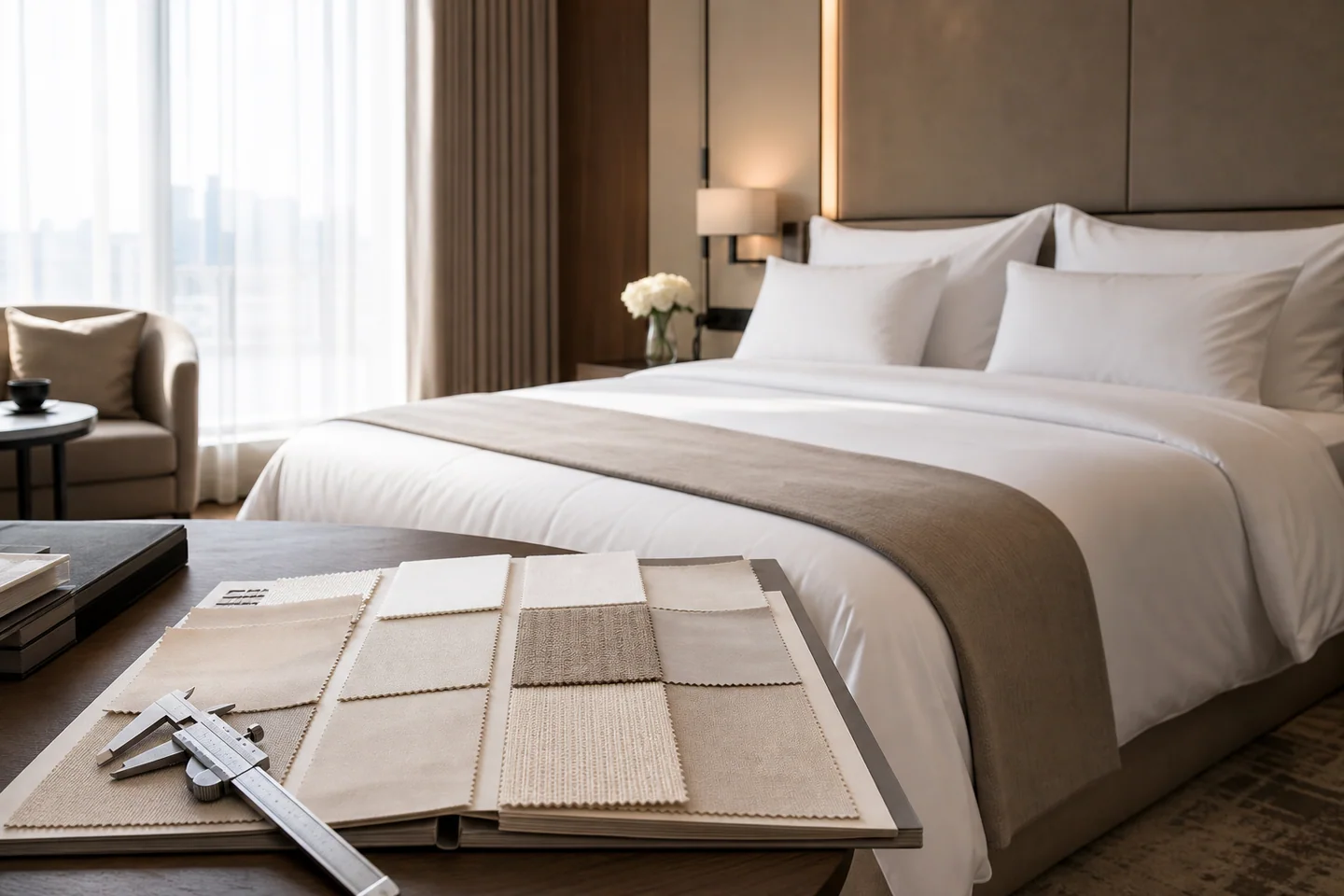
Request identified samples with the declared composition, basis weight, bonding description and relevant finish. Compare equivalent formats where possible. A heavy folded napkin and a thin loose runner swatch do not provide a fair impression of hand or apparent opacity. Record which side is intended to face outward and whether embossing or another surface treatment is included. A decorative texture can influence the visual response without explaining the underlying material or the commercial quantity being quoted.
Review the surface under consistent light and in the intended table arrangement. Note whether the material's appearance suits the place setting, but keep that aesthetic observation separate from performance. Do not assign fibre content from colour or declare that a soft sample contains a particular binder. Ask the supplier to resolve discrepancies between the material declaration and the sample reference before approval. If two samples are alternatives, retain both identities rather than allowing the preferred appearance to become an unnamed standard for later supply.
Review ordinary handling with the operation
Wet-table observations need defined conditions
Agree a practical sample review with the dining team that reflects the intended use. Identify the sample, table arrangement, relevant contact conditions and actions to be observed. Record any tearing, surface change or difficulty in handling the item, without creating a general absorption or wet-strength claim from an informal demonstration. If a measurable performance characteristic is required, ask the technical owner to select an appropriate method and acceptance criteria for the actual product rather than improvising a universal pass threshold.
Keep use and disposal decisions with the operation's responsible team. Do not test a sample through an unapproved cleaning treatment to make it resemble reusable linen. Where a material is proposed for one use cycle, evaluate it within that declared scope. If the buyer's intended workflow requires a different behaviour, change the brief or compare an independently supported alternative. The useful evidence explains why the selected item fits the stated task; it does not promote a pleasing showroom demonstration into a claim covering every dining environment.
Specify the supplied format and converting details
A roll quotation is not a finished-napkin quotation
List the finished dimensions, folded dimensions, fold orientation and quantity per pack for napkins. For runners or table coverings, distinguish cut pieces from continuous rolls and identify any perforation or cutting arrangement included. Ask how the usable quantity is measured and verified. A comparison based only on price per pack can conceal different piece counts, sizes or material references. The quotation should identify one supplied unit that receiving and service staff can recognise without reconstructing the supplier's conversion assumptions.
Review the edge and folded presentation on actual converted samples. Look for differences that affect separation, unfolding or appearance at the table, and document them against the accepted reference. If printing is included, treat artwork and print placement as additional approvals rather than assuming that any existing material declaration covers the decorated version. Confirm the proposed packing and storage instructions with the supplier. Avoid inventing shelf-life, moisture-protection or food-contact claims merely because the product is delivered in a sealed-looking pack.
Reconcile material evidence with the order
Keep substitutions visible after the first sample
Build the release record around the material reference, declared web and bonding route, finished format, operator review and any required supporting documents. Ask the supplier to identify which changes would create a new material or finished-product reference. A similar embossing pattern or the same nominal basis weight should not permit an unreviewed substitution of composition, binder system or finish. Keep approved alternatives separate and connect each to the conditions under which it was accepted.
For a FY Bedding sourcing enquiry, provide the intended dining item, formats, quantities and evidence requirements, then confirm whether the programme is within the proposed supply scope. Ask for sample availability, minimum quantities, converting responsibilities and delivery assumptions on that specific reference. Compare the complete supported offer rather than an airlaid label alone. The result should be a table-linen purchase whose material identity, operational use and supplied unit are clear, without borrowing unsupported performance or sustainability promises from another part of the supply chain.
Record composition, web formation, bonding and finish separately; then approve the actual converted format for its intended dining role. Keep informal handling observations distinct from formal performance, food-contact and environmental claims.
Method references: ANDRITZ: airlaid formation, bonding routes and table-linen applications.