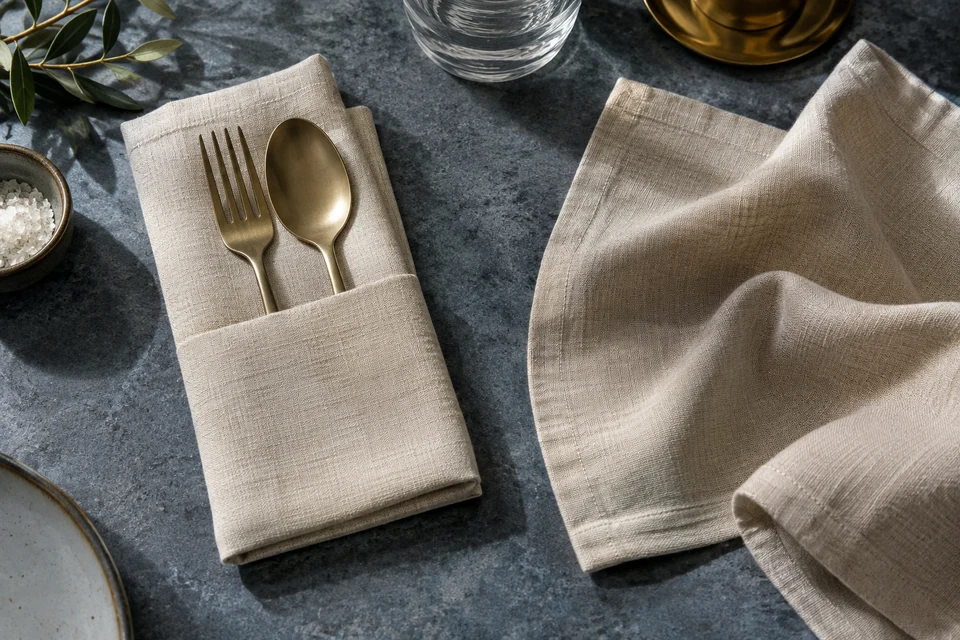
A cutlery-pocket fold turns a restaurant napkin into a small presentation assembly. The finished napkin, fold sequence and actual place-setting items must work together; approving the fabric or square dimension alone leaves that decision incomplete. Buyers should review the intended arrangement with food-service staff and preserve a repeatable reference. This guide concerns presentation and ordinary handling under the property's procedures. It does not define hygiene controls, authorize how cutlery is cleaned or stored, or claim that a folded napkin provides a protective barrier.
Identify the intended place setting
Review the actual items instead of a styling substitute
Record which cutlery pieces the restaurant intends to place in the pocket and identify the relevant variants. A sample fork selected for a photograph may differ from the pieces used during service. Keep the presentation connected to the table-linen furniture and service brief, including the napkin reference and where the folded assembly sits. Changes in the restaurant's service format can require a different trial even when the linen specification remains unchanged.
Ask the responsible food-service team to confirm the permitted preparation and handling route. Procurement should not infer that an attractive folded arrangement meets the property's operating requirements. Record any constraints that affect the fold, including when it is prepared and how it reaches the table. The buying brief should separate those confirmed inputs from open styling preferences so the sample maker knows which details are fixed and which can still be proposed for review.
- Identify the actual cutlery references.
- Record the napkin and table presentation.
- Obtain the operator's permitted handling route.
- Separate fixed inputs from styling options.
Define the fold reference
Make the pocket opening and depth reproducible
Document the fold sequence with an identified napkin and a clear finished reference. Show which face is visible, how the pocket is formed and which edges are expected to align. A single front-view photograph can hide the folds that determine usable space. Connect the reference to the napkin shape and corner review, while keeping the pocket trial distinct from the basic acceptance of hems, squareness and finished dimensions.
Have more than one trained staff member reproduce the intended fold using the same instructions. Record differences that affect the opening, item position or presentation, without assigning a universal acceptable tolerance from an informal demonstration. If staff need an undocumented adjustment for each napkin, investigate whether the fold reference or product specification needs refinement. Do not treat a carefully arranged sample made by the designer as proof that the regular service team can reproduce the same result consistently.
- Show the full fold sequence.
- Identify the visible face and edges.
- Observe repeat preparation by trained staff.
- Record adjustments instead of hiding them.
Assess the filled pocket
Separate visual balance from handling findings
Place the identified cutlery in the pocket using the operator's approved method. Record how the pieces sit, whether the intended portion remains visible and whether the napkin presents as agreed on the actual table. Compare the same viewpoints across samples. The approved physical reference should include the complete arrangement or a traceable record of its components, rather than only a loose napkin marked with a general approval date.
Observe the ordinary permitted transfer and placement steps with staff, noting any movement that changes the presentation. Do not invent a retention test or claim that the pocket prevents items from falling under every handling condition. If the result requires a different fold or napkin dimension, review the purchasing consequences before releasing the change. A larger napkin can affect existing service arrangements and stock identity, so the correction should remain connected to the restaurant's broader linen program.
- Review the complete filled arrangement.
- Use consistent presentation viewpoints.
- Observe only permitted handling steps.
- Keep changes linked to the linen program.
Compare care states fairly
Use samples that represent the intended service route
Agree which starting and post-care states should be represented in the trial with the parties responsible for the napkin program. Record the care reference and sample identity rather than comparing an unused showroom sample with an unidentified service napkin. The dimensional review can support the measurement record, but the pocket trial asks a further question: can the accepted fold still be prepared and presented with the actual intended cutlery?
Keep observations about dimensions, surface appearance and fold preparation separate. If the pocket result changes, identify which input changed before asking the supplier for a correction. Do not prescribe a pressing or chemical treatment to recover a photographically attractive result. The responsible technical and operating teams should review any proposed change to the care or finishing route. Retain the comparison samples so the purchasing decision remains understandable at the next reorder or when a replacement napkin is proposed.
- Identify the represented care states.
- Repeat the agreed fold with actual cutlery.
- Separate dimension and presentation findings.
- Route care changes through responsible reviewers.
Release a service-ready purchasing reference
Keep substitutions visible
The release record should connect the napkin reference, fold instruction, cutlery references and operator acceptance. State which substitutions require another pocket trial rather than assuming that any item of the same nominal size is equivalent. Keep the accepted presentation available to receiving and food-service teams so they do not independently recreate different versions. A clear record also helps distinguish a product discrepancy from a staff preparation difference when the table setting later looks inconsistent.
For a restaurant napkin enquiry, share the intended pocket arrangement, actual cutlery details and relevant care requirements with the sourcing team. Ask for a sample review against those inputs rather than a generic promise of restaurant quality. Order quantities should follow the property's verified service and rotation plan. The useful outcome is a repeatable presentation supported by the real textile and operating references, without overstating the fold's function or replacing the property's food-service procedures.
- Link all components in the release record.
- Define substitution review triggers.
- Share the same reference across teams.
- Base quantities on the property's service plan.
Approve the actual napkin, fold and cutlery combination through the operator's permitted preparation and handling route, keeping presentation evidence separate from hygiene or retention claims.