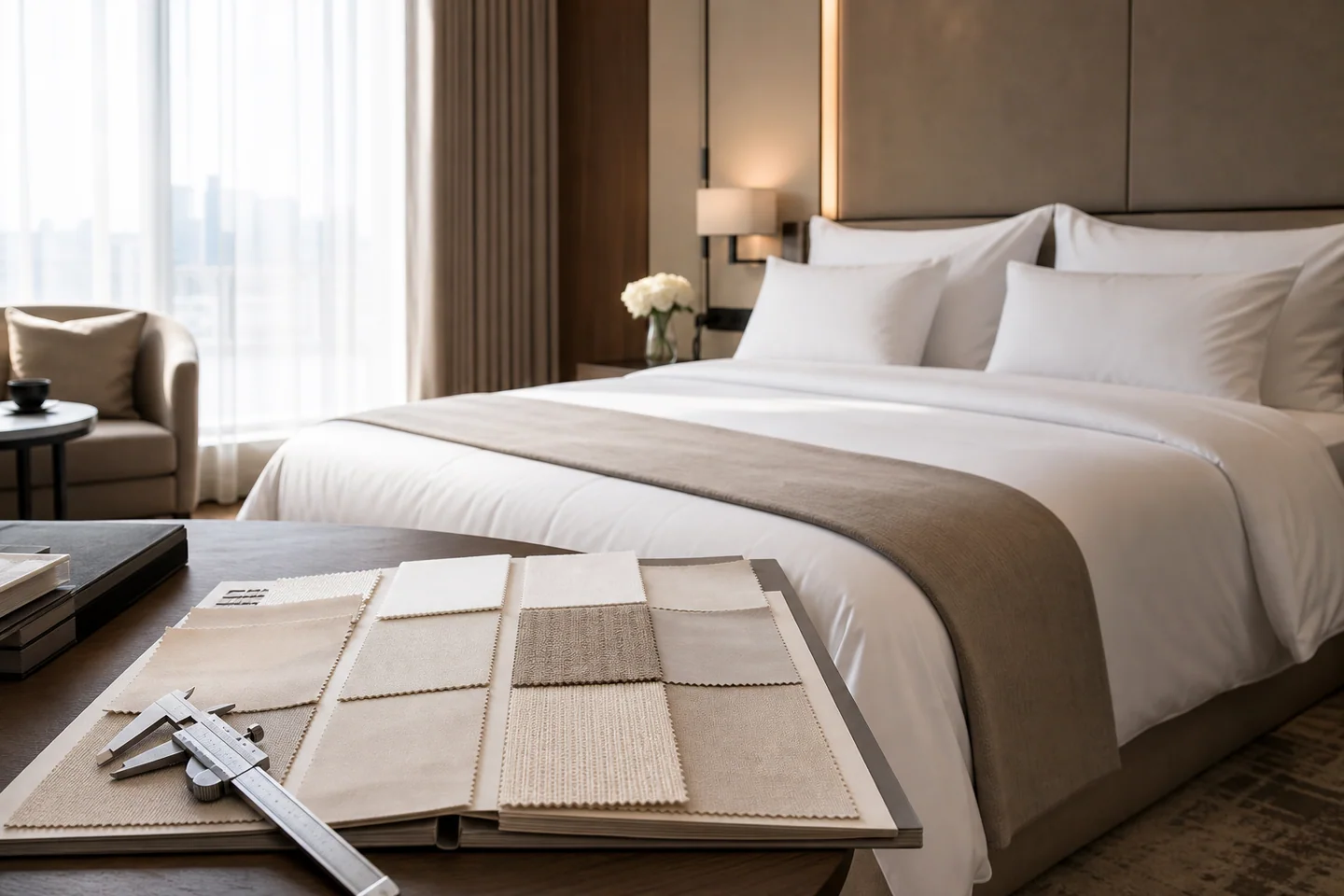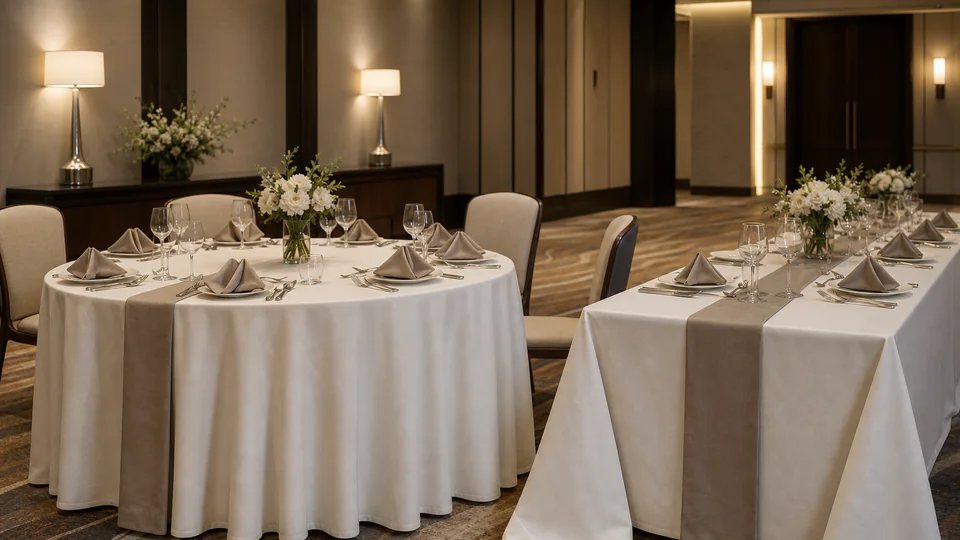
Table linen must fit a changing mix of restaurant, banquet and event furniture while maintaining shade and finish through intensive food-service care. A controlled program begins with a furniture matrix and presentation rules, then aligns material, dimensions, stain handling, laundry capacity and event allocation.
Build a furniture and presentation matrix
Measure tabletop length, width, diameter and height for every approved table, including joined configurations. Record whether linen should reach the floor, stop at a standard drop or expose a decorative base. Include overlays, runners, skirting and underlays that change the visible result.
Map each furniture setup to a finished textile size and identify legitimate shared items. Avoid ordering from labels such as four-person round without dimensions. A matrix reduces unnecessary SKUs while protecting the appearance of high-visibility banquet layouts.
Define fabric, hems, seams and finished dimensions
State fiber content, weave, finished weight, color, opacity, drape and surface texture. For tablecloths wider than available fabric, define seam count, direction and acceptable placement. Specify hem type, width, corner finish and label position so the cloth hangs consistently on all sides.
Control dimensions after the intended care route using the principles in the shrinkage and tolerance guide. Napkins also need finished square tolerance, grain alignment and corner quality because small distortions become obvious when folded in groups.
Evaluate stain release, shade and food-service risks
List representative exposures such as oil, wine, coffee, sauce, wax and cleaning chemicals. Agree a repeatable stain-removal and laundering trial rather than relying on a general easy-care claim. Inspect residual marks, redeposition, hand change and color loss after the prescribed process.
Test colorfastness and rubbing where dark cloths contact upholstered chairs or light uniforms. For white programs, check optical appearance under venue lighting and compatibility with the laundry chemistry. Connect laboratory and operational checks through the textile testing plan.
Trial event setup, laundering and finishing
Set representative tables with cared-for production samples. Observe centering, drop, seam visibility, corner behavior, chair clearance and the effect of underlays. Time the setup and folding methods used by banquet teams, then photograph the approved arrangement for training.
Run the textile through the intended wash, extraction, ironing or calendaring and folding process. Measure throughput, crease quality, rewash rate and storage volume. The best visual option on a sample table may not be sustainable if it creates a finishing bottleneck before large events.
Plan event quantities, coding and replenishment
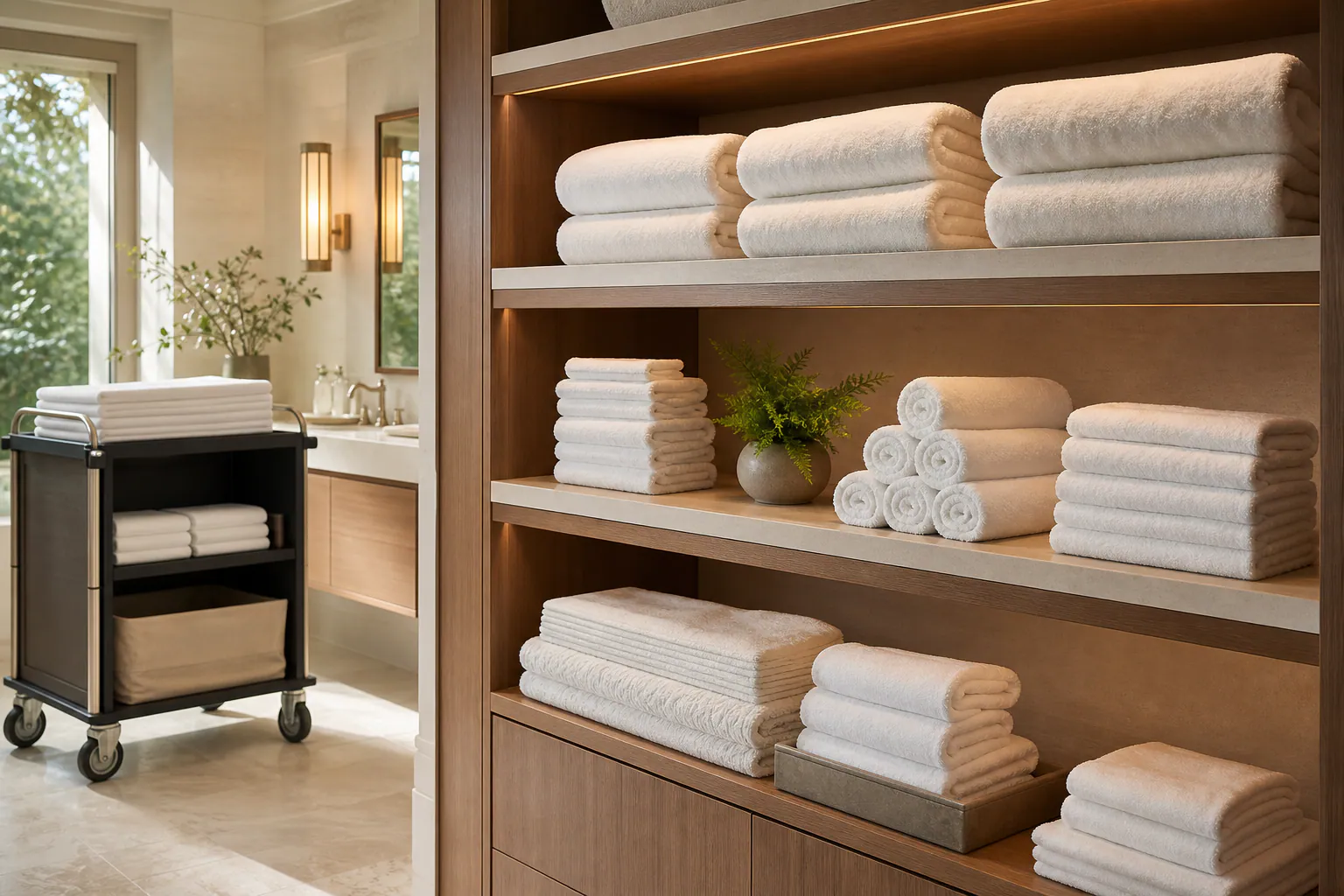
Calculate quantities from maximum simultaneous setups, change frequency, laundry turnaround, stain rejection and reserve. Keep regular restaurant demand separate from event peaks. Packaging and shelf labels should show finished size, shape, color and venue code so similar folded items do not mix.
Maintain an approved shade standard, cared-for sample and current matrix. Track permanent stains, tears, shade variation and size loss by SKU. Reorder decisions should protect usable matching lots for complete rooms rather than adding a visibly different small batch to every event. Review the matrix after furniture changes, new venue layouts or major adjustments to the laundry process.
Approve table linen on measured furniture after stain and care trials. Release a matrix that connects every setup to finished sizes, drop, material, shade, processing route and quantity.