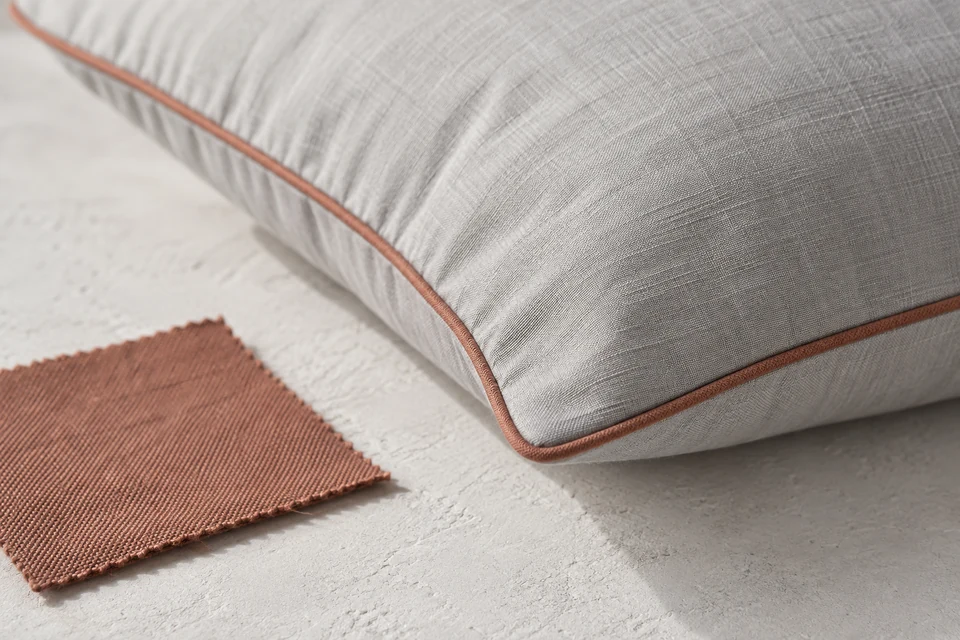
A contrast piping swatch can look acceptable when flat and appear different once wrapped around a cord and sewn beside the bedding fabric. The buyer should review the assembled edge as a design relationship, not simply approve two isolated color chips. This guide addresses the visible piping color, rounded-edge shadow and neighboring fabric combination. It does not replace dimensional piping specifications, seam inspection or a properly scoped instrumental color assessment.
Identify the assembled reference
The edge is a combination of parts
Record the face fabric, piping fabric, cord reference and intended product construction before reviewing appearance. If the sample uses a different cord size or sewing arrangement from the planned order, label it as a design exploration rather than a complete approval. The piping construction guide should control those physical details, while the color review records how the finished combination appears to the buyer.
Keep a flat reference of the piping fabric beside the sewn sample, but do not expect the two views to look identical under every angle. Describe the observation without assuming a dye-lot defect or dismissing a mismatch automatically as shadow. The material-board approval gives the collection context; the assembled sample determines whether the selected materials create the intended visible edge when used together.
- Identify face fabric, piping fabric and cord references.
- State whether the construction matches the planned order.
- Retain both flat and sewn comparison samples.
- Keep collection context linked to the edge review.
Control the viewing arrangement
Avoid comparing unlike surfaces
Place the assembled sample and references under the same agreed lighting and use a recorded background. Observe the piping at the intended viewing distance as well as in detail. A highly magnified photograph can emphasize a shadow or seam variation that is not the buyer's design question, while a distant image may conceal a genuinely distracting contrast. Keep both views and state what each is intended to assess.
Where the project requires several light sources, use the multi-light comparison approach with the actual assembled product. Do not claim that a favorable view under one lamp proves color consistency everywhere. Screen images are useful for locating the area under discussion, but they should not silently replace the agreed physical color reference. Record any remote-review limitations so later participants understand what was and was not approved.
- Use a consistent background and viewing setup.
- Keep normal-distance and detail observations separate.
- Assess agreed light sources with the assembled sample.
- State limitations of photographs and screen review.
Examine corners and changes in direction
One straight edge is incomplete
Review a straight section, a corner and any visible join included in the product. The direction of the edge relative to the light changes around a pillow or duvet cover, so a single straight swatch may not represent the full presentation. Observe whether the contrast remains intentional across those positions and distinguish color appearance from construction irregularity. A badly formed corner should be referred to the construction review rather than solved by changing the color reference alone.
Place the sample in the intended product arrangement, including the correct insert where relevant. The insert-and-cover proportion review addresses the underlying shape. An underfilled cover can present its piping differently from the approved complete pillow, making a color comparison harder to interpret. Keep the insert and presentation condition identified so a later sample is not rejected merely because it was photographed with a different internal shape.
- Inspect straight sections, corners and visible joins.
- Separate color observations from sewing defects.
- Use the intended insert or product assembly.
- Record presentation conditions with each comparison.
Compare alternatives deliberately
Do not change every variable at once
If the edge looks too strong, too weak or inconsistent with the collection, prepare identifiable alternatives that change a defined variable. A different piping shade, a changed face fabric or a revised cord can each affect the result, but changing all three together obscures the decision. Ask the design owner to describe the preferred relationship in practical terms and retain the selected sample rather than relying on an adjective such as premium or subtle.
If the proposed material change affects care compatibility or other specified properties, route those questions to the relevant evidence review. The colorfastness evidence plan is separate from whether the initial color combination is attractive. A visually preferred trim should not enter the purchase order before the team has identified any additional requirements that apply to it. Record those requirements as open gates, not as properties assumed from the sample's appearance.
- Change identifiable variables between alternatives.
- Retain the chosen assembled reference.
- Record the design owner's practical preference.
- Keep care and performance evidence as separate gates.
Freeze the visible-edge approval
Carry the combination into reorders
The final record should identify the approved fabric and piping combination, construction reference, viewing conditions and covered product variants. State whether the decision applies to one sample size or a broader range supported by review. Preserve photographs for identity and communication while keeping the physical reference where required. If the piping material, cord or face fabric changes later, reassess the relevant assumptions rather than carrying forward the old approval by product name alone.
Share the collection board, intended bedding construction and sample-review requirements with FY through the private-label sourcing enquiry. Ask for an assembled-edge discussion rather than an unsupported promise that a flat swatch will look identical in every finished position. The result should be a clear design acceptance with documented limits and outstanding evidence needs. That gives purchasing a reference it can communicate to production without confusing visual preference with proof of performance.
- Identify the full approved material and construction combination.
- State covered sizes and presentation conditions.
- Preserve physical and photographic references appropriately.
- Reopen affected checks after a relevant component change.
Approve contrast piping on the assembled product under agreed viewing conditions, with corners, neighboring fabric and construction identity included in the decision.