A repeat order is an abbreviated approval only when the product and its inputs are demonstrably unchanged. The buyer must compare evidence rather than assume continuity from a style name.
Retrieve the complete approved order record
Begin with the last accepted production, not only its purchase-order number. Collect the released specification, BOM, approved sample, color standard, label and packaging artwork, test reports, inspection findings and any concessions. Confirm which revision actually shipped.
If records disagree, resolve the controlling reference before asking for a repeat quotation. A supplier may have improved or substituted an input during the last order without every buyer file being updated. The reorder is the moment to close that gap.
Compare the current requirement field by field
Reconfirm size and color matrix, quantities, delivery destination, labeling, case pack and commercial terms. Ask whether the product use, sales channel, property equipment or laundry process has changed. A repeat style can have a different risk profile when the destination or care route changes.
Use the SKU quantity guide to expose small variants and inefficient ratios. Mark every intentional difference instead of issuing a clean file that makes changes difficult to see.
Confirm material, trim and source continuity
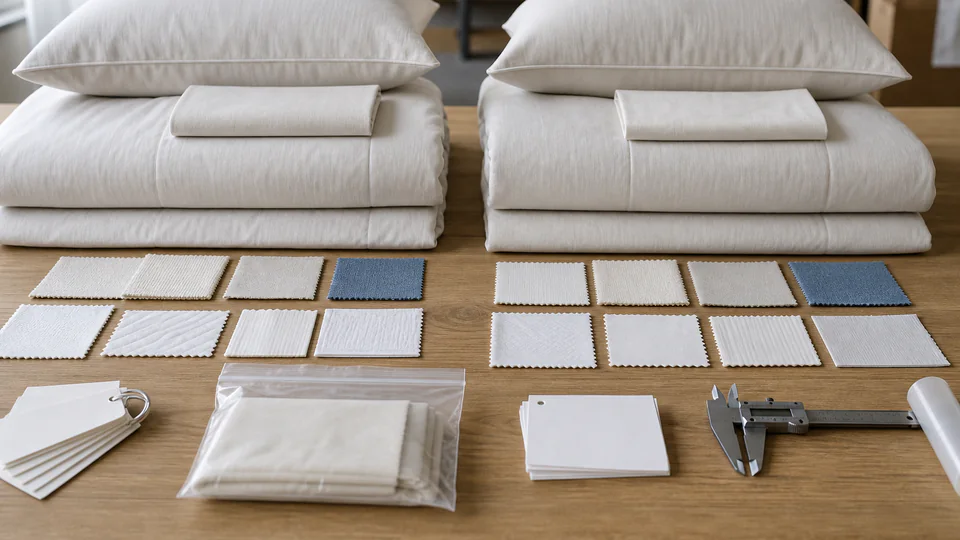
Request confirmation that fabric, yarn, fill, finish, trims, labels and packaging sources remain the same approved references. Review shade or hand continuity where old and new stock will be used together. If an input is discontinued, require a documented alternative and impact review.
Apply the change-control workflow to substitutions. A supplier statement that the new material is equivalent is useful context but does not replace buyer approval against relevant appearance, performance and evidence fields.
Choose validation based on change and elapsed time
Not every reorder needs a full development cycle, but every reorder needs a documented validation decision. Consider changes, time since last production, complaint history, source continuity, current standards and product complexity. The result may range from document confirmation to swatches, a pre-production sample or renewed testing.
State which prior approval remains valid and which field is reopened. If a new color is added to an existing construction, do not automatically reopen dimensions that are unchanged, but do validate color, artwork and any color-dependent performance risk.
Feed history into production and final inspection
Share prior inspection defects, concessions, customer feedback and corrective actions with the new production team. Add known high-risk points to the pre-production review and inspection checklist. Repeat orders should become more controlled, not merely faster.
After shipment, update the master record with the final revision and accepted production reference. Keep old and new samples clearly dated. This creates a reliable baseline for the next replenishment and prevents gradual specification drift.
Compare commercial assumptions as well as product fields. Raw-material minimums, case packs, test validity, freight route and supplier capacity may differ from the original order. Document which previous prices or lead times no longer apply so procurement does not force the team to preserve an outdated promise by changing the product invisibly.
Reconcile the last shipped revision with today's needs, document every change and choose validation proportionate to risk. Archive the new accepted order as the next baseline.