A printed flower becomes a different purchasing component when it must be cut out and placed on a quilt. Broderie perse development therefore starts with usable motifs in the source cloth, not merely metres of an attractive floral print.
Define the cut-printed motif proposal
The source cloth is part of the design system
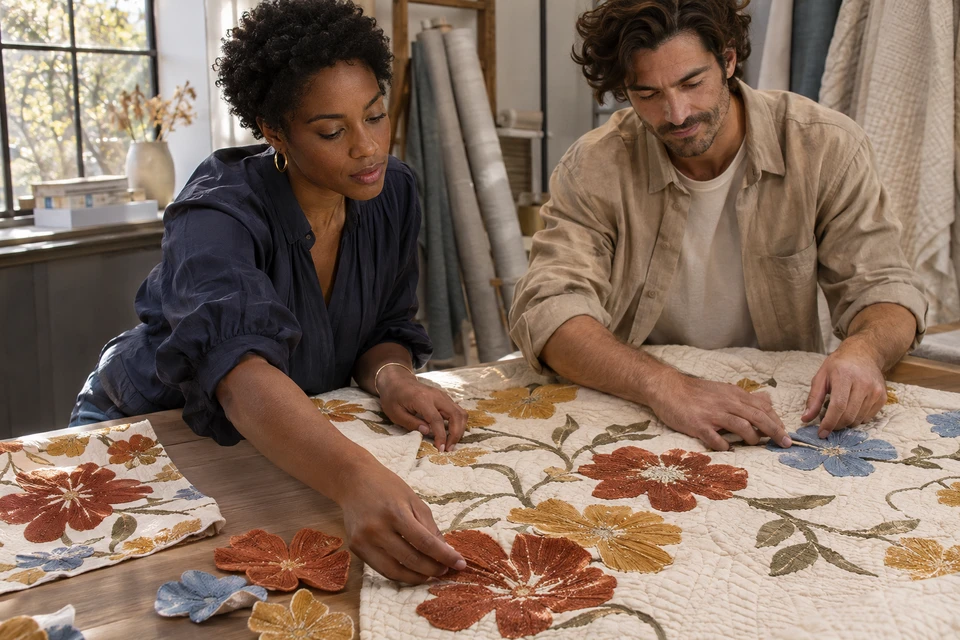
The Metropolitan Museum of Art describes a broderie perse quilt in which floral forms were cut from printed fabric and applied to the ground. That historical example explains the construction idea; it does not establish the material, method or availability of a contemporary FY proposal. Ask the supplier to identify whether the intended flowers will be cut from a printed cloth, printed as separate components, embroidered, or represented by another route. Each proposal needs its own description and sample reference.
Retain the source fabric with the composed sample. A finished quilt alone cannot show which flowers were available, which were omitted or how much surrounding print had to be left unused. Record the print reference, declared material and proposed ground fabric separately. Confirm that the project has the required rights to use the chosen artwork and photographs, without treating a museum example or a collection image as a grant of permission. The buying brief should connect an authorised design direction to an identifiable material proposal.
Build a motif inventory before estimating yield
Count complete usable flowers rather than repeat boxes
Name the components the composition actually needs: a large flower head, a left-facing sprig, a pair of leaves or a small filler bloom. Photograph and number them in the sample record so the buyer and cutter refer to the same shapes. Then inspect a representative length of the proposed source cloth. Count complete motifs with the space needed for the maker's intended cutting and attachment route, not every partial flower visible at the edge of a print repeat.
Ask the maker to distinguish theoretical print-repeat quantity from usable component yield. A motif near a selvedge, an interrupted sprig or a closely neighbouring flower may not be usable in the same way as a fully isolated component. Do not prescribe a universal cutting allowance or waste percentage from a photograph. Request a documented cutting trial on the identified cloth, with retained examples of accepted and unusable pieces. That gives the quotation a defensible project basis instead of an optimistic count inferred from a small swatch.
Assign component roles in the composition
A flower shortage should not silently redesign the quilt
Create a composition map showing which motifs are essential focal elements and which may vary within an approved group. For example, the buyer may require a particular central bloom but allow several small leaf shapes around it. Write that distinction before production quantities are discussed. An instruction to arrange the flowers nicely leaves too much room for unrecorded substitutions when one component becomes scarce. The supplier needs to know which differences are intentional design freedom and which require another approval.
Review the complete proposed layout at finished scale. Count the required components for one article and show their orientation, spacing and relationship to the quilt perimeter. Avoid judging the composition only as a close crop in which a missing corner sprig cannot be seen. If the range contains several sizes, identify whether each size uses the same component set with more space or a different arrangement. The component requirement should follow the approved layout, not a simple area multiplier applied to the smallest quilt.
Resolve attachment after the inventory is understood
A component is usable only in its intended construction
The shape selected for cutting must work with the maker's proposed attachment route. Ask for a worked sample that includes narrow stems, inward curves and any small detached pieces important to the design. Review how much surrounding print remains visible and how the component meets the ground. Keep this construction approval distinct from the inventory calculation: a flower may be available in the print yet unsuitable for the agreed finished edge or level of detail. A cutting trial is not full approval of the completed quilt.
Record which component shapes were changed during development and update their inventory references. If a narrow stem is omitted or a flower is simplified, the buyer should accept that visual change explicitly. Do not let a revised attachment method quietly alter the composition after the fabric quantity has been estimated. Ask the responsible technical team to determine the suitable construction and care evidence. This article supplies a purchasing method, not a universal appliqué recipe, seam specification or promise of resistance to laundering and handling.
Connect colourways to their own component counts
Similar prints can yield different arrangements
Do not assume that another colourway provides an identical set of usable motifs. Confirm the actual repeat, scale and available fabric reference for each proposed option. Review whether the ground colour changes the visible outline of cut flowers or exposes more of the source fabric around them. Keep the approved colourway and component photographs together. A digital recolouring of the first layout can help a discussion, but it does not prove what can be cut from the physical material offered for the second.
For ordering, ask the supplier to reconcile the number of finished articles with the required component sets and the proposed source-fabric quantity. Identify any reserve or contingency as a supplier proposal to be reviewed, not a percentage borrowed from another project. If the source print changes or becomes unavailable, request a new inventory and composition review. A replacement floral cloth that looks similar in a catalogue may contain fewer focal blooms or different facing directions, changing both the visual result and the purchasing calculation.
Keep the approved layout and fabric together
Give receiving teams a composition they can recognise
The release reference should include the source-cloth identity, component inventory, complete layout, permitted variations and accepted worked sample. A receiving reviewer should be able to distinguish an approved alternate leaf from an unintended missing flower. Use a few clear full-layout photographs and selected detail views rather than an unstructured folder of attractive images. Keep any agreed variation tied to named areas. This makes the design understandable without requiring every reviewer to reconstruct the original creative discussion. Use the FR-01 floral direction to discuss botanical composition only; it does not identify a broderie perse construction or an authorised cutting plan.
Share the intended floral direction, finished sizes, source-cloth proposal and quantities with FY Bedding for a scoped development enquiry. Ask for feasibility, sample stages, minimum quantities and supply assumptions against the actual component plan. The existing floral collection can help communicate a botanical mood, but it should not be treated as proof that a displayed item uses broderie perse or that its fabric is available for cutting. Confirm the route and material evidence separately before describing or ordering the finished range.
Count usable authorised print components, assign them to an approved full-size composition and reconcile those requirements with the source cloth. Keep any permitted substitutions explicit so cutting yield does not become an unplanned redesign.
Method references: The Metropolitan Museum of Art: a cut-printed-floral quilt example.