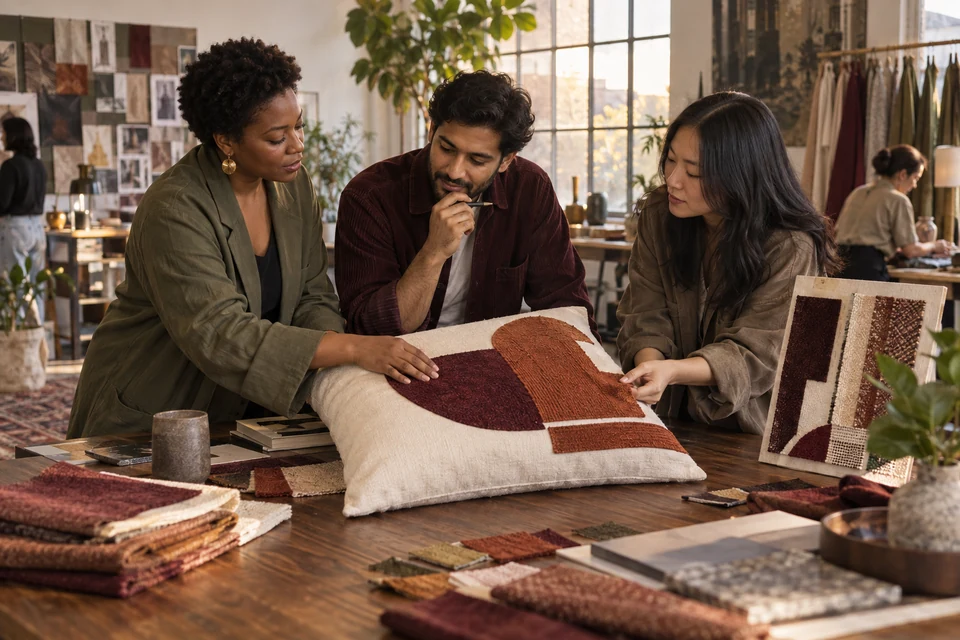
Appliqué gives a cushion design a physical layer that a flat image alone cannot communicate. That makes it an interesting direction for a private-label range, but also makes a digital artwork approval incomplete. The buyer must choose how the fabric shapes meet the background, how the edges should look and what happens when the cover is filled and handled. A compelling motif is the beginning of the brief, not the finished construction.
Choose a layered design for a reason
Compare the effect with print and thread-only decoration
Begin with the visual role of the cushion in the collection. Is the motif meant to be a quiet tonal relief, a contrasting graphic shape or a deliberately irregular textile detail? Request enough background around the design to judge its scale. A close photograph can make a small detail appear dominant or hide a motif that becomes weak when viewed across a sofa.
Ask the supplier to distinguish the proposed applied fabric pieces from a printed imitation or thread-only embroidery. Brother's appliqué explanation illustrates one folded-edge fabric-piece approach. It is an example of a construction method, not a universal specification for every decorative cushion or an instruction to copy machine settings.
Keep ownership of the design files clear. Provide original or authorized artwork and identify which shapes, colors and proportions are essential. The embroidery artwork guide has useful source-file controls, but appliqué also needs a fabric-piece map. A thread color list alone does not identify the decorative materials.
Decide whether the edge should disappear or be visible
Design intention changes the acceptance question
Compare the offered edge treatments on the actual materials. A neatly enclosed or covered edge may support a crisp graphic; a deliberately exposed edge may be part of another design language. Do not call every loose fiber intentional character, or every visible fiber a defect. Have the design and technical owners agree what the finished boundary should look like and which observations require review.
Include tight curves, narrow points and places where fabric pieces overlap in the sample request. These areas can look very different from an easy straight edge. Observe the contour without pressing or stretching it into shape just before review. Record the material identity, attachment proposal and any preparation used, so a revised sample can be compared with the same visual intention.
The technical pack should show motif position, piece sequence where relevant and the boundaries that matter most. Leave production technique to the competent maker, but require an understandable finished result. Asking for a more premium edge without a reference simply sends the decision back to the sample room.
- Identify enclosed, covered or intentionally exposed boundaries.
- Include difficult curves and overlapping pieces.
- Separate intentional texture from uncontrolled departures.
Review the cushion as an object, not only a flat panel
The insert and everyday contact reveal another view
Put the production-intent cover on the identified insert and review it in the intended display position. Check whether the motif remains where the buyer expects, whether layered areas stand away from the background and how the shape looks from the side. Use the insert-to-cover review to keep the underlying fit consistent while comparing decorative versions.
Handle the cushion in the ordinary way expected for the product. Observe accessible edges and raised points that might catch adjoining textiles or feel conspicuous at contact areas. Describe what happened and where; do not convert a hand review into a safety or durability certification. The surface-damage guide can help frame a further assessment if the intended use calls for one.
Inspect the inside as well. Record any backing, stitching or retained layer that is part of the proposed assembly, and compare it with the supplier's stated finish. The separate reverse-side finishing guide is relevant when embroidery or stabilizing materials are involved. Do not instruct staff to remove a layer merely because it looks untidy in an isolated photograph.
Keep the post-care design in the decision
Several materials need one coherent finished appearance
Agree the intended care route for the whole cover before reviewing a processed sample. Keep the body fabric, appliqué materials, threads and any backing identities together. After the relevant preparation, compare the motif's contour, local puckering, lifted areas and color relationship with the starting reference. Measure the cover separately so a decorative appearance decision does not conceal a size change.
If a design relies on intentionally irregular edges, specify how its accepted post-care appearance will be judged. A reference can allow variation without leaving inspection entirely subjective. Use overall and close views in the sample record, stating which version was reviewed. Avoid replacing a material, changing the attachment and altering the care route simultaneously unless the entire new assembly is being treated as another candidate.
- Review overall dimensions and motif appearance separately.
- Record the same material combination before and after care.
- Escalate unexplained changes rather than restyling the sample.
Turn the design into a realistic range
Complexity should serve the collection
Ask the supplier to explain which decisions drive sample work and minimums: the number of fabric pieces, material and color availability, placement variation, cover size and chosen attachment route. Separate an artwork revision from a new material trial in the quote. The MOQ planning guide supports that discussion without pretending every additional shape has a fixed surcharge.
Compare a focused first assortment with a larger range before committing. Two visually distinct motifs may share background fabric, while a minor color change could require a separately sourced appliqué material. Ask what can genuinely be shared and what cannot. Keep any supplier proposal conditional until the offered construction and material quantities have been confirmed, rather than announcing unverified capabilities to customers.
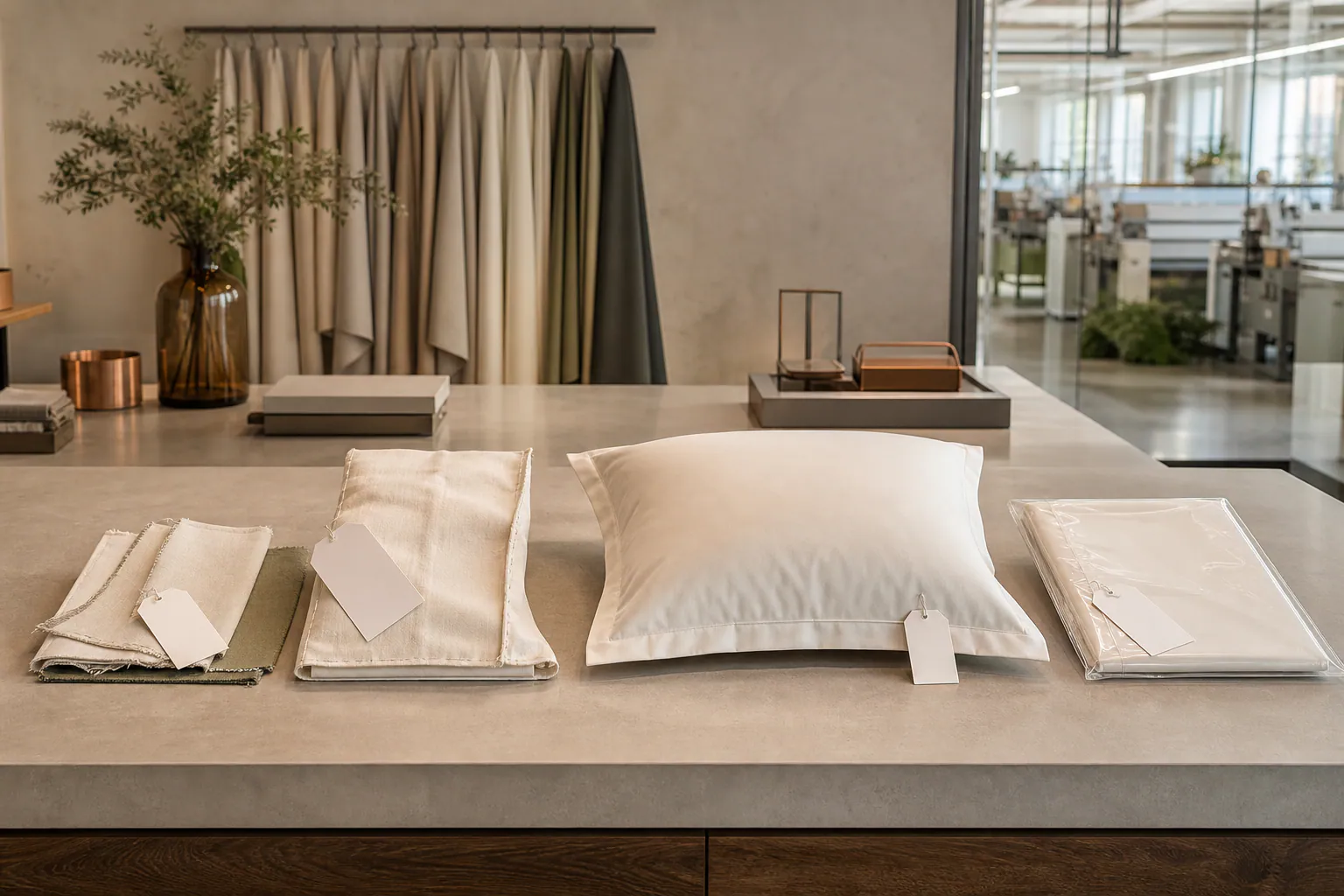
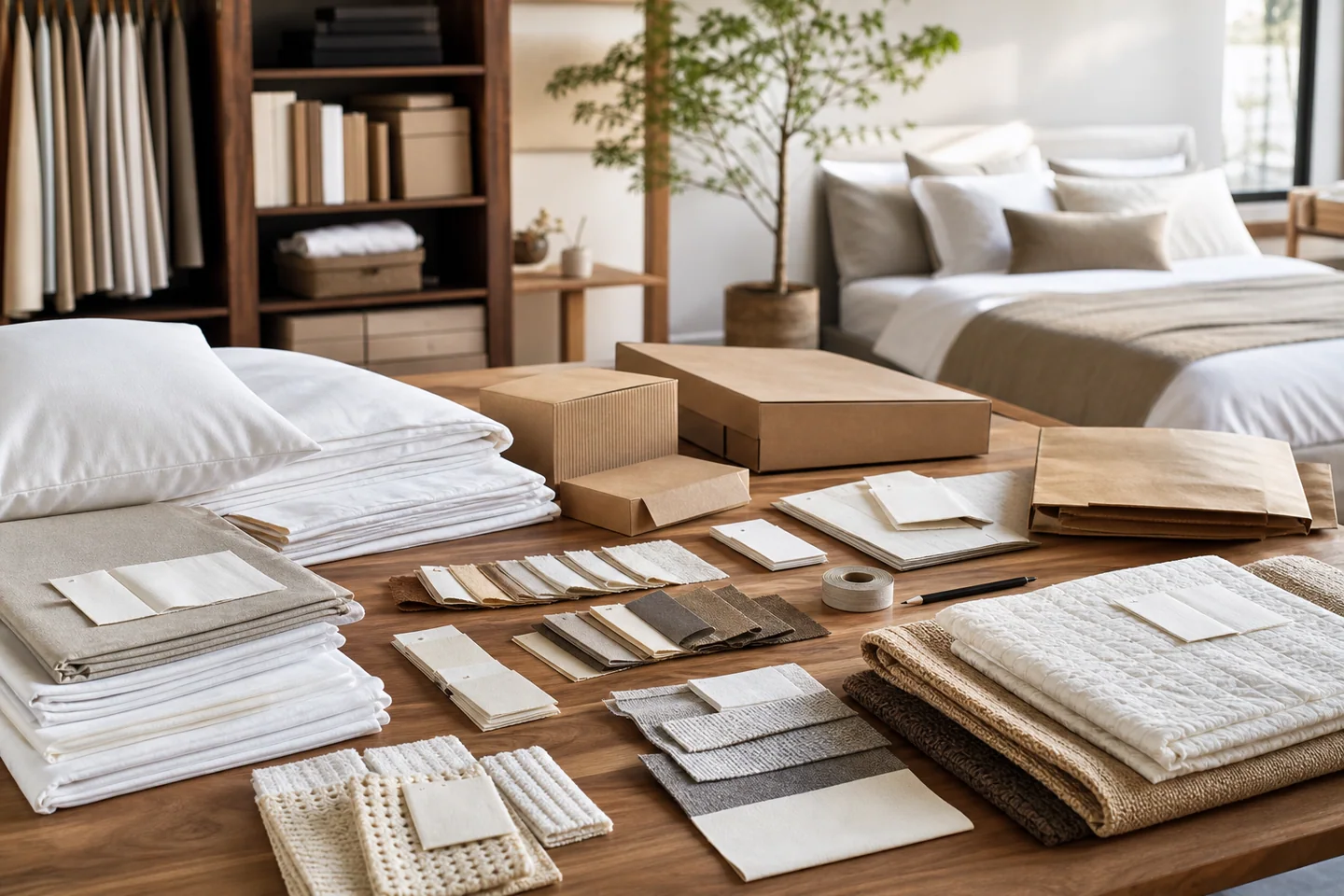
Approve a folded or filled retail presentation using the actual sample. Check whether the pack hides the motif, presses a raised piece awkwardly or needs unpacking instructions to reproduce the display. When requesting development samples, send the authorized artwork, intended contact use, cover-and-insert relationship and care expectation. The resulting brief gives a sourcing discussion a clear design goal and an honest basis for comparing alternatives.
Choose the appliqué cushion only after the motif, fabric-piece edges, filled appearance, reverse finish and agreed post-care state describe the same reproducible product.
Method references: Brother official support: one folded-edge appliqué example; not a universal industrial cushion specification.