There is no useful universal minimum order for private label bedding. The workable quantity is created by several linked minimums: fabric production, dye or print lot, special components, filling, packaging, line efficiency and the number of sizes or colors sharing those inputs. Buyers can improve both price and flexibility by exposing that structure.
Separate factory MOQ from material minimums
Ask the supplier to distinguish the finished-product minimum from greige fabric, dyed or printed fabric, yarn, fill, zipper, elastic, label and packaging minimums. Some inputs can serve several sizes, while others are committed to one color or construction. A headline of five hundred sets is incomplete if it leaves a large unused fabric balance.
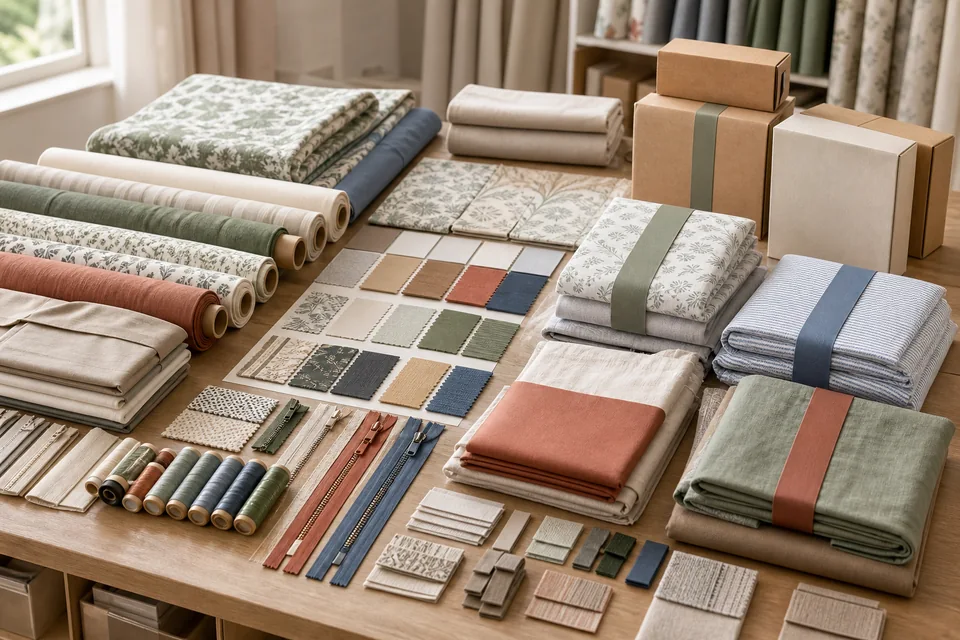
Map every input in the bedding bill of materials and record its purchase unit, conversion loss and ownership. Clarify whether excess material is included in price, held for reorders, invoiced separately or discarded. The answer changes cash exposure even when the finished-unit MOQ looks identical.
Model the SKU mix before asking for a price
Provide units by product, size, color and pack format, not only a total program quantity. Cutting yield, labeling, packing and carton configuration differ by SKU. Ten colors at one hundred pieces each are rarely equivalent to one color at one thousand, because each color creates material and changeover commitments.
Use the SKU and color quantity planning method to group common materials and identify slow variants. A core color may carry the custom fabric minimum while smaller sizes share it, but only if consumption and demand support the split. Avoid launching variants that cannot reach a sustainable reorder level.
Identify the cost drivers that change with specification
Fabric construction, finished weight, usable width, finish, print method, fill type, stitch density, quilting pattern, closure and tolerance all affect consumption or processing. Cost also changes with inspection level, testing, compressed packing, retail presentation and destination labeling. Ask which assumptions were used instead of comparing one unexplained price per set.
A wider fabric may reduce seams but create a higher weaving minimum. A custom zipper color may cost little per piece yet require an oversized purchase. Review component decisions with the zipper component approval guide, and request alternates that preserve function when a custom detail creates disproportionate inventory.
Budget one-time and recurring program costs
Separate sample development, pattern work, print screens or cylinders, testing, packaging artwork setup, barcode administration and inspection from recurring production cost. State which fees are refundable or credited and under what volume. This prevents a low unit quote from hiding the actual investment required to make the product sale-ready.
Development choices also affect timing. Follow the lead-time critical path to see when a payment, artwork approval or test result releases the next expense. Buyers should approve costs at gates, especially before suppliers purchase custom material that cannot be used for another program.
Negotiate options without weakening product control
To lower launch exposure, consider stock or shared base fabric, fewer opening colors, common labels, standard carton footprints or staged call-offs from one material lot. Ask for price and MOQ scenarios with the changed assumption highlighted. Do not reduce quantity by silently accepting a different fiber, weight or finish from the approved sample.
Preserve the chosen scenario in a specification and confirm reorder rules through the reorder control guide. Include remaining custom stock, storage term, ownership and expiry risk in each review. A good MOQ agreement supports repeatable supply; it does not merely make the first purchase order possible.
Break MOQ into its material, process, component and SKU constraints. Compare cost scenarios using the same released specification and make all excess-material obligations visible.