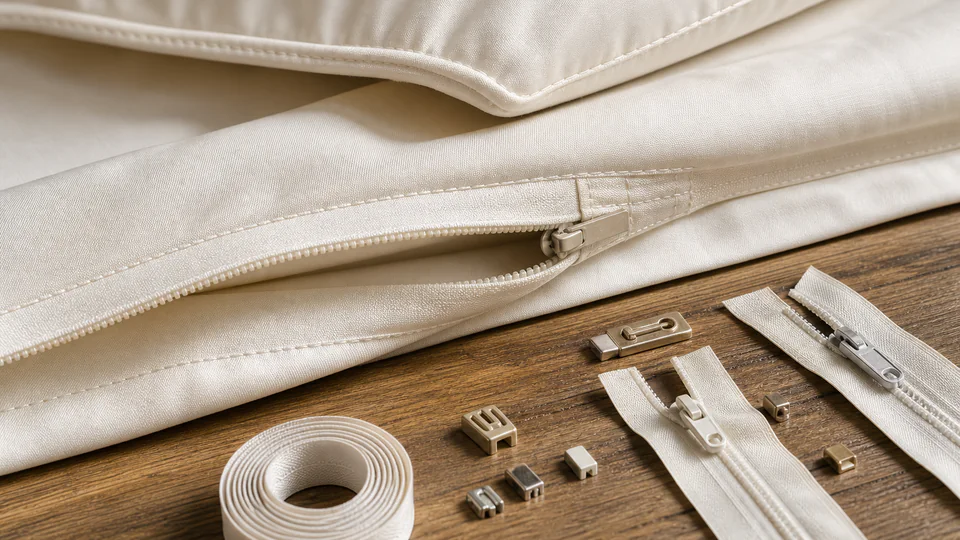
A zipper is a small part with an outsized effect on bedding complaints. Chain behavior, slider, puller, tape, stops and sewing must work together through filling, guest use and repeated care. Component approval should therefore cover the identified zipper and its installation in the final product.
Define the complete zipper assembly
State zipper type, chain size, tooth or coil material, tape composition, color, slider type, puller shape, end stops, nominal length and supplier reference. Clarify open-end or closed-end construction and whether the zipper is one-way or reversible. Photographs help, but dimensions and named components should control production.
Include the zipper in the bedding bill of materials. If the chain is cut to length at the factory, define measurement points and stop formation. A change to only the slider or tape can alter strength, shade or laundering behavior.
Assess user contact and access requirements
Choose placement around how the duvet insert, pillow fill or protector is installed and removed. Check whether the puller, slider or stops can contact the guest, mattress or adjacent textile. Concealed garages, protective flaps and inward orientation may reduce exposure but must remain easy for staff to operate.
Evaluate opening length and direction with the actual insert. A shorter opening may improve appearance but increase handling force and seam stress. Record the approved filling sequence so the factory and end user assess the same operating condition.
Specify sewing, reinforcement and end treatment
Define seam type, stitch density, tape allowance, topstitching, alignment and reinforcement at both ends. Check that the needle has not damaged the coil or teeth and that fabric cannot catch in the slider. Set limits for waviness, puckering, exposed tape and mismatch at joined panels.
Reference the bedding seam standard while giving zipper-specific drawings. Test operation with the product filled, not only flat on an inspection table. Repeated opening should not loosen reinforcement or pull the end stop through the seam.
Validate operating force and care durability
Agree checks for opening and closing, crosswise strength, puller retention, stop security and repeated cycling appropriate to the product risk. Run the finished item through its intended laundering and drying route, then inspect tape shrinkage, corrosion, shade, deformation and slider operation.
Compare performance at seams and corners where fabric load is highest. If the product is ironed or pressed, verify heat exposure near the zipper. Add destination-specific chemical or safety requirements to the product testing plan before sample approval.
Control color, incoming lots and substitutions
Approve tape and visible component color against the finished textile under agreed lighting. Incoming inspection should confirm supplier, type, size, length, appearance and operation. Retain labeled zipper and finished-product samples for launch lots and important programs.
Require written approval before changing the zipper supplier, component material, slider or manufacturing location. Use the change-control workflow to decide which operating, strength and care checks need repeating. An unavailable component should trigger a documented alternate approval, not an unrecorded line-side substitution.
Approve the identified zipper after repeated operation and care inside the filled product. The bill of materials must control chain, tape, slider, puller, stops, length and supplier.