The reverse of an embroidered bedding item needs its own finished-product review. Buyers may approve the visible motif while overlooking backing remnants, loose fragments or the contact condition on the opposite side. The question is not whether all backing should disappear: the appropriate finished construction depends on the identified materials and technical design. This guide helps buyers record that construction and assess the submitted result without prescribing improvised trimming, chemical removal or unsupported claims about comfort, durability or safety.
Identify the intended reverse construction
Ask what should remain after finishing
Request the embroidery supplier's proposed finished construction, including the backing reference and any retained layer that forms part of the approved design. Record the embroidery location, base textile and which side will be accessible in use. The embroidery artwork approval should remain separate: correct motif size and placement do not establish that the reverse has been finished to the agreed condition. A buyer needs both records to release the complete item.
Ask the competent embroidery team to explain the backing's intended role and the finished result it proposes for this textile. Do not infer a removal method from color, stiffness or the way a sample tears by hand. Enter the approved material and construction in the bill of materials, with the relevant supplier information attached. If the proposal changes between sampling and production, keep that change visible even when the front of the embroidery appears identical.
- Identify backing and base textile references.
- Record which reverse areas remain accessible.
- Separate artwork approval from finishing approval.
- Request the intended finished construction explicitly.
Review a complete production-intent sample
Do not approve an isolated decorative swatch alone
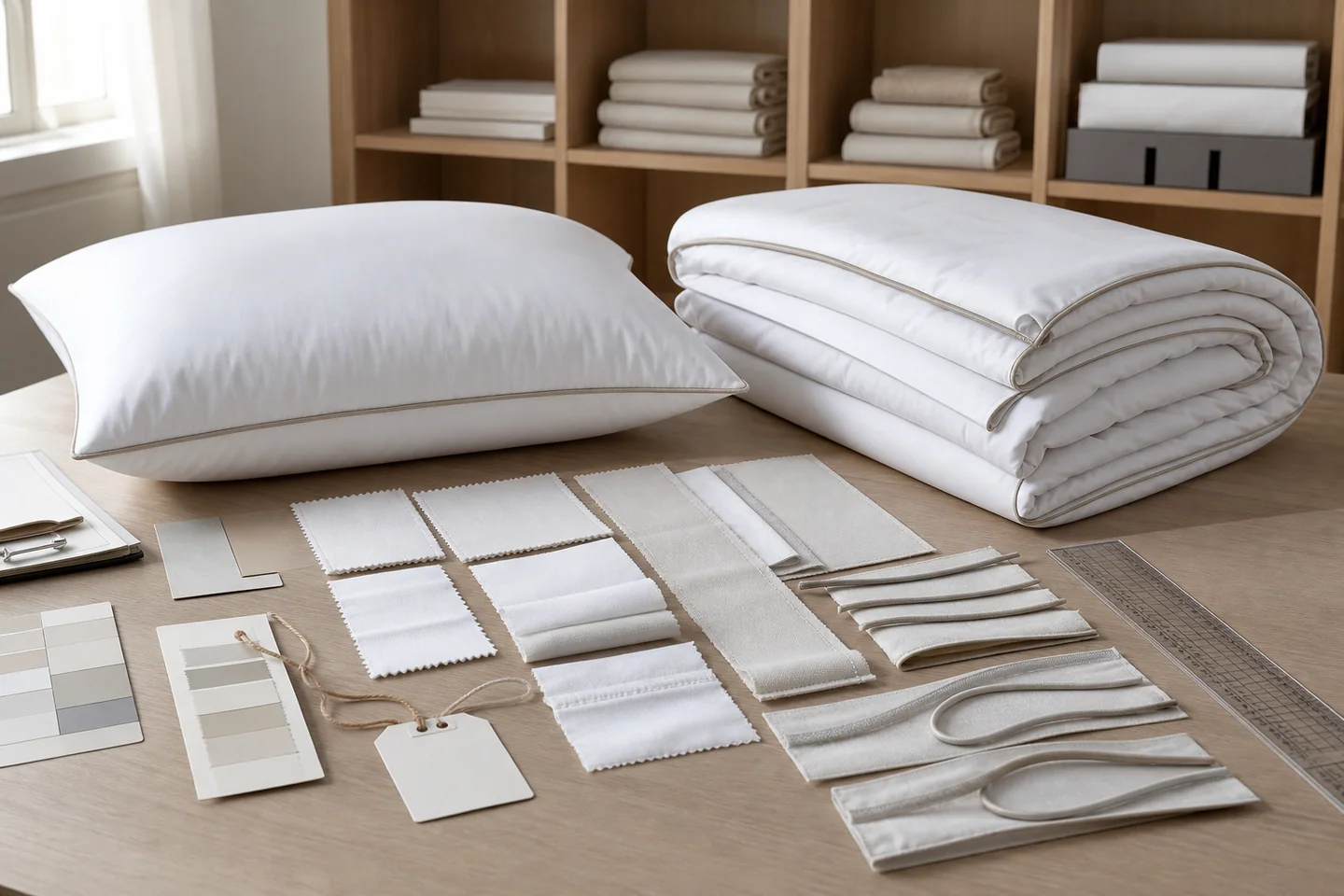
Use a sample made with the proposed textile, embroidery and finishing sequence, and identify any departures from routine production. A decorative swatch may help select a motif but can omit seams, linings or contact relationships present in the final pillowcase, cover or towel. The technical pack should show the reverse condition in the assembled item, including any area concealed during one handling state but accessible during another.
Compare the submitted sample with the supplier's stated finished construction under consistent viewing conditions. Record retained backing, irregular protrusions, loose fragments and adjacent textile condition as separate observations. Avoid assuming that every visible remnant is a defect or that a completely bare reverse is automatically correct. The acceptance decision should reference the approved design and the project's requirements, with unresolved technical questions returned to the responsible team before production authorization.
- Use the actual textile and assembly.
- Record non-production sample steps.
- Photograph the reverse in relevant handling states.
- Judge observations against an identified reference.
Examine contact and loose material
Keep tactile observations within their real scope
Review the areas that can contact the user, other textiles or packaging during the intended route. Record the location and nature of any accessible edge, bulk or loose material without converting one reviewer's impression into a universal comfort or safety claim. Where contact could affect an adjoining textile, the surface-contact assessment offers a separate way to frame the question. It does not replace a technical evaluation appropriate to the finished product.
If loose fragments are found, preserve their relationship to the identified sample and ask the production team for a controlled correction proposal. Procurement should not instruct staff to scrape, heat or chemically treat the reverse based on a photograph. A correction can change the neighboring textile or embroidery condition, so the revised sample needs review as an assembly. Retain the original finding and the proposed action together rather than accepting a cleaner-looking replacement without explanation.
- Identify actual contact areas.
- Describe accessible edges and loose fragments.
- Avoid universal claims from tactile impressions.
- Review corrections on the complete assembly.
Assess the agreed post-care condition
Link appearance changes to the evidence plan
Where the item has an intended care route, include the reverse construction in the project's agreed assessment. Record the sample identity, relevant procedure and observed changes rather than prescribing a universal cycle count or removal expectation. The finished-product testing plan should distinguish the backing-related observations from embroidery appearance, dimensional change and other requirements. A reverse that looks acceptable before care does not independently approve the complete product afterward.
If the supplier proposes a different backing or finish to address a finding, identify which evidence must be repeated and who will authorize the change. A similar front appearance cannot establish equivalent reverse contact or post-care condition. Keep the earlier reference available so that the reviewer can explain the decision. Where the evidence does not answer the buyer's requirement, record the limitation and the next assessment needed instead of describing the sample as generally tested or compliant.
- Include the reverse in the agreed care review.
- Record the procedure and sample identity.
- Separate backing observations from other results.
- Reassess relevant evidence after material changes.
Release an observable finishing standard
Give inspection a clear decision boundary
Define the finished condition using the accepted reference, photographs and checkable fields such as retained-layer position, accessible loose material and conformity of the surrounding textile. Keep any technical test requirements separately identified. The inspection checklist should state when an observation requires a hold or technical review rather than letting staff improvise a trimming instruction. Production personnel need a repeatable finishing standard, while inspectors need a clear boundary for accepting or escalating the result.
For a new embroidery enquiry, provide the base textile, motif location, intended contact side and care requirements with the sample request. Ask the sourcing team to submit the proposed reverse construction alongside the front artwork, including the backing reference and unresolved questions. At reorder, reconcile those records before allowing a substitution. This keeps a small finishing detail connected to the buyer's actual product needs and prevents a visually attractive motif from concealing an unapproved reverse-side condition.
- Release front and reverse references together.
- Define observable inspection fields.
- Escalate findings instead of improvising repairs.
- Control backing and finishing substitutions.
Approve the intended embroidery reverse on a production-intent assembly, with explicit backing identification and scoped contact and post-care evidence; neither total removal nor visible retention is universally correct.