A gingerbread figure garland is read as a sequence, not as a collection of unrelated small ornaments. Figure shape, attachment position and the space between bodies determine whether that sequence looks deliberate when it hangs. The purchase specification should distinguish the overall tape length from the decorated span and should show how each figure is connected. This guide addresses decorative textile garlands, not edible products, toys or a claim that an installation is suitable for every location.
Resolve the small figure before repeating it
Keep the neck, arms and legs readable after sewing
Review a finished figure at the intended size, with the proposed edge finish and any filling already present. The narrow neck and the gaps between the limbs deserve particular attention because a flat drawing does not show what turning or stuffing will do to those spaces. Ask for a simpler outline if the finished figure no longer resembles the approved shape without being pulled into position by hand.
Identify decorative details separately from construction. A stitched smile, embroidered buttons and an applied fabric patch are different components, even if they look similar in an image. Decide which details will be offered and which are only development options. Keep a face-on photograph and a reverse photograph of the selected figure so the approval covers both the design and the way its edges and attachments are finished.
- Approve the completed silhouette at actual size.
- Include any fill, backing and applied details in the component list.
Draw the entire decorated span
Do not calculate finished appearance from figure count alone
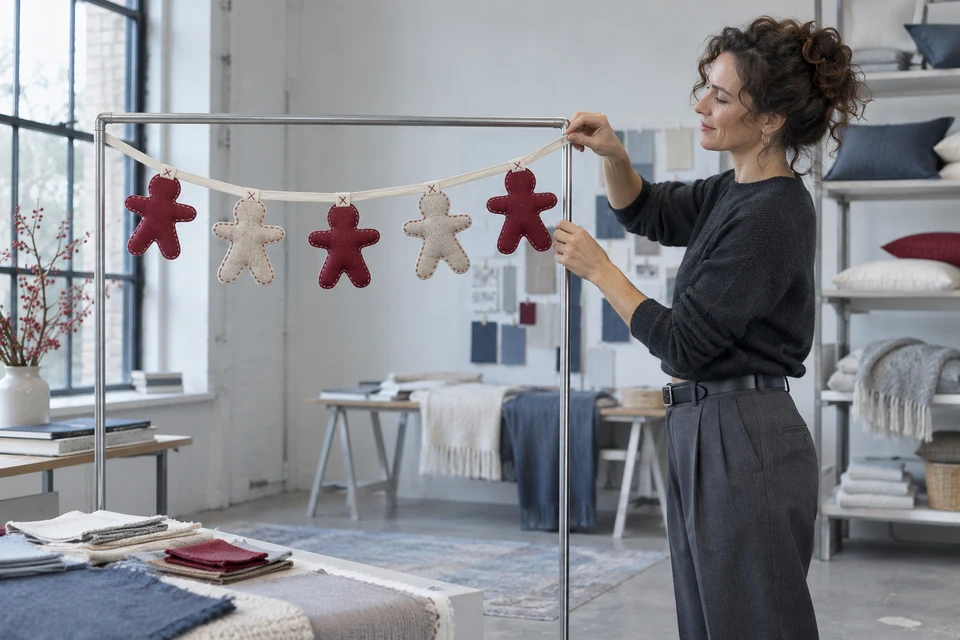
Lay out the sequence with the center of each figure marked along the support tape. Record the intended gaps between adjacent bodies, the end allowances and the overall length. If the colors alternate, show the first and last figure explicitly; a five-piece set and a six-piece set do not produce the same end-color relationship. Agree whether the garland is supplied as one fixed sequence or as separate components for the buyer to arrange.
Review the sequence both laid flat and suspended across the intended span. A shallow arc can bring raised arms closer together than they appeared on the cutting table. The buyer should decide whether that contact is acceptable or whether the spacing needs adjustment. For several retail lengths, prepare a sequence for each rather than asking production to remove a figure wherever convenient.
- Separate tape length, decorated length and installation span.
- Record color order and end allowances for every offered length.
Choose the attachment arrangement deliberately
A single tab and paired connections create different presentations
Ask the supplier to show the proposed attachment: a single tab above the head, two points near the shoulders or another documented method. Review how the figure turns and tilts on that arrangement. A single central tab may suit a freely moving decoration, while a buyer seeking consistently forward-facing figures may request a different proposal. Choose from real samples instead of assuming that more attachment points automatically solve every display issue.
Inspect the attachment on the reverse and along the tape. Note whether the figure pulls the tape into a sharp crease, whether the tab obscures the head and whether stitches are consistent between figures. Any additional fastening component should be declared and included in the appropriate product review. Do not label the assembly safe for children or suitable for overhead installation solely because the sewing looks neat.
- Photograph one complete connection from both faces.
- Approve the hanging behavior of the whole garland, not one isolated figure.
Protect the sequence during packing
Keep limbs and connecting tape from folding into unwanted positions
Agree a retail packing arrangement that allows the figures to be removed without pulling on their limbs. Show the tape path and the order in which the buyer unfolds the garland. If individual figures are folded over each other, compare the first, middle and last figures after unpacking. A repeated crease through a face or arm may be a packing problem rather than a defect in the original sewing.
For store assortments, keep different lengths and color sequences identifiable on the outer pack. Count completed garlands separately from the number of figures they contain. Record the proposed packing materials and any separation needed to prevent applied decorations from pressing against neighboring cloth. Review a packed sample before the carton plan is fixed, so a shape-preserving pack is not treated as an unexpected late addition.
- Check that the supplied pack count means complete garlands.
- Retain a packed approval sample as well as a displayed sample.
Use the Christmas brief to control variants
Confirm artwork rights, minimums and delivery milestones separately
Create a variant sheet covering figure outline, finished size, color order, attachment method and pack format. Request the supplier's minimums for each proposed combination and identify any shared components. A common support tape does not establish that every color sequence has the same production economics. If a licensed or buyer-supplied gingerbread design is used, keep its permitted use linked to the exact artwork revision being developed.
Before placing an order, reconcile the sample sign-off date with production and freight planning rather than promising a seasonal arrival from a concept image. Send FY Bedding the sequence map and quantity split for a scoped sample discussion. The final release should identify one approved figure, one complete garland and one retail pack for each construction family; unresolved variants should remain outside the confirmed order.
- Make the order unit and the number of figures per unit unambiguous.
- Keep unapproved artwork or alternate color sequences out of the final pack images.
A release-ready gingerbread garland has an approved actual-size figure, a complete sequence map, a documented hanging arrangement and a tested pack layout. Count and inspect complete garlands, not merely piles of finished figures.