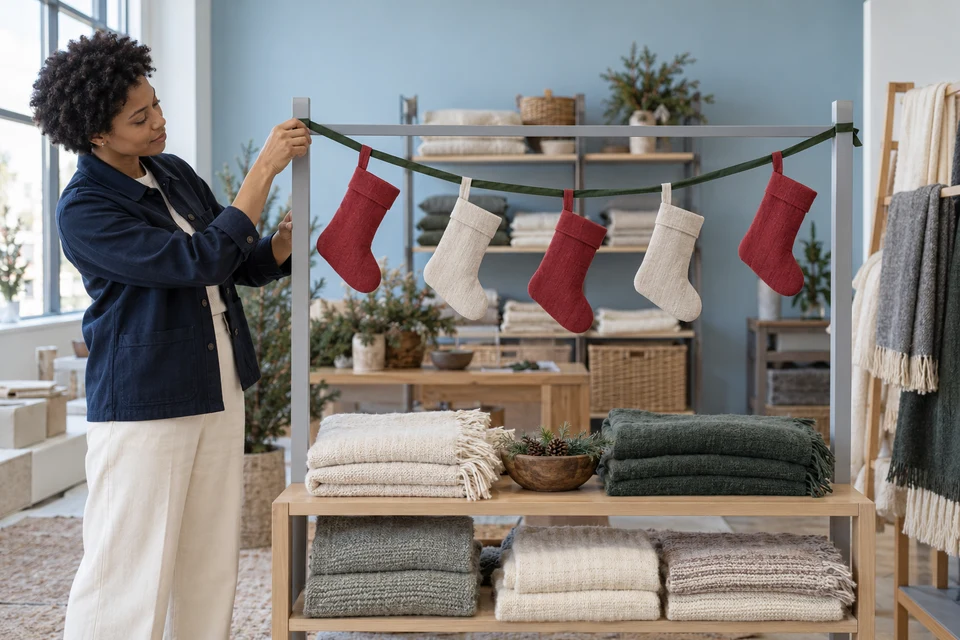
A row of miniature stockings is not the same product as a set of full-size gift stockings. The buying decision centers on the completed garland: sequence, spacing, orientation and the shape of the supporting tape across the intended display span. Define whether the tiny stockings are decorative shapes or intended to hold anything. Do not assume usable pocket capacity simply because their outline resembles a gift stocking.
Specify the finished sequence as one product
Count stockings independently from overall length
List the number of miniature stockings and their color or motif order from one named end of the tape to the other. Show the direction in which the toes face and whether that direction changes intentionally. An assortment of loose stockings and a completed garland can use identical pieces but require different purchase descriptions, inspection checks and packaging instructions.
Use the assortment control process to keep color sequences distinct when several variants share a shipment. State whether the quoted length includes the free tying ends. Photograph the complete flat garland with all pieces visible so the count can be checked without interpreting overlaps in a styled room image.
- Define piece count, toe direction and color order.
- Separate decorated span from total tape length including end ties.
Set spacing from repeatable reference points
The hanging curve changes the apparent gaps
Choose a consistent point on each stocking attachment from which spacing will be measured. Record the flat tape positions first, then hang the garland across the proposed span and observe how the gaps appear. The central curve may bring some pieces closer together visually, especially if the stockings rotate. Do not correct that effect by moving attachments during installation unless adjustment is part of the approved design.
The technical pack should include both flat spacing and the intended hanging arrangement. Identify the two support positions and the available height below the tape. A single nominal overall length does not establish the right display fit on every shelf, frame or window arrangement.
- Measure flat attachment positions using one agreed reference.
- Approve the hanging curve at the intended support span.
Review the attachment and the reverse face
A garland can turn during ordinary display
Ask how each stocking connects to the tape: a separate loop, a sewn tab or another agreed construction. Inspect the attachment area and the reverse finish on every position in the sample. Check whether the stocking hangs with its intended face forward and whether the attachment allows unwanted twisting. A front-only photograph cannot show thread tails, unfinished backs or inconsistent loop placement.
The seam inspection guide supports a written attachment reference. Keep decorative positioning separate from any load claim. If the buyer wants the mini stockings to hold items, define those items and obtain a suitable construction and evaluation plan; do not infer capacity from the appearance of an empty miniature pocket.
- Approve the reverse face and attachment method.
- State decorative-only or separately defined pocket use explicitly.
Trial the display without unsafe improvisation
Support and clearance belong in the installation brief
Use the actual proposed display support and an accessible sample setup to review the garland. Record the clearance from merchandise and the route used to secure each end. The textile supplier should not be expected to approve an unknown wall, shelf or fixture simply by supplying a tie. Have the responsible display team confirm the installation arrangement and any location-specific requirements.
The retail display control guide helps keep the trial organized. Avoid showing the textile over flames or other unsuitable heat sources merely because a fireplace is a familiar Christmas scene. This article offers no universal mounting or fire-safety approval. Use a defined non-heated display context unless a different setup has been properly reviewed.
- Document the support arrangement and merchandise clearance.
- Do not add unreviewed fastenings to rescue an unsuitable display span.
Pack the sequence so it can be checked at opening
Prevent knots from becoming an installation task
Try a packing arrangement that keeps the tape route understandable and allows the full sequence to be counted without pulling the stockings through a knot. Open the proposed pack as a new store employee would. Check whether the free ends can be distinguished from the decorated span and whether creases or compressed cuffs change the presentation. Include a simple assembly reference that matches the supplied variant.
The pack-out inspection workflow can verify counts, sequence and variant identification before release. Confirm minimums for the chosen stocking fabrics, tape and decoration. A shared fabric may reduce complexity across a collection, but it does not establish a delivery commitment. Agree sampling, production and dispatch milestones before announcing holiday availability.
- Count the complete sequence immediately after unpacking.
- Match each pack reference to its precise color and spacing variant.
Provide FY Bedding with the desired stocking sequence, display span and intended decorative or pocket use. Request one complete garland with its proposed pack and installation reference before confirming the seasonal order.