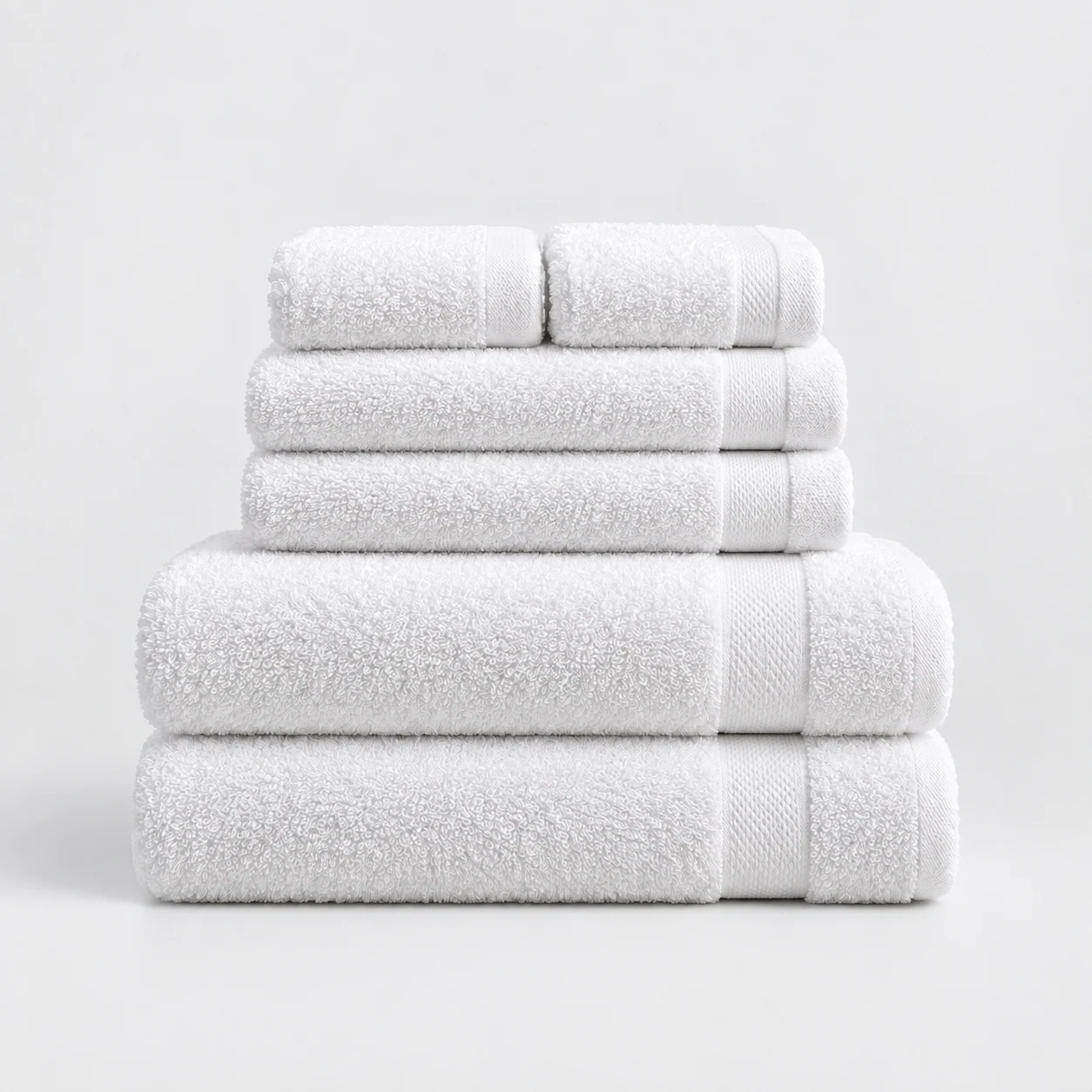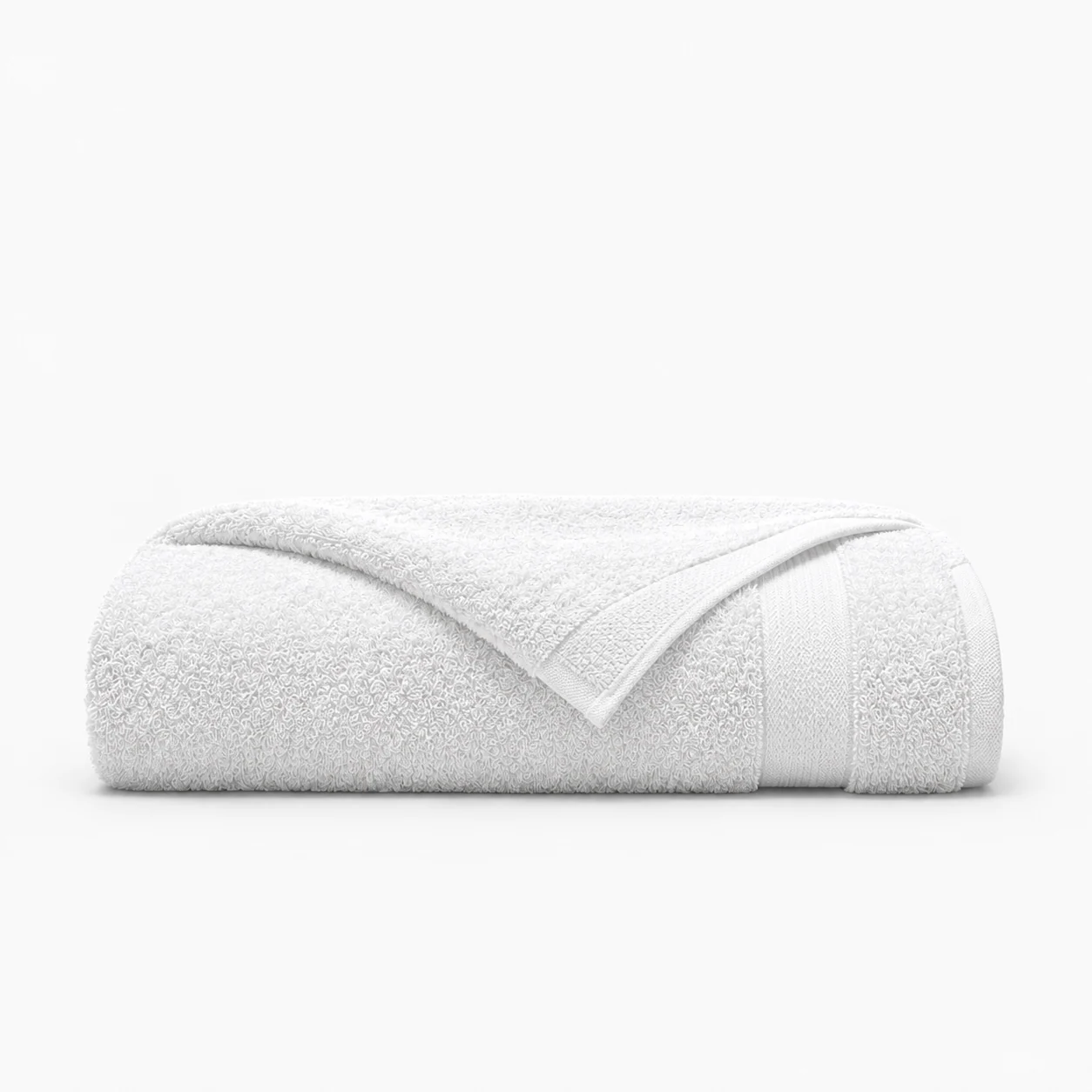
A Christmas border on a huck towel is not simply a coloured version of the fabric's weave. The added embroidery follows selected surface floats, and that path determines the design. A buyer needs to approve how the decorative thread travels across the actual towel, including its turns and endings, rather than accepting a photograph of a similar textured ground. This is a development brief for a decorative guest towel, not an instruction to substitute embroidery for an absorbency or care assessment.
Separate the ground from the added design
Two thread systems need different descriptions
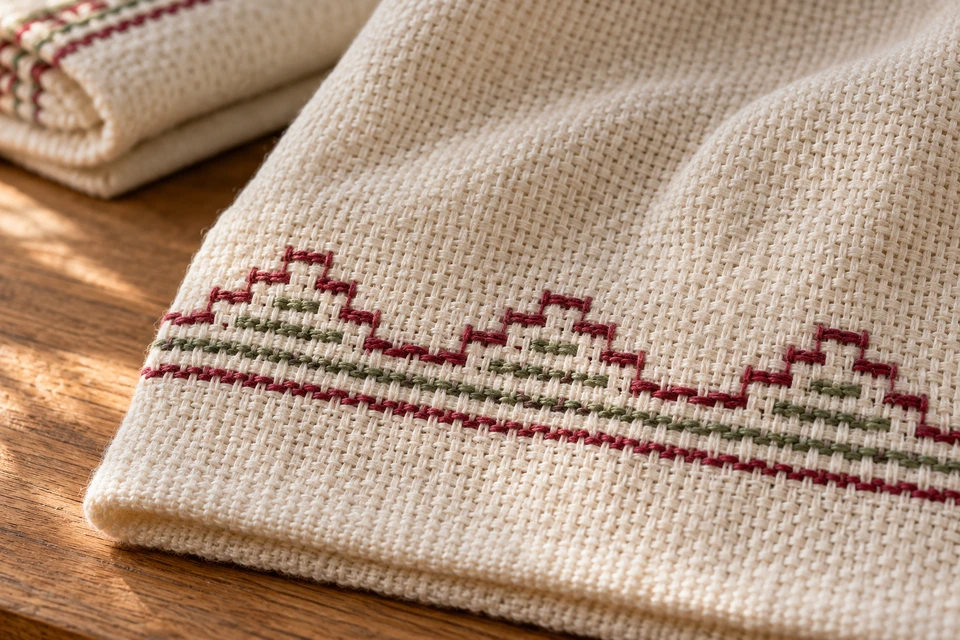
The University of Kentucky's introduction to Swedish weaving describes huck embroidery as a surface design made by taking floss or yarn under raised floats in a woven fabric. That distinction is useful when ordering: the towel ground supplies the structure that the decorative thread follows. Ask the maker to identify both the proposed ground cloth and the separate embroidery material. Do not infer either composition from the term huck or from an ivory colour in a reference image.
Request an unembroidered cutting beside the decorated trial. The buyer should be able to see which marks belong to the cloth and which have been added. A printed imitation, an ordinary machine-stitched border and embroidery travelling through existing floats are different proposals. They can be discussed on their own merits, but should not share an approval record merely because the finished photographs have a similar red-and-green rhythm.
Draw a readable route through the floats
A Christmas motif needs a working interpretation
Provide authorised artwork showing the intended seasonal border, then ask the maker for a working interpretation suitable for the selected ground. Identify a starting reference, the direction of travel and the places where the route changes level. Keep colour names tied to actual thread references. A row described as green above red can become ambiguous when different people begin reading from opposite towel edges.
The buyer need not dictate every needle movement. Instead, select a short section containing the difficult part of the design: a stepped tree tip, a turn beside a narrow gap or the junction between two repeated units. Ask the sampler to explain how that section follows the available floats. If the chosen cloth cannot carry the drawing at the intended scale, revise the design explicitly rather than silently changing the count or filling a meaningful gap.
Review the decorated surface without pulling it flat
Thread path and thread tension are separate observations
Lay the worked sample naturally and compare it with the undecorated ground. Follow the decorative thread through its turns, looking for a skipped location, an unintended diagonal or a visibly split ground yarn. Then examine the surrounding cloth for local gathering. A correctly counted path may still draw the fabric inward; a smooth surface can still contain the wrong path. Record those findings separately so the next sample addresses the actual problem.
View the sample close up and at the distance expected in a folded towel display. The close view helps identify how the thread is held, while the longer view reveals whether the seasonal motif reads as intended. Avoid photographing the towel under tension or pressing it unusually hard solely to produce a clean approval image. Ask the maker to state the normal preparation used, and retain that state with the reference rather than approving an unexplained studio treatment.
Resolve the border at both ends
A repeat should not run out by accident
Show the finished towel width and the space available between its edges or hems. Decide whether the pattern is centred, repeated to an agreed stopping point or framed by plain areas. Review both endings on a complete towel. A short swatch can prove the central route while hiding an awkward half motif at the side. Wider and narrower sizes should each have an intentional resolution, even where they share the same thread colours.
Ask how starts, joins and final thread ends are secured in the proposed construction, and inspect the resulting appearance from both sides. Do not prescribe a copied finishing recipe from an unrelated pattern. The maker should demonstrate its offered method and identify any reverse-side visibility that is part of the design. The purchase reference should show that detail clearly instead of allowing the towel to be folded so that every ending is concealed.
Keep the towel's use requirements in view
Decoration approval does not establish service performance
Define whether the towel is intended mainly for decorative retail presentation, occasional guest use or a particular hospitality programme. That decision affects the evidence needed for the complete article. Request the relevant care assessment on the actual ground and embroidery combination. Compare thread appearance, the worked path, local flatness and the border's position before and after the agreed procedure. Keep observed changes specific to the identified sample and conditions.
An attractive worked border does not prove colour-transfer resistance, long service life or suitability for a hotel's laundering process. Obtain separate evidence where those properties matter. If a thread or cloth alternative is proposed, ask which part of the previous evaluation remains applicable and which must be repeated. Avoid accepting a different ground solely because the same chart can be worked onto it; the resulting proportions and interaction with the added thread still need review.
Order an identified border, not a general craft description
Preserve the worked sample and its ending plan
The enquiry should connect the ground reference, embroidery thread identities, approved route, complete towel dimensions and the two border endings. Distinguish a minimum for the ground cloth from any minimum or setup associated with the decorative design. Ask the supplier to quote the selected version and to identify any simplified alternative separately. A cheaper route that omits turns or changes the repeat spacing is a design change, not merely a quantity adjustment.
Send FY Bedding the intended Christmas direction and the actual use requirement when requesting a development proposal. Confirm feasibility, sample stages and commercial timing before committing to a retail launch. Keep one complete towel and one close reference of the critical float path for later inspection. Receiving staff can then identify a changed design without having to reverse-engineer the whole craft technique. No seasonal theme establishes available stock or a guaranteed arrival before the holiday.
Approve the added thread path on the chosen ground, including difficult turns and both border endings. Retain the relaxed complete towel and keep decorative approval separate from use and care evidence.
Method references: University of Kentucky: huck embroidery and surface floats.