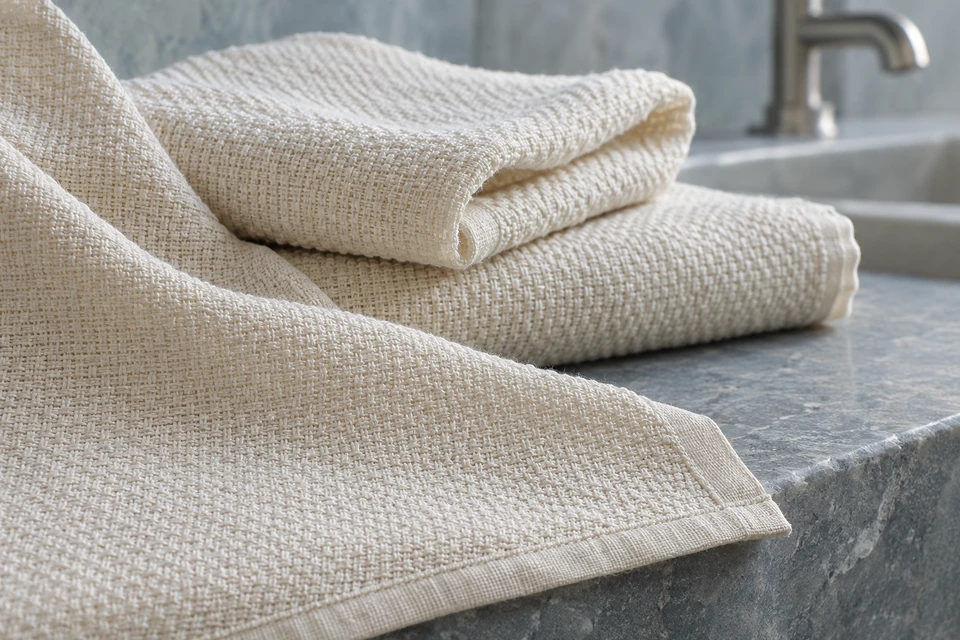
Two ivory hand towels can have the same dimensions and an apparently similar textured surface while using different constructions. If the buyer wants huckaback, a description such as textured woven towel leaves too much open. The enquiry should identify the actual weave being proposed and preserve a sample that the receiving team can recognise. Start with the relationship between the ground and its small float groups, not with a lifestyle photograph or an unsupported performance claim.
- 1. Look beneath the surface description
- 2. Compare both faces in a fixed orientation
- 3. Distinguish a construction alternative from a finish variation
- 4. Review the transition into a plain border
- 5. Separate weave identification from material and use evidence
- 6. Issue a recognisable reference for purchasing and receiving
Look beneath the surface description
Identify ground and float groups together
The historical weaving text Textile Design and Colour describes huckaback constructions with a plain-weave foundation and groups of longer yarn floats. It also illustrates variations rather than a single universal appearance. This is useful structural terminology, not a modern test result or a reason to borrow its historical performance assertions. Ask the supplier to identify the specific weave offered for your towel and show how its ground and float arrangement correspond to the submitted sample.
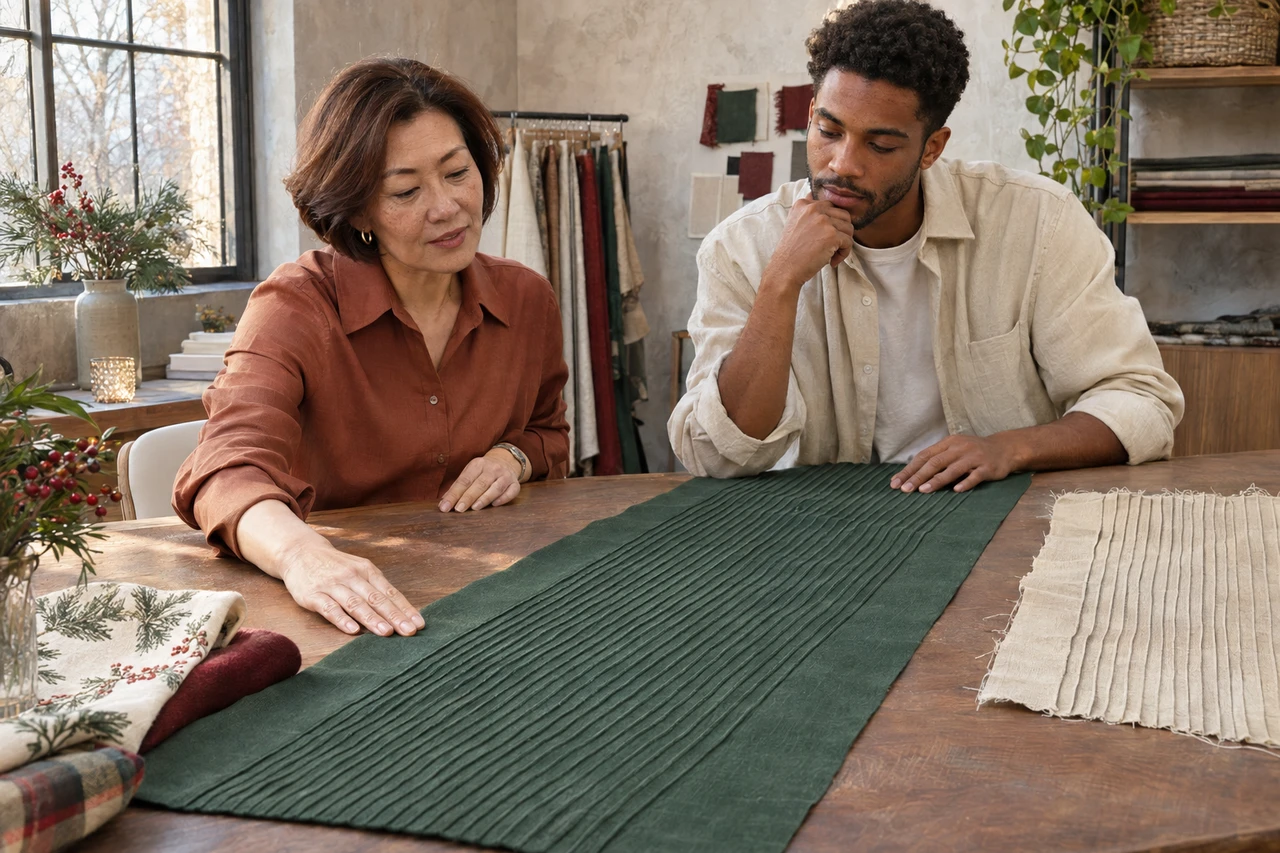
Use an enlarged face photograph alongside a physical swatch. Mark one complete visible texture unit in the private review record, then show several adjacent units so their relationship is clear. The reviewer should be able to distinguish the raised groups from the intervening ground. Avoid approving a heavily blurred photograph in which any small-scale texture could pass for the same cloth. Where identification is uncertain, request a construction description or technical review from the responsible weaver rather than inventing a weave name from appearance alone.
Compare both faces in a fixed orientation
Similar-looking sides need separate references
Turn the same sample over without losing the identified top edge. Photograph the reverse at the same scale and under comparable light. Ask whether the proposed weave is intended to present equivalent faces or a distinct face and reverse. The weaving reference describes variants with different arrangements, so the buyer should not assume that every cloth sold under the huckaback name is interchangeable on both sides. Record the supplier's explanation for this actual sample.
For a finished hand towel, decide which face is meant to be outward in the selling fold and during display. If either face is acceptable, state that explicitly after review. If a particular face is required, retain a clear identifying detail. This is a construction identity decision rather than a general towel-fold styling exercise. It prevents a later sample from being turned over to disguise a changed surface arrangement while still appearing to match a small photograph.
Distinguish a construction alternative from a finish variation
Do not approve substitutes under one broad adjective
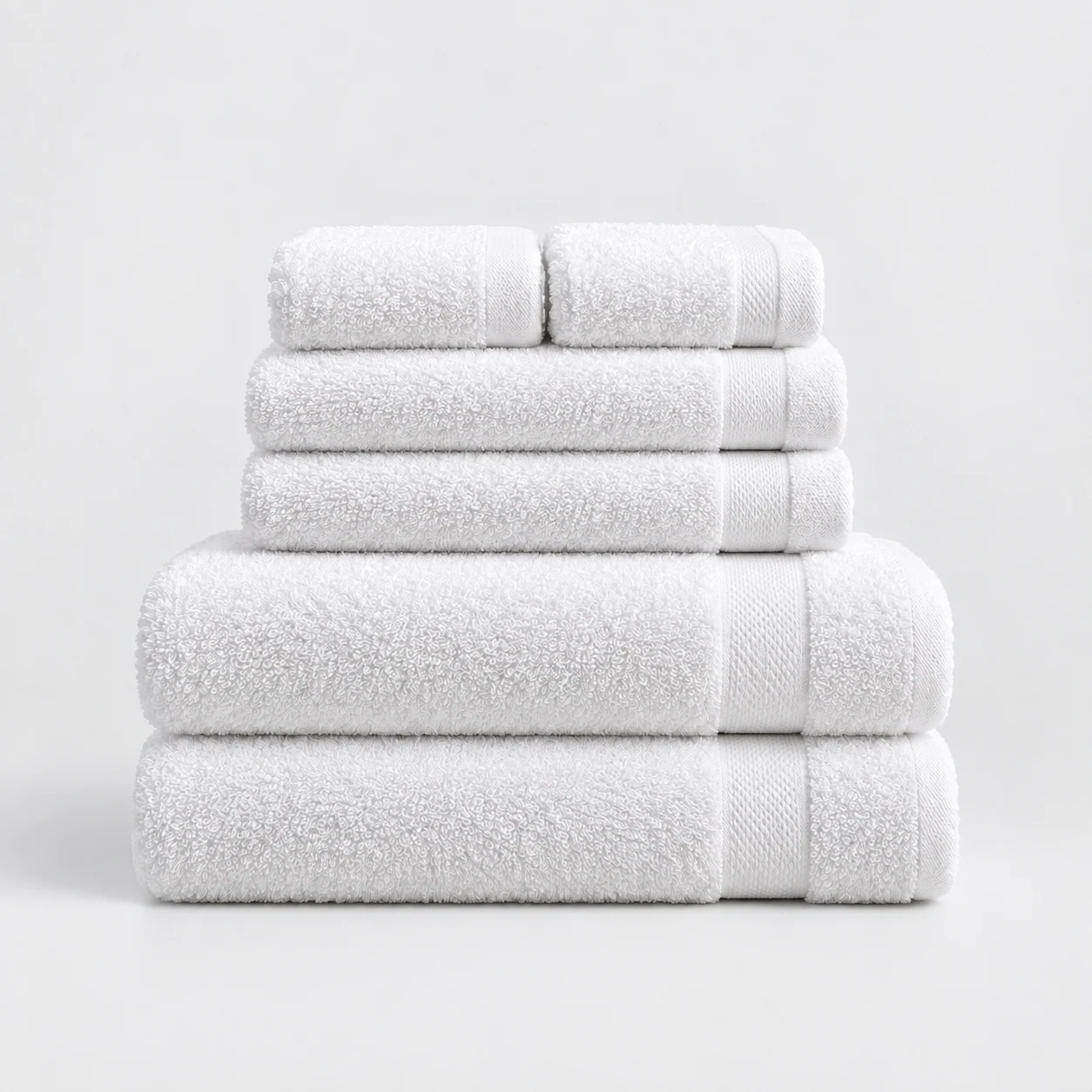
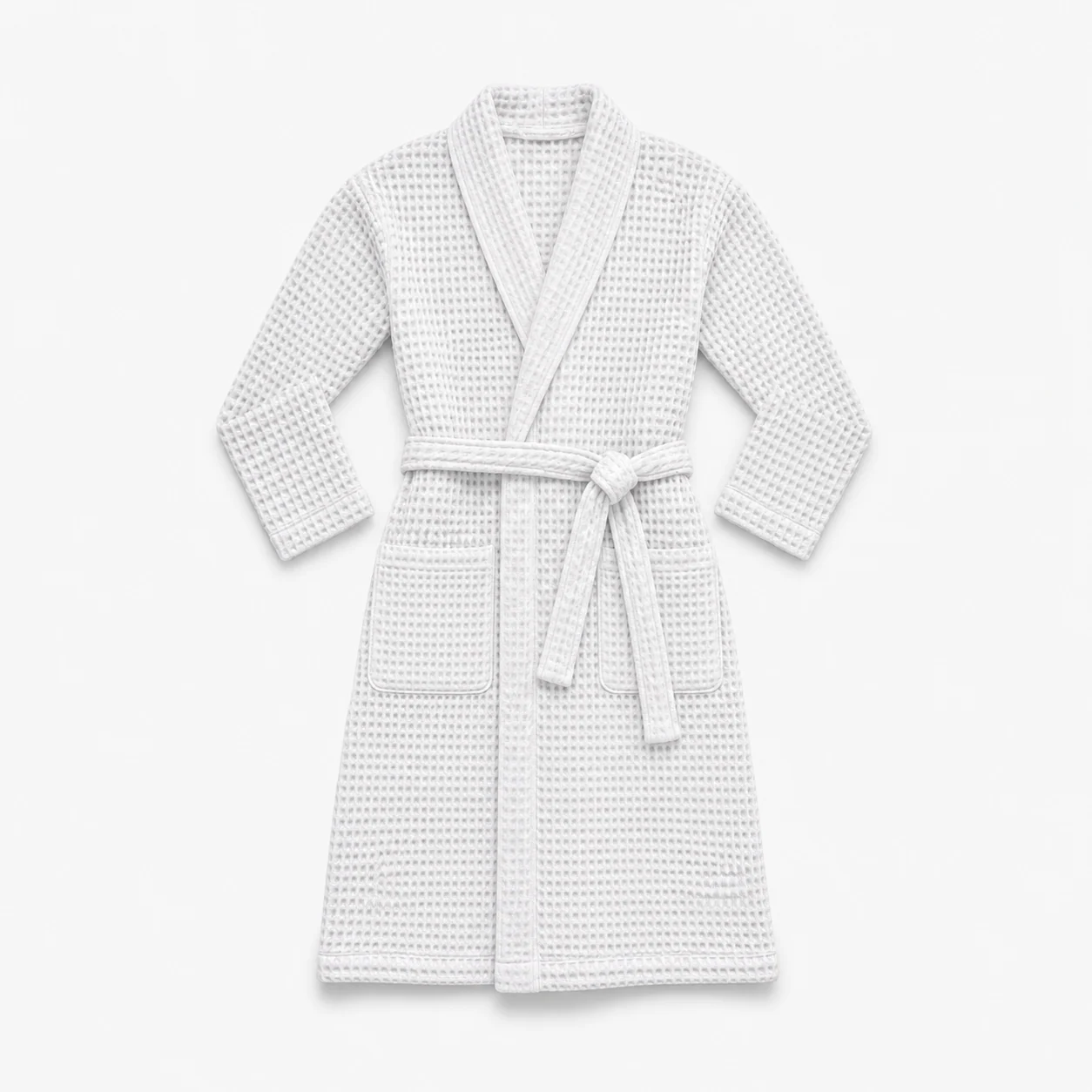
Ask to see any proposed alternative alongside the accepted swatch, not only in a separate catalogue image. A terry loop surface, a deep cellular waffle and a small float-group woven texture should not be treated as one specification because all can be described as textured. The supplier may have a commercially sensible alternative, but it should be identified and evaluated as a different proposal. Record its construction name and the reason it is being offered.
Within a proposed huckaback construction, ask whether a visible difference comes from weave arrangement, yarn selection or finishing. Keep these explanations linked to sample identities. A softer finish may change how clearly the texture reads without proving that the underlying weave has changed; conversely, similar handle does not prove identical construction. The buyer need not prescribe loom settings, but should require enough information to understand what is being approved and what changes need notification before a reorder.
Review the transition into a plain border
Preserve the intended texture field
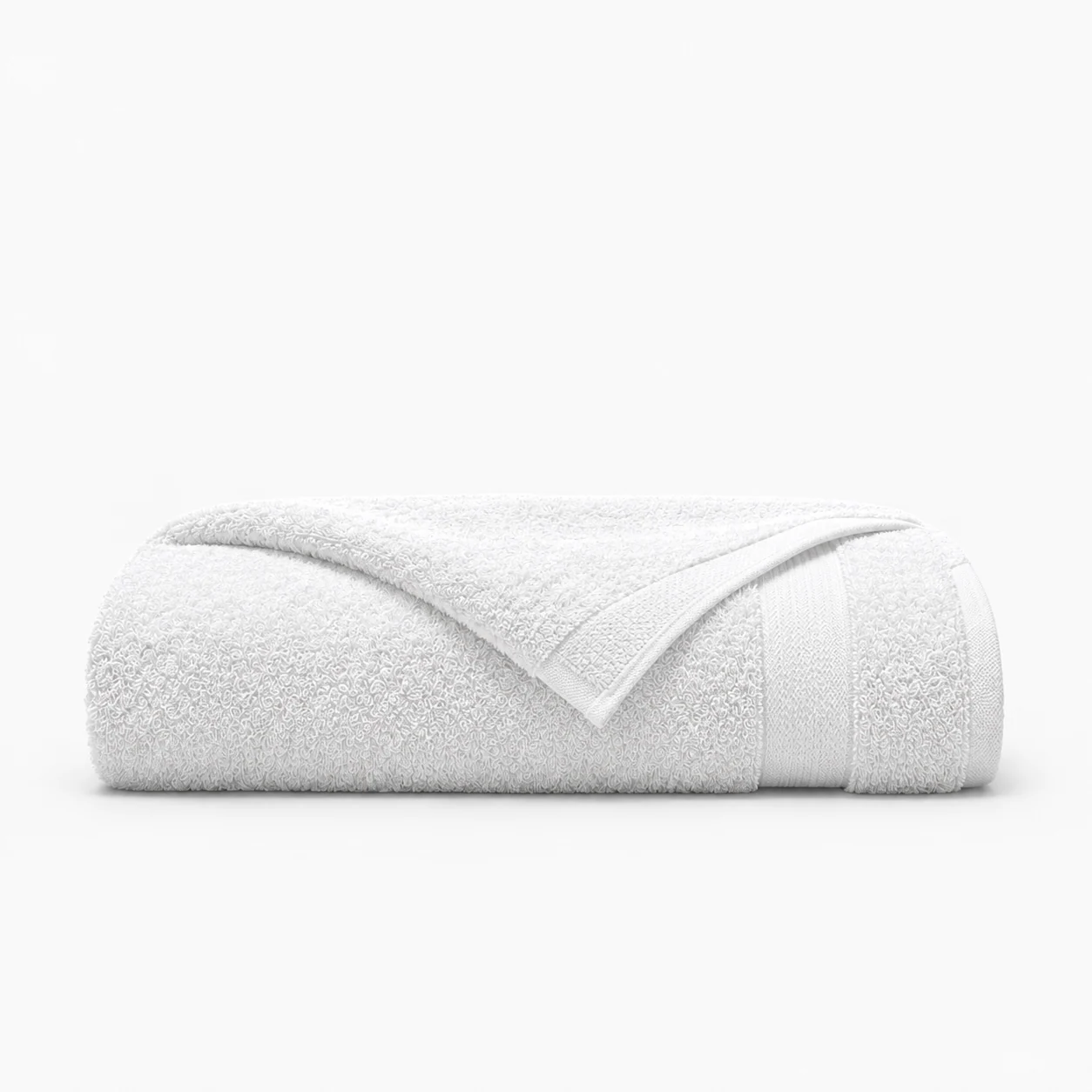
Some towel proposals include a plain border or a change in weave near the hem. Show that transition in the sample record and identify its position relative to the finished edge. Review a complete towel because a body swatch does not reveal how the textured field meets the border. Decide whether the transition is meant to be aligned across paired pieces and whether the visible field remains balanced after the intended fold. Keep this decision tied to the actual finished dimensions.
Examine the corners and the point where a hem crosses the textured body. Record whether the accepted detail uses a plain finishing zone or folds the textured cloth directly. An alternative can change the local appearance and thickness even if the main fabric is unchanged. Ask the maker to propose a workable edge and approve the result; do not infer a construction fault merely because it differs from an unconfirmed reference photograph. Retain the accepted border-to-body relationship for later comparison.
Separate weave identification from material and use evidence
A texture does not prove composition or performance
Request the declared fibre composition for the offered fabric as an independent field. Fergusons, for example, identifies a particular Huck fabric as pure linen; that statement applies to its own named item, not to all huckaback cloth or to an FY Bedding proposal. A sample with the desired float arrangement still needs its own material evidence. Keep natural-looking colour, linen-look descriptions and confirmed fibre declarations clearly separated in both the purchase record and proposed retail copy.
Likewise, weave identification does not establish absorbency, drying behaviour, durability or hygiene performance. Agree any required testing or care evaluation for the actual towel and retain the tested sample identity. After that evaluation, compare the same marked texture units, border and two faces to understand the observed change. Do not present a historical weaving description or one visual inspection as contemporary proof of a product benefit. The accepted construction and the required performance evidence answer different questions.
Issue a recognisable reference for purchasing and receiving
Keep the weave sample with the quotation
An FY Bedding enquiry can include the physical or clearly photographed huckaback reference, marked face and reverse, requested fibre declaration, finished dimensions and border detail. Ask whether that construction or a named alternative can be proposed, with sample stages and commercial conditions confirmed for the project. Keep any alternative separate in the quotation. A trade name alone does not establish available quantities, material sourcing or a delivery schedule.
Retain a sealed body swatch and a complete towel from the accepted revision. Receiving staff can compare the small texture groups and border transition before escalating a difference for technical review. Use clear observations rather than a vague statement that the cloth looks less traditional. When a reordered fabric changes, obtain a new controlled comparison instead of allowing the familiar huckaback label to carry the old approval automatically. That makes the weave name a useful specification entry rather than a substitute for one.
Identify the accepted ground, float groups, face/reverse relationship and border transition on a retained sample; confirm composition and performance through separate evidence.
Method references: Textile Design and Colour: historical huckaback weave structures only; Fergusons: a specific Huck fabric and its declared composition.