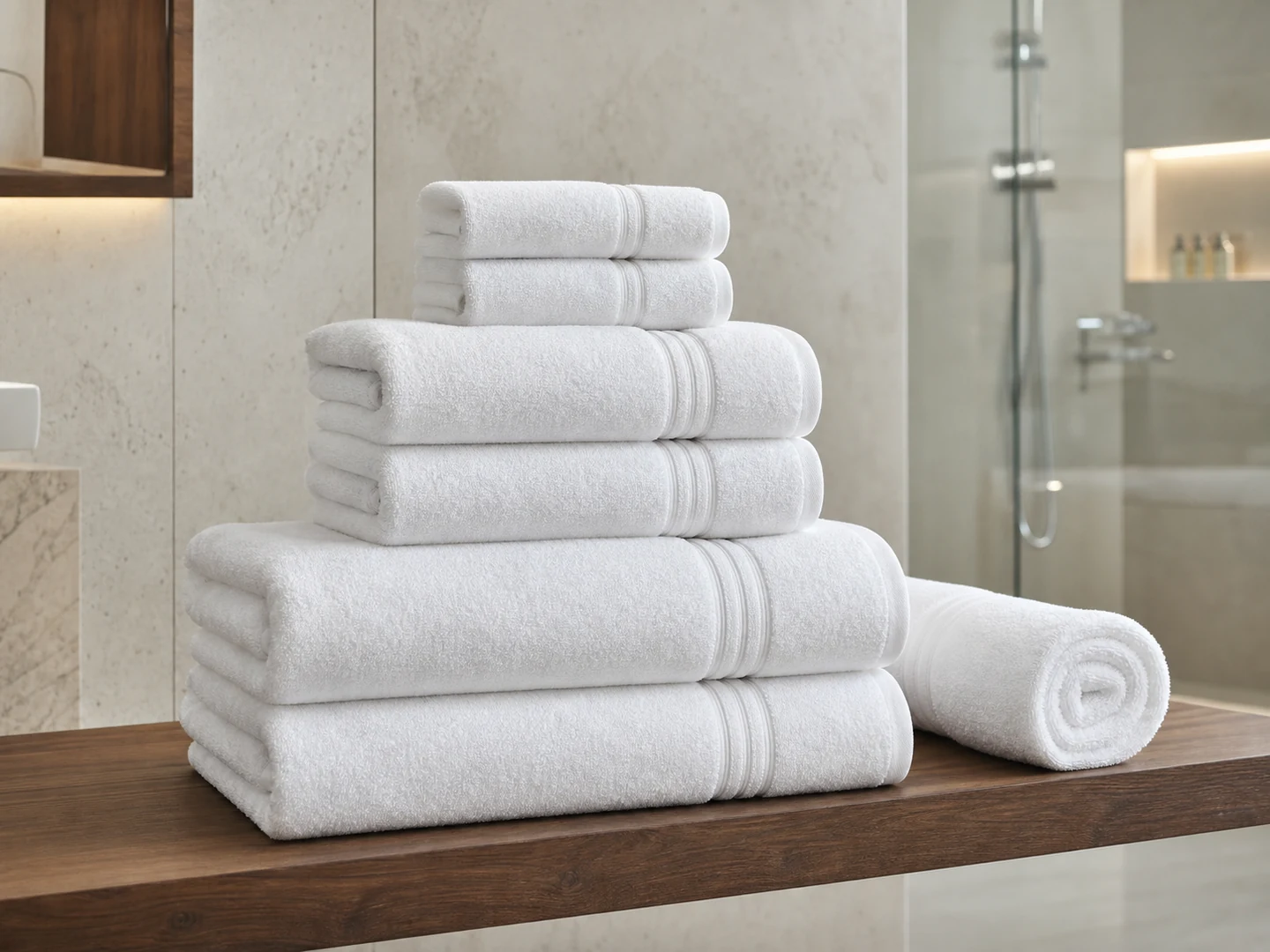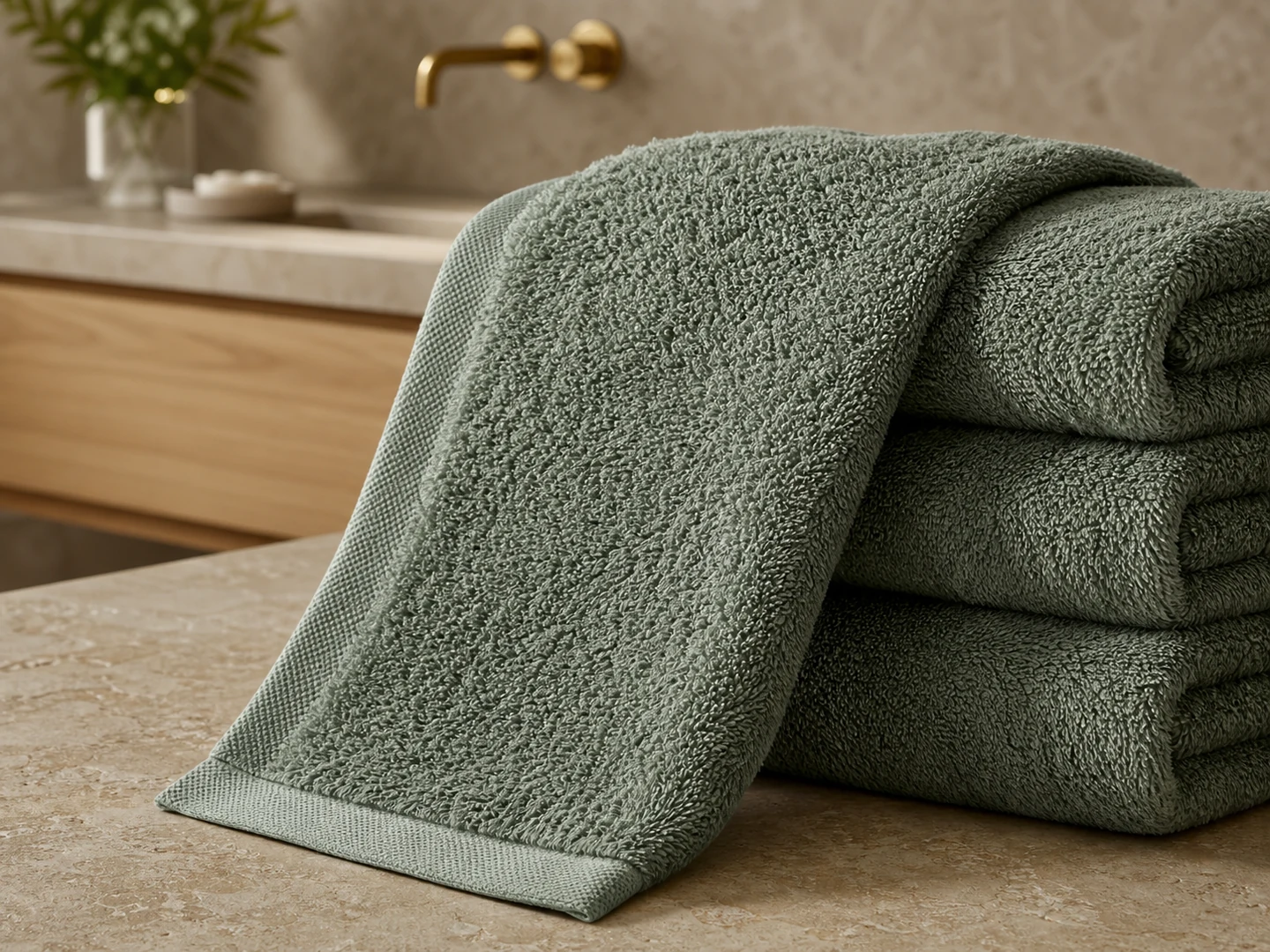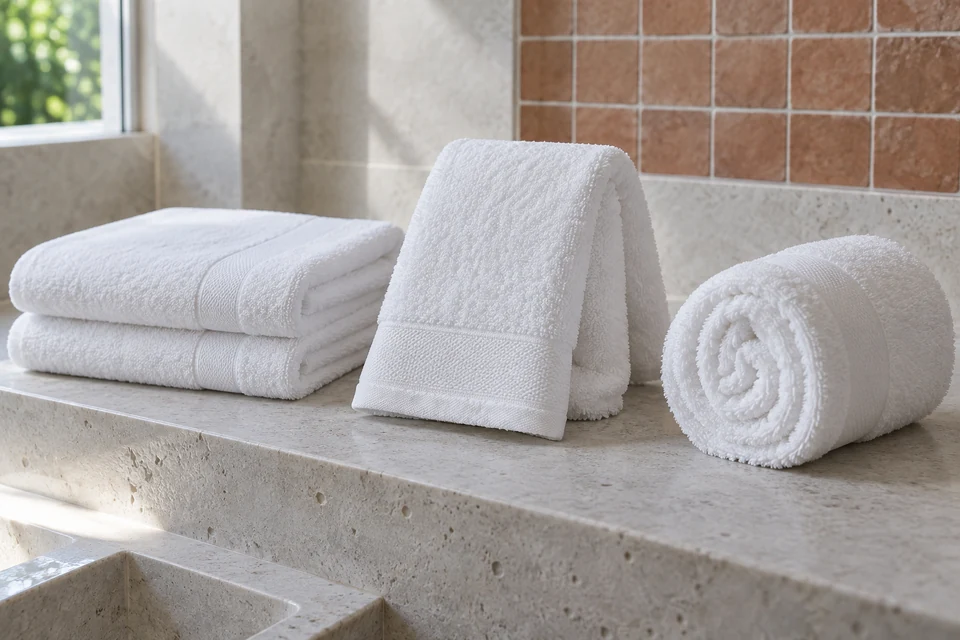
The same towel can present very differently when folded on a shelf, hung over a rail or placed in a guest-room basket. Procurement should agree the intended display face before ordering a branded or bordered towel. This review is about how housekeeping presents the finished item, not whether a woven logo was manufactured correctly. A fold reference can prevent an otherwise approved design from disappearing inside the stack or facing away from the guest.
Identify the display location
Start with the guest's view
Record the actual shelf, rail or basket dimensions and the direction from which a guest normally sees the towel. Include the number of towels in the arrangement and any required separation between sizes. A close-up on a design table cannot show whether the border remains visible at the intended room position. Use the mock-up room record to anchor the review to an identifiable installation rather than an attractive but unrelated photograph.
Ask housekeeping which display arrangements can be repeated during normal room preparation. If a decorative fold needs unusual handling or hides the size identification used by staff, record that consequence early. The size-marker plan remains an operational requirement even when the guest-facing design takes priority visually. Do not remove or relocate functional identification merely to improve a presentation photograph without consulting the people who handle the towels after laundering.
- Record the display dimensions and viewing direction.
- Identify towel sizes included in the arrangement.
- Check the location in the actual room setup.
- Keep operational identification visible where needed.
Use the approved towel
Fold samples are product-specific
Prepare the display with the proposed towel construction, size, border position and care condition. A smaller showroom sample or a towel with a different border width can make a fold appear feasible when the purchased version will not match it. For branded towels, first confirm the manufactured design through the woven-logo approval. Then review presentation; a fold trial cannot repair missing or poorly formed design details.
Distinguish new and care-trial samples in the record. If the property intends to display towels after its normal laundry process, include an appropriately prepared sample and document that preparation. Do not assume a new towel's fold thickness or border position proves its later presentation. The border and edge-distortion review can supply relevant observations, but the room display should still be inspected as an assembled arrangement rather than inferred from a measurement alone.
- Confirm the exact towel and border reference.
- Separate manufactured-design approval from display approval.
- Record whether samples are new or care-treated.
- Review the full arrangement after relevant preparation.
Compare a small set of folds
Make the alternatives explainable
Select a few practical folds and photograph them from the same guest-view position. Record which face is outward, where the border sits and whether the edge is tucked or exposed. Avoid changing towel count, shelf position and lighting between alternatives unless those changes are themselves part of the comparison. A consistent setup allows the team to decide what it prefers without mistaking a more flattering photograph for a better operational choice.
Include the act of removing one towel from the display. A neat stack may lose its intended face when the upper towel is lifted or when neighboring items are disturbed. Ask whether the remaining presentation matters to the property's service standard and record the answer. If the arrangement uses a mixed group of hand towels and bath towels, evaluate the group rather than approving each folded item independently and assuming that they will fit together.
- Keep viewing position and lighting consistent.
- Record face orientation and border location.
- Observe removal of one item from the arrangement.
- Evaluate mixed-size displays as complete groups.
Check repeatability with housekeeping
A reference must survive handover
Ask more than the original designer to recreate the preferred fold using the proposed instruction. Observe which steps are ambiguous and revise the reference accordingly. The purpose is not to rank employees but to learn whether the instruction communicates the intended result. A short sequence of photographs showing the starting orientation, key fold and finished view may be more useful than a final beauty shot with no explanation of how it was achieved.
Record any handling or preparation burden that affects adoption. The housekeeping task-trial approach offers a way to separate observed workflow effects from unsupported claims of efficiency. Adapt the method to towel presentation and do not copy bed-making results. If the property chooses a more elaborate fold, make that an explicit service-design decision rather than concealing the additional work inside the product specification.
- Have another staff member recreate the fold.
- Identify unclear starting orientation or tuck steps.
- Keep instructions short enough for operational use.
- Record workflow observations without invented savings.
Approve the display reference
Control changes to the visible face
The approved record should identify the towel variant, care condition, display location and fold sequence, with a guest-view photograph. State whether alternative folds are allowed and who can authorize a change. A later border relocation, towel size change or different shelf arrangement should trigger review of the affected presentation. Keep the display reference with the product specification so a replacement purchase does not preserve the item name while losing the intended visual result.
For a hotel textile project, share the room display photographs and towel references with FY through the hospitality enquiry. Ask for a sample discussion that distinguishes design manufacture, laundry observations and display handling. The purchasing decision should show which combination was accepted and what remains outside scope. This keeps a presentation preference practical without turning it into an unsupported guarantee about every towel, room layout or future laundry condition.
- Attach the towel identity and care condition.
- Save the final guest-view reference.
- State permitted alternatives and approval ownership.
- Review the fold after relevant product changes.
Approve a towel display only when the intended face is visible in the actual location and housekeeping can reproduce the documented arrangement with the identified towel.