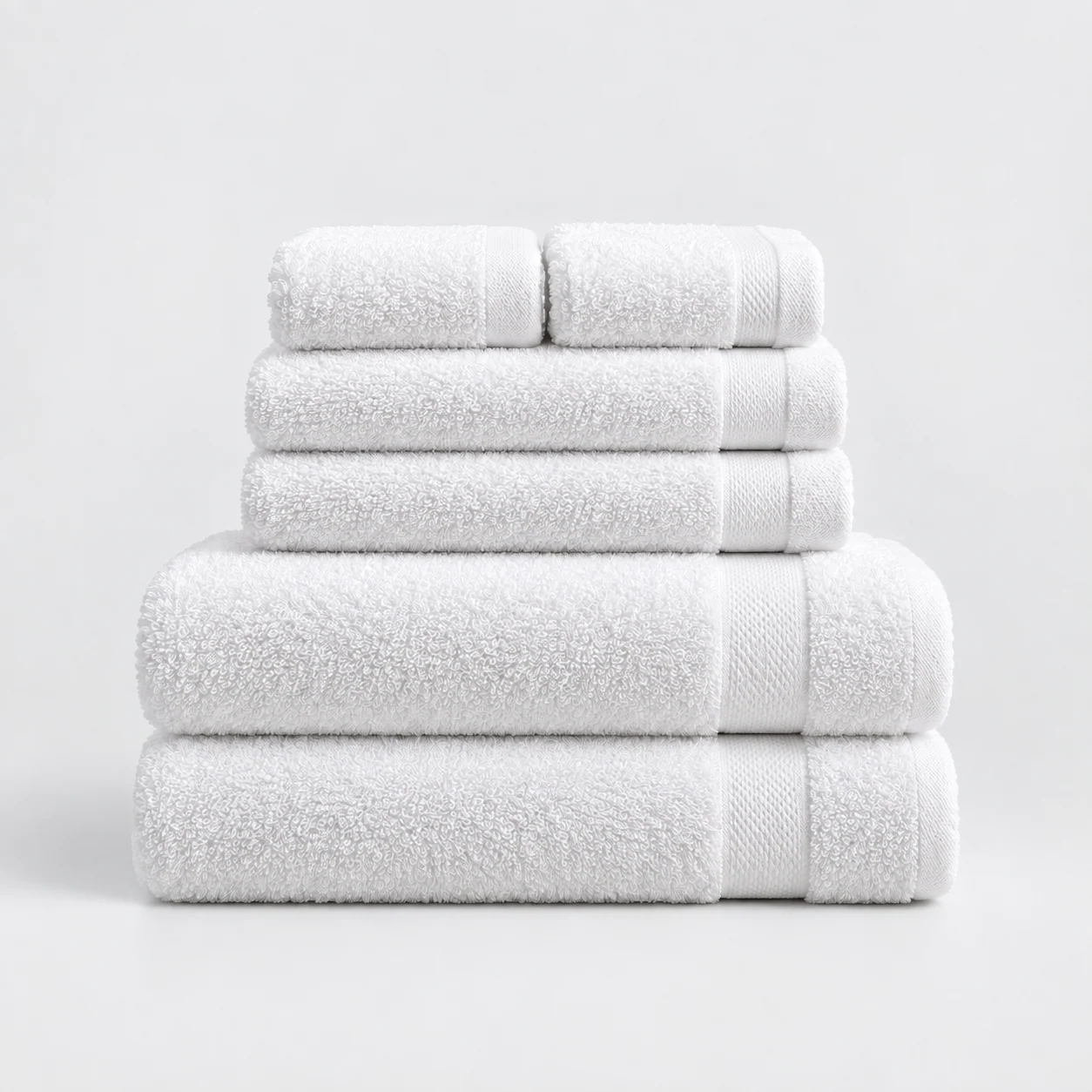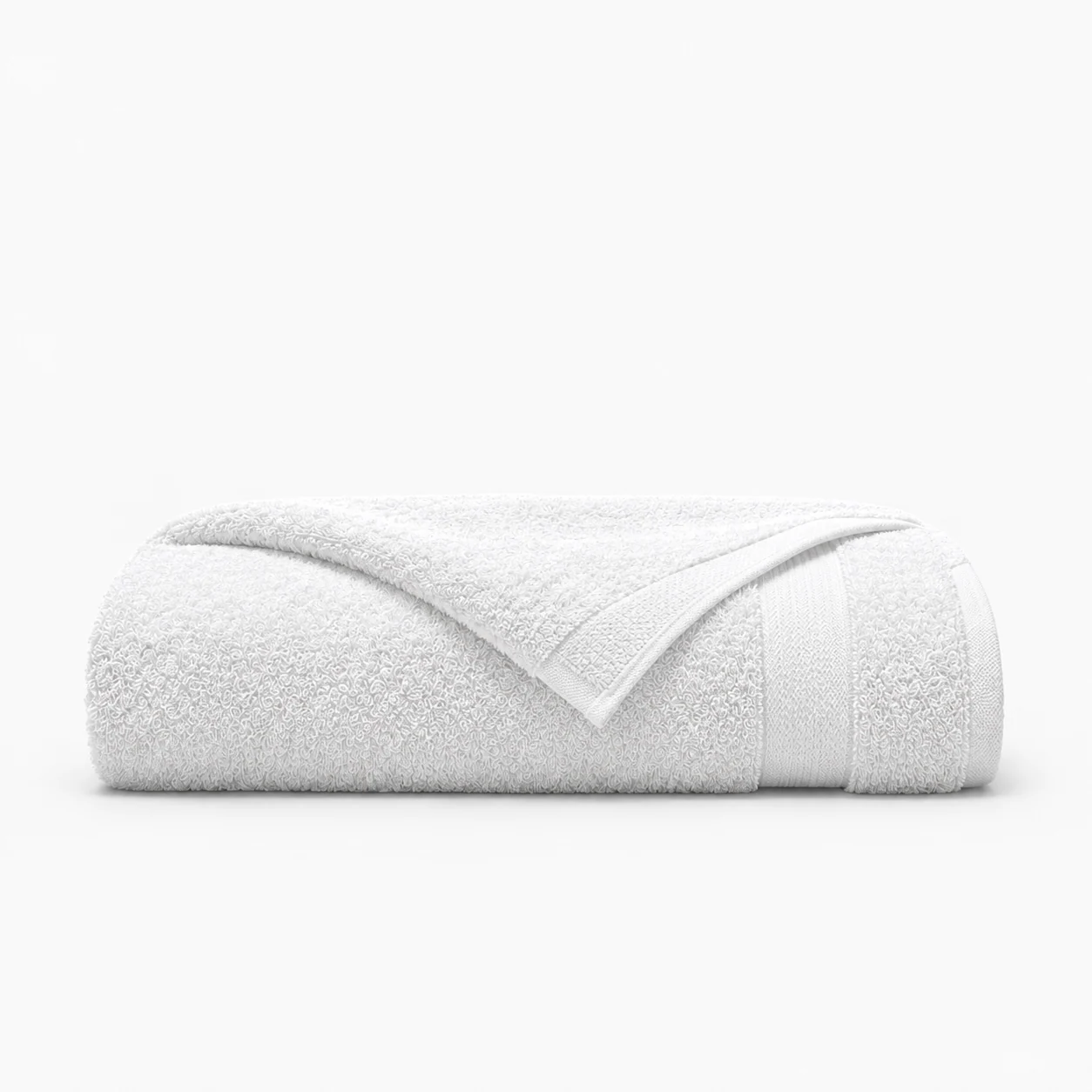
A towel body and its decorative border do not always change at the same rate during laundering. The result may be border draw-in, bowed ends, curled corners or wavy side hems even when weight and absorbency meet expectation. Buyers need a construction-specific dimensional plan that follows the product through wash trials. This guide isolates border and edge distortion from the separate questions of linting, absorbency and loop retention.
Map the towel body, borders and hems as separate zones
Describe the structures that can shrink differently
Record the finished towel width and length, terry body area, border depth, border weave, end-hem construction and side-hem width. If two decorative borders are used, define their position from the finished ends. A single overall dimension cannot show whether the border is pulling the terry body inward or whether the whole towel has changed uniformly.
Specify yarn and construction information that is actually controlled for the program, including relevant ground, pile and border relationships. The towel GSM guide supports weight selection, but GSM alone does not predict differential shrinkage. Keep an approved flat sample that shows border alignment and corner shape before laundering.
- Terry body and border dimensions
- Border weave and placement
- Side and end hem construction
- Approved pre-wash corner shape
Define the wash and measurement method
Use the intended service route and a consistent conditioned state
Agree the wash load, detergent, temperature, extraction, drying and cycle count that represent the buyer's evaluation. Hotel laundry and retail home care may create different stresses, so identify which route supports the decision. Condition towels before measurement and state whether they are gently spread flat without tension or evaluated as removed from the normal finishing process.
Mark or reference measurement points before care. Record overall width and length, border width at several points, diagonal dimensions and the distance between opposite corners. Use principles from the dimensional stability guide, while adding zone-specific values that reveal border-to-body imbalance.
- Buyer-approved laundry cycle
- Conditioning and finishing state
- Overall and zone measurements
- Diagonal or corner-to-corner values
Grade edge, border and corner shape
Combine measurements with repeatable appearance review
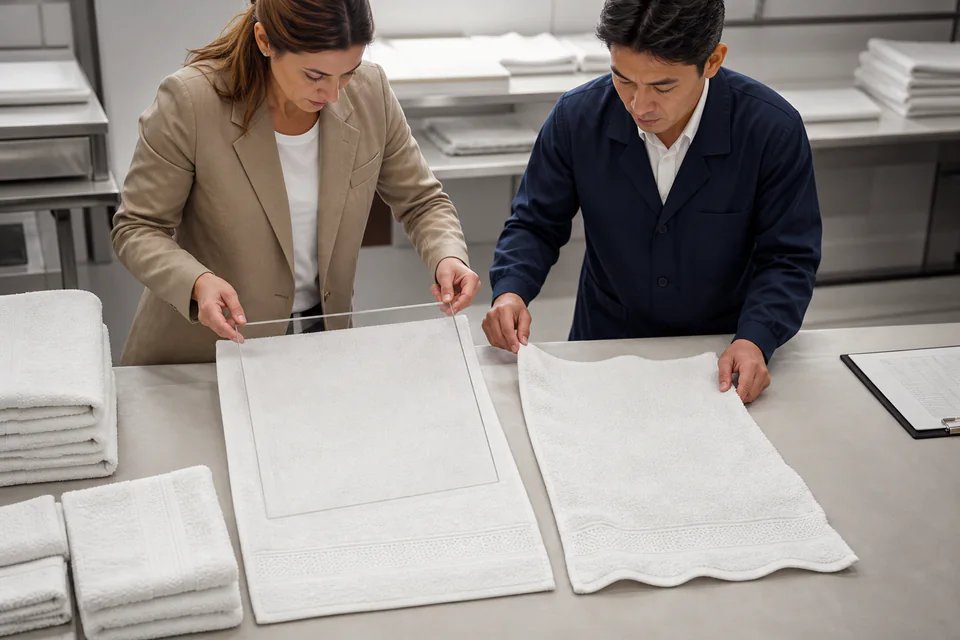
Lay the towel on a flat surface without stretching the hems. Review side-edge waviness, end bow, border draw-in, corner curl and loss of squareness under consistent light. A transparent square or dimensional template can support comparison, but it should not be used to force the product flat. Photograph the full towel and representative close views from the same angle.
Distinguish distortion from pile appearance. Lint and wash loss are addressed in the towel linting guide, while loop security is covered by the loop pull guide. Keeping the decisions separate prevents one acceptable test result from hiding an unrelated border problem.
- Side-edge waviness
- End bow and border draw-in
- Corner curl and squareness
- Full-product and close-view photographs
Connect results to material and process controls
Review border-body compatibility before changing tolerances
When distortion exceeds the approved limit, compare border yarn, weave density, tension, finishing and hem construction with the retained reference. Review whether the border was stabilized consistently and whether cutting and sewing introduced unequal tension. Do not solve the record by increasing the finished dimension if the shape still becomes visibly distorted after care.
Run controlled corrective trials with one documented change at a time. Confirm absorbency separately through the towel absorbency guide if finishing changes could influence wetting performance. The preferred correction should meet shape, hand, absorbency and durability requirements together rather than optimizing one result in isolation.
- Border and body construction comparison
- Finishing and sewing tension record
- One-change corrective trials
- Cross-check of related performance risks
Approve production and service follow-up
Keep trial evidence connected to hospitality use
Approve a conditioned reference with actual pre- and post-care values, cycle details and photographs. Production inspection can check initial dimensions, border placement, hem straightness and squareness, while a planned wash verification confirms retained shape. Sampling and lot decisions should follow the agreed AQL inspection route rather than an undefined spot check.
For hotel programs, monitor whether distortion affects folding, shelf presentation, room setup or guest-facing appearance. Record service feedback by product and lot instead of assuming every deformed towel came from the same cause. Buyers can share their towel construction and laundry brief to align sample evidence before bulk production.
- Conditioned approval reference
- Initial production checks
- Planned wash verification
- Hospitality handling feedback by lot
Approve the towel as a combination of terry body, border and hems. Record zone dimensions and squareness before and after the agreed wash route, then retain the conditioned reference for production comparison.