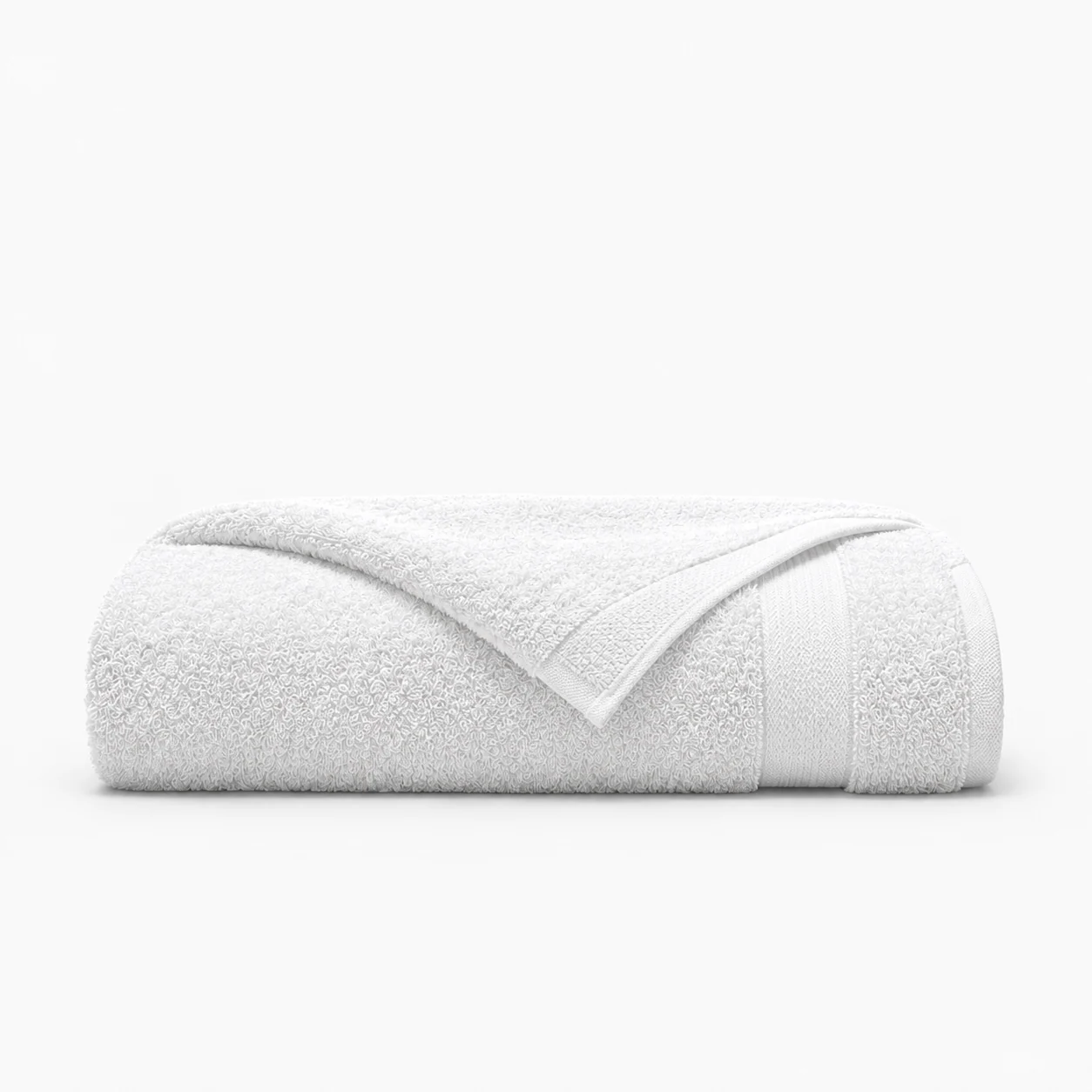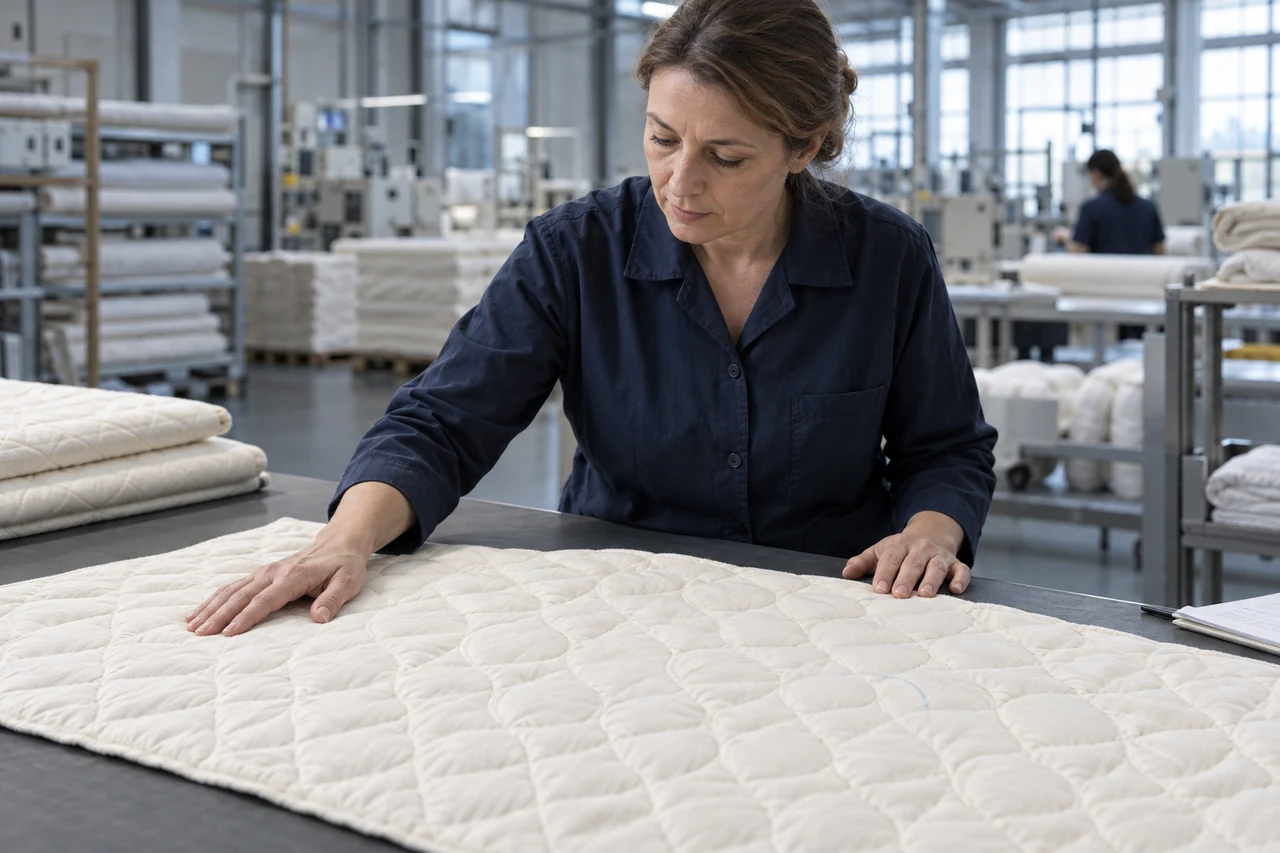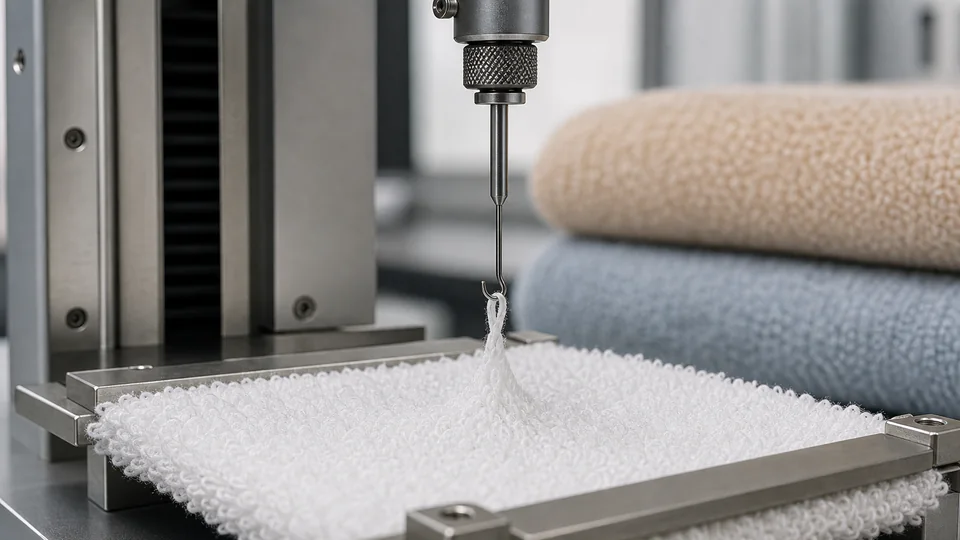
Pulled loops can reduce towel appearance, create long snags and lead to trimming or early retirement. A useful control plan connects loop retention to the complete pile and ground construction, then combines a defined test with realistic care and handling trials.
Map where loops are pulled in service
Review guest use, laundry equipment, carts, shelving, hooks, jewelry exposure and folding processes. Record whether problems occur at borders, near hems, across the field or after a particular care stage. Different locations can point to different construction or handling causes.
Document finished weight and construction using the towel GSM guide, while keeping loop retention as a separate property. A heavier towel may still snag if pile height, ground stability or processing is unsuitable.
Specify pile, ground and border construction
Record pile fiber, yarn type, yarn count or size, twist direction where relevant, loop height, pile density, ground yarn, weave, border, hems and finished weight. Include color and finish because processing can alter yarn friction and fabric stability.
Place these fields in the home-textile technical pack. An approved visual sample without construction data is difficult to reproduce when the supplier changes yarn, loom settings or finishing conditions.
Define the pull test and observations
Agree the buyer method, clamp or hook geometry, pull direction, speed, endpoint, number and location of specimens, conditioning and reporting unit. State whether the test records peak force, length pulled, failure mode or another result. Include photographs of unusual behavior.
Connect the method to the product testing plan and identify the exact towel represented. Do not compare results from unrelated methods or specimen positions as though they were directly equivalent.
Combine testing with repeated care trials
Process representative towels through the intended washing, drying and finishing route. Inspect pulled loops, loose fiber, lint, shrinkage, border distortion and hand at defined intervals. Simulate normal folding and cart handling without introducing uncontrolled abuse.
Use the hotel linen care guide to document wash chemistry, load, extraction, drying and sorting assumptions. A construction that passes when new may behave differently after pile opens and ground dimensions change.
Classify defects and control improvements
Define acceptable isolated loops, long pulls, cut loops, bare areas and repair rules. During bulk inspection, sample from different cartons and positions. Keep defects separated from stains, weaving bars or edge damage so corrective action addresses the actual mechanism.
Use the defect classification framework to record severity and quantity. If pile yarn, ground construction, finish or processing changes, retest and compare cared-for appearance before authorizing the substitute for production. Record whether damaged loops are trimmed, repaired or rejected and whether the action leaves a visible bare area. Review defects by production lot and laundry location, because a sudden cluster may point to one machine surface, cart edge or handling step rather than a general towel weakness. Retain representative failed and acceptable samples for the next corrective-action review.
Approve loop retention for the exact pile, ground, color and finish using a documented pull method plus repeated care trials. Keep service defects classified so construction and handling actions remain evidence-based.