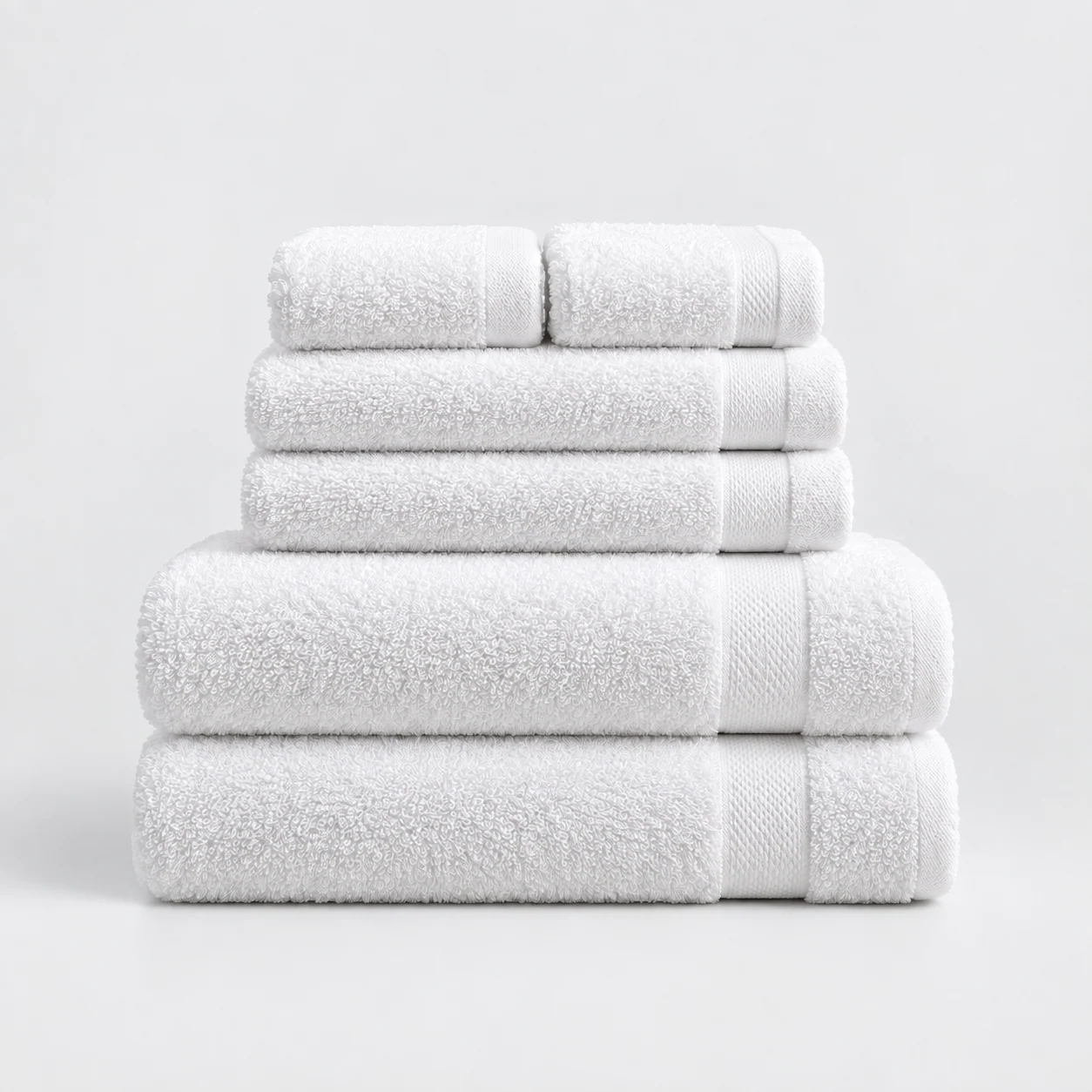
A towel can feel plush yet absorb slowly, or absorb well while creating excessive drying time and lint. Buyers should define the service requirement, construction and conditioning before selecting a test, then combine laboratory results with cared-for operational trials.
Define absorbency in the intended service context
Separate bath, hand, face, pool, spa and utility uses. Record whether speed of wetting, total uptake, liquid transfer, drying or repeated use is the controlling concern. The same result may not suit every item because size, contact area, laundering and guest expectation differ.
Use the towel GSM guide to document finished weight alongside fiber, yarn, pile and ground construction. GSM supports comparison but does not prove absorbency, softness, durability or laundry economics by itself.
Choose and document a repeatable method
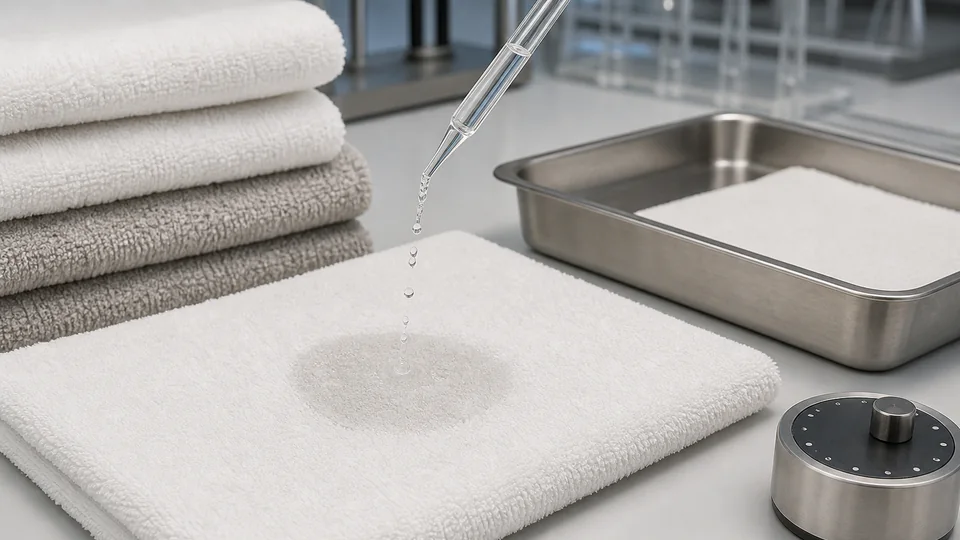
Agree the buyer-approved method, specimen size, water condition, conditioning, timing, endpoint, number of specimens and calculation. State whether results measure wetting time, retained liquid, transferred liquid or another property. Record individual results and visual observations rather than one unexplained pass label.
Place the method in the product testing plan with the exact towel construction and color. Results from a different pile yarn, finish or shade should not be assumed to represent the proposed bulk product.
Control finishing and preconditioning
Some processing, softening, dyeing or residual material can change initial wetting and hand. Define whether testing is performed as received, after a specified preparation or after care cycles. The chosen state should reflect the decision the buyer needs to make and be consistent between samples.
If colors are compared, connect the plan to the colorfastness test framework. A finish adjustment intended to improve hand or absorbency may also affect shade, rubbing, wash behavior or drying and should be reviewed as a complete change.
Run cared-for service and laundry trials
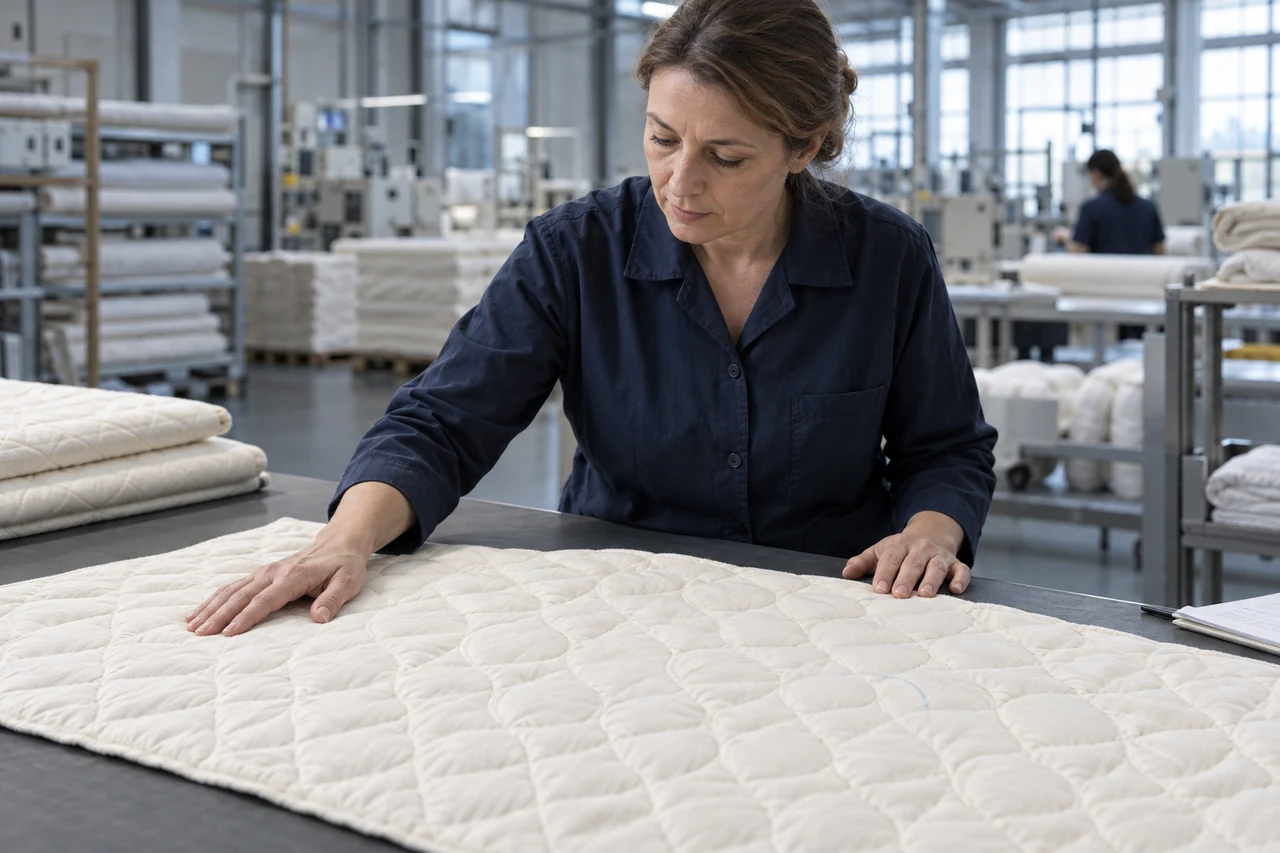
Process production-representative towels through the intended laundry route, then evaluate wetting, uptake, skin feel, lint, dimensional change, edge condition and drying time. Include several cycles because initial finishes and loose fibers can change after use and care.
For outdoor programs, use the resort pool towel guide to include guest transport, sun, chemicals, staining and return logistics. Absorbency should be evaluated with the operational cost and service route, not in isolation.
Carry the approved reference into bulk control
Seal cared-for reference towels and record fiber, yarn, construction, finished weight, color, finish and test results. Define which bulk changes require renewed testing. Incoming weight and visual inspection can support identity checks but do not replace performance evidence.
Add shade, dimensions, hems, pile defects, contamination and labeled weight to the final inspection plan. Track guest and laundry feedback after launch so future absorbency targets respond to observed service, not preference alone. Compare rewash, drying time, lint and early retirement with the approved absorbency results; a construction should support the complete operating target rather than optimize one laboratory value at the expense of laundry throughput.
Approve towel absorbency using one documented method and a cared-for service trial. Freeze construction, finish, color and reference results, then reassess performance when any controlling material or process changes.