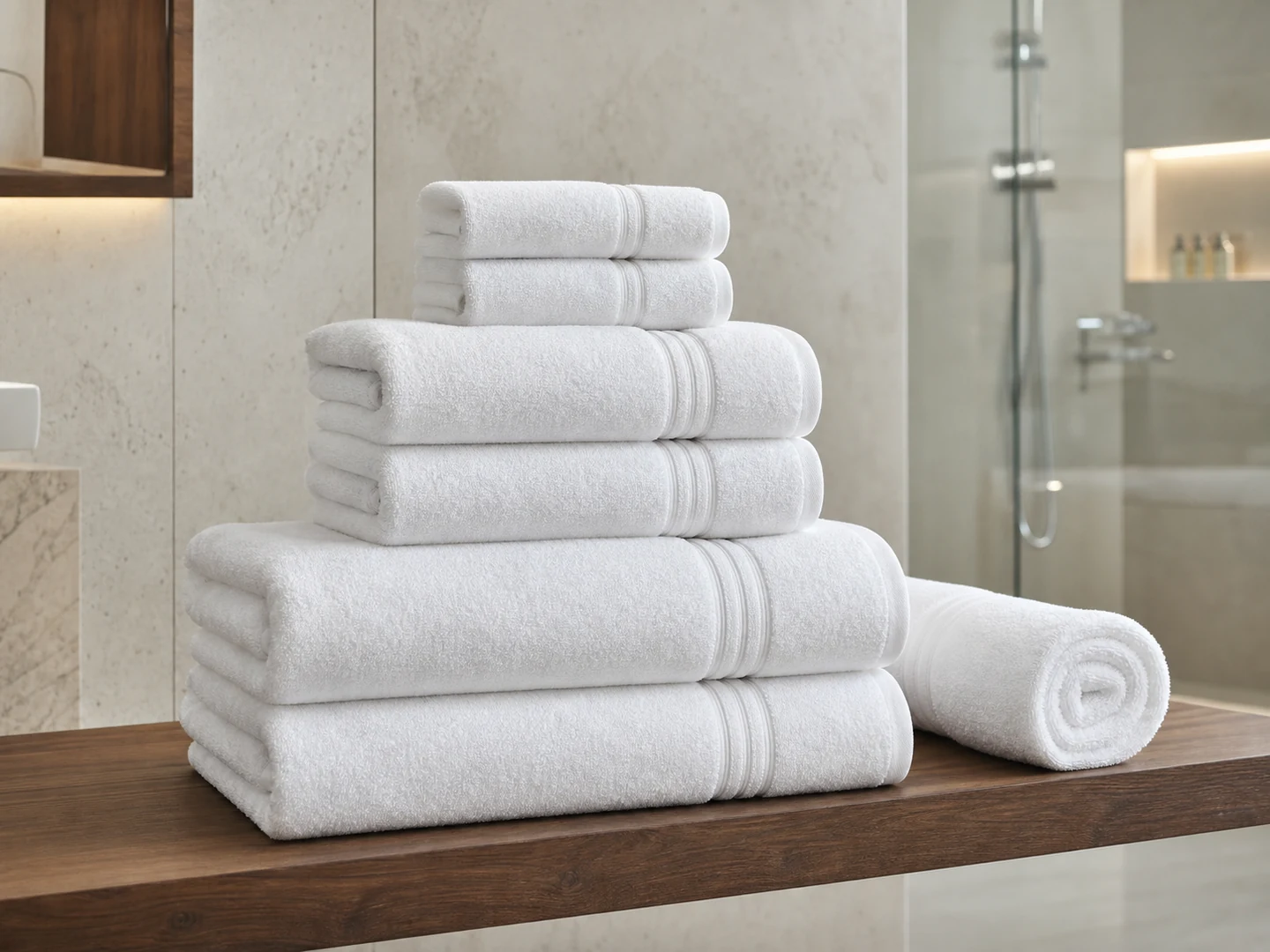
GSM is useful, but it does not fully describe how a towel is built or how it will feel in service. Two towels with a similar finished weight can use different pile heights, loop populations, yarn sizes and ground constructions. A buyer who defines only weight leaves important decisions to the development stage and may struggle to explain why an approved sample feels different from bulk production.
Map the towel as pile plus ground construction
Treat weight as an outcome of several variables
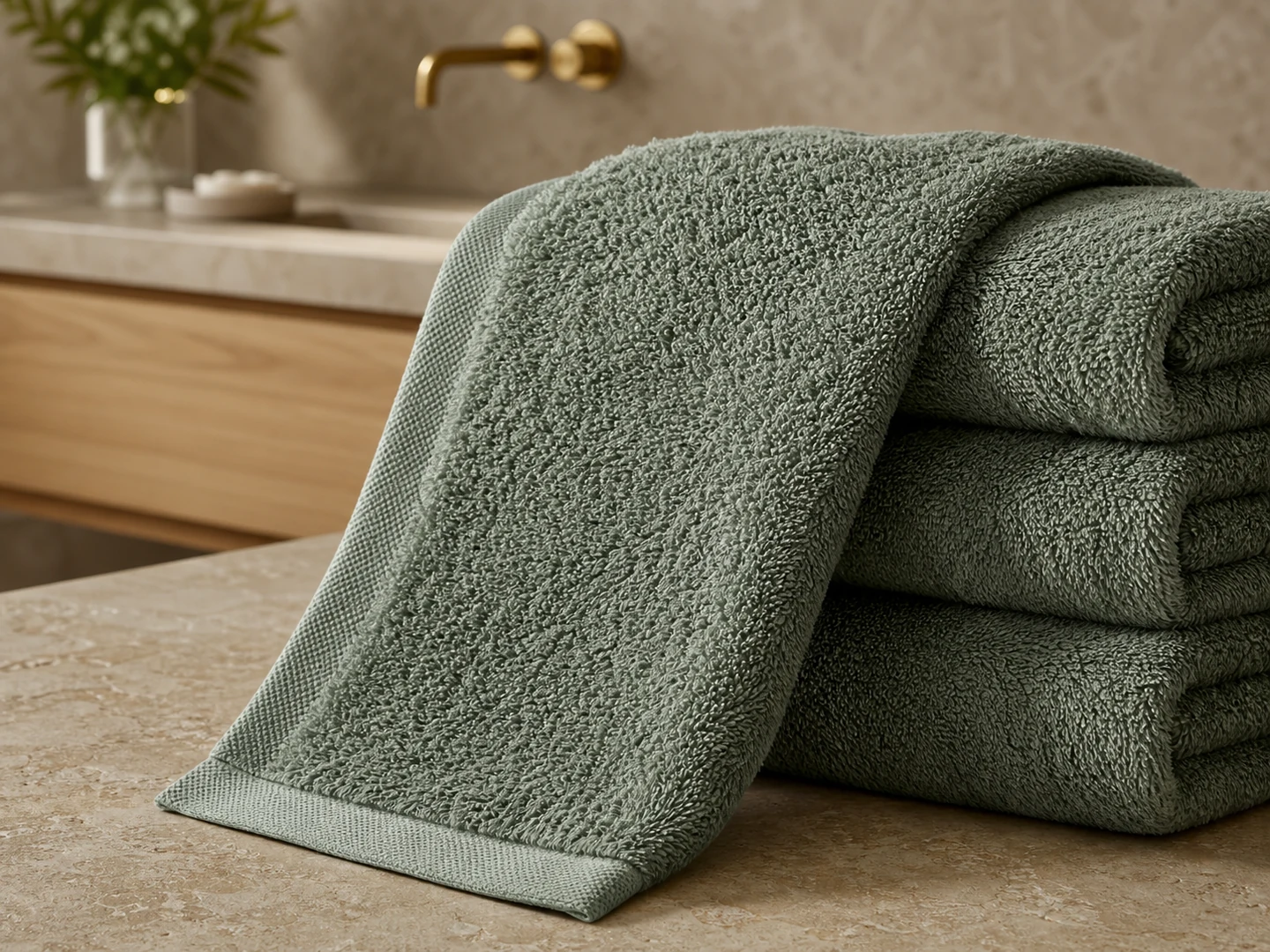
The visible loops create much of the towel's softness, coverage and water-contact surface, while the ground warp and weft hold those loops in place. Pile yarn count, twist, loop height, pile on one or both faces and border construction all contribute to finished weight. Begin with the use case and the buyer's towel GSM decision, then define which construction features must remain controlled.
A useful development sheet does not need to disclose proprietary mill settings, but it should capture the approved physical outcome and the variables the supplier will control. Sample identity, yarn composition, nominal finished weight, dimensions, pile-face direction and ground description provide a stronger starting point than a handfeel adjective alone.
- Identify single-face or double-face pile construction.
- Record pile yarn and ground yarn descriptions.
- Define nominal dimensions and finished weight.
- Retain a sealed sample for tactile comparison.
Set pile height for use and presentation
Balance plushness, snag exposure and drying demand
Longer loops can increase perceived plushness and visual depth, but they may also change drying behavior and expose more loop length to snagging or pulling. Shorter pile can feel compact and controlled when loop coverage and yarn selection are appropriate. The buyer should compare conditioned samples rather than assuming that greater height always means a better towel.
Describe the approved pile profile with a retained sample and an agreed measurement or visual reference. Review cut or uneven loops, lean areas and face-to-face differences under consistent lighting. Where pull resistance matters, connect the construction decision to a loop-pull evaluation instead of treating appearance alone as proof of durability.
- Compare pile height after conditioning and laundering.
- Review lean areas and uneven loop presentation.
- Consider snag exposure in the intended operation.
- Approve a realistic rather than maximized plushness target.
Evaluate loop density and surface coverage
Look for an even field, not a single isolated count
Loop density affects coverage, hand and the way the ground is concealed. A dense, even field can support a substantial surface, while sparse or irregular areas may expose the ground and create visible bands. Buyers should define where observations or counts are taken because borders, selvedges and pile-free design zones are intentionally different.
Use multiple locations across the towel and compare face, center and edge regions. A small optical counter or controlled close photograph may support the record, but the sampling plan must prevent selection of only the best area. Results should be reviewed with the absorbency trial, since loop structure and finishing both influence water uptake.
- Define representative face measurement locations.
- Exclude intentional pile-free design areas.
- Check both coverage and visual uniformity.
- Retain images with specimen and location identity.
Control the ground weave and border transition
Protect dimensional support beneath the pile
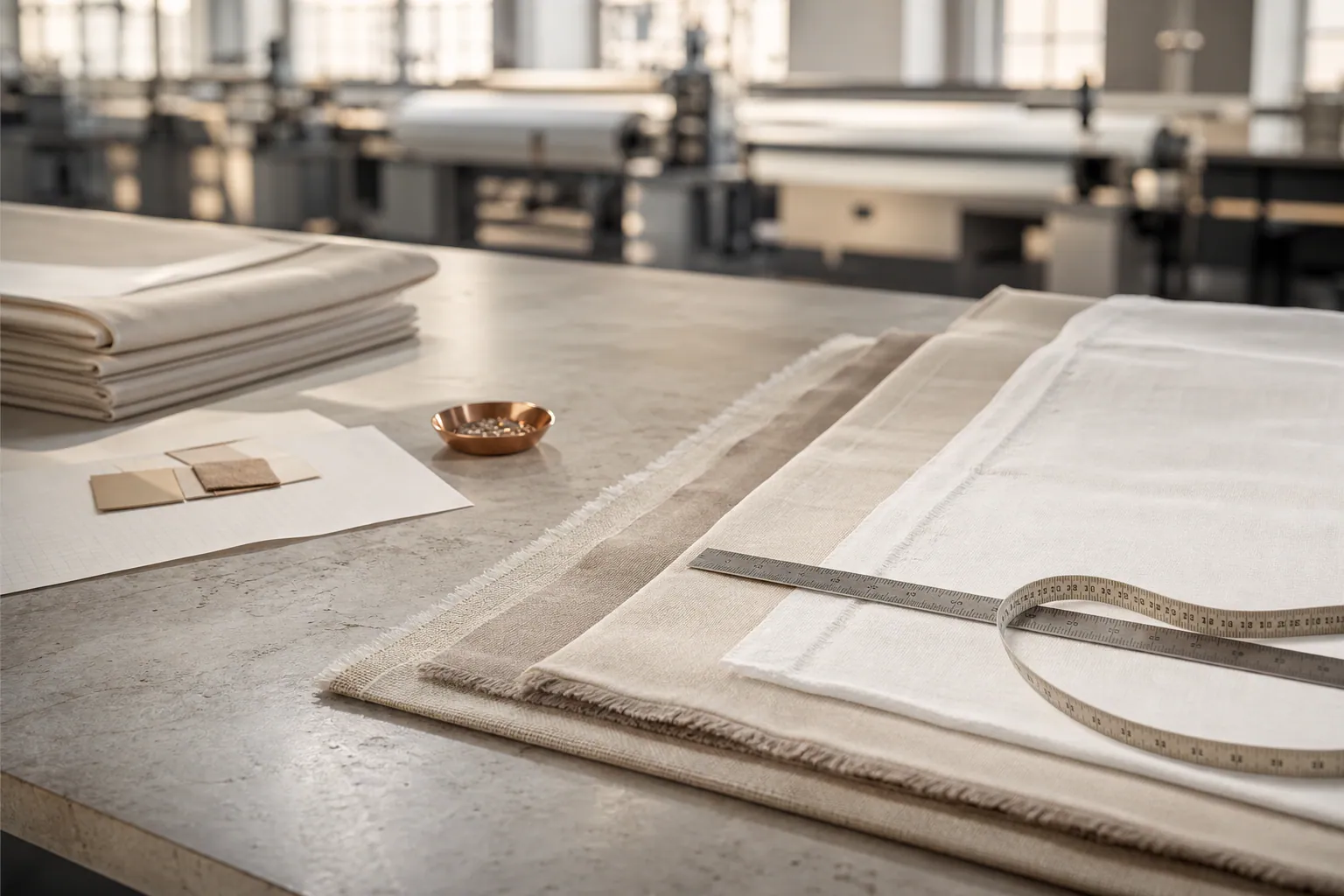
The ground construction anchors the pile and contributes to strength, stability and edge behavior. A towel can appear plush while still showing weak ground support, distortion or differential shrinkage around decorative borders. Review the woven ground at the face, hem and border transition, not only in a trimmed laboratory piece.
Wash trials should include dimensional change, squareness, border draw-in and edge waviness. These observations connect directly to the towel border shrinkage plan. If a dobby or decorative band is used, document its position and finished behavior after the same laundering route intended for approval.
- Inspect ground visibility between pile loops.
- Review border-to-pile transition after washing.
- Measure squareness and differential shrinkage.
- Check hems and selvedges for distortion.
Approve construction through combined evidence
Join specification, sample and laundry performance
A production-ready approval links the construction record to physical samples and trial results. Compare dry hand, wet handling, drying behavior, absorbency, lint release and appearance after the agreed wash cycles. The linting and wash-loss guide can help buyers separate initial loose fiber from unacceptable ongoing loss.
Use the approved sample as a controlled reference, but keep measurable limits for dimensions, weight and relevant performance. Bulk inspection can then confirm identity and appearance without pretending that one quick surface count predicts the entire service life. Any yarn, loom or finish change should trigger review against the approved construction and test scope.
- Link construction values to a sealed reference sample.
- Run the agreed laundering and drying route.
- Record absorbency, lint and appearance together.
- Reapprove material or process changes by scope.
Ask the supplier to explain how the approved GSM is distributed between pile and ground, then confirm that the sample, wash trial and production control all describe the same construction.