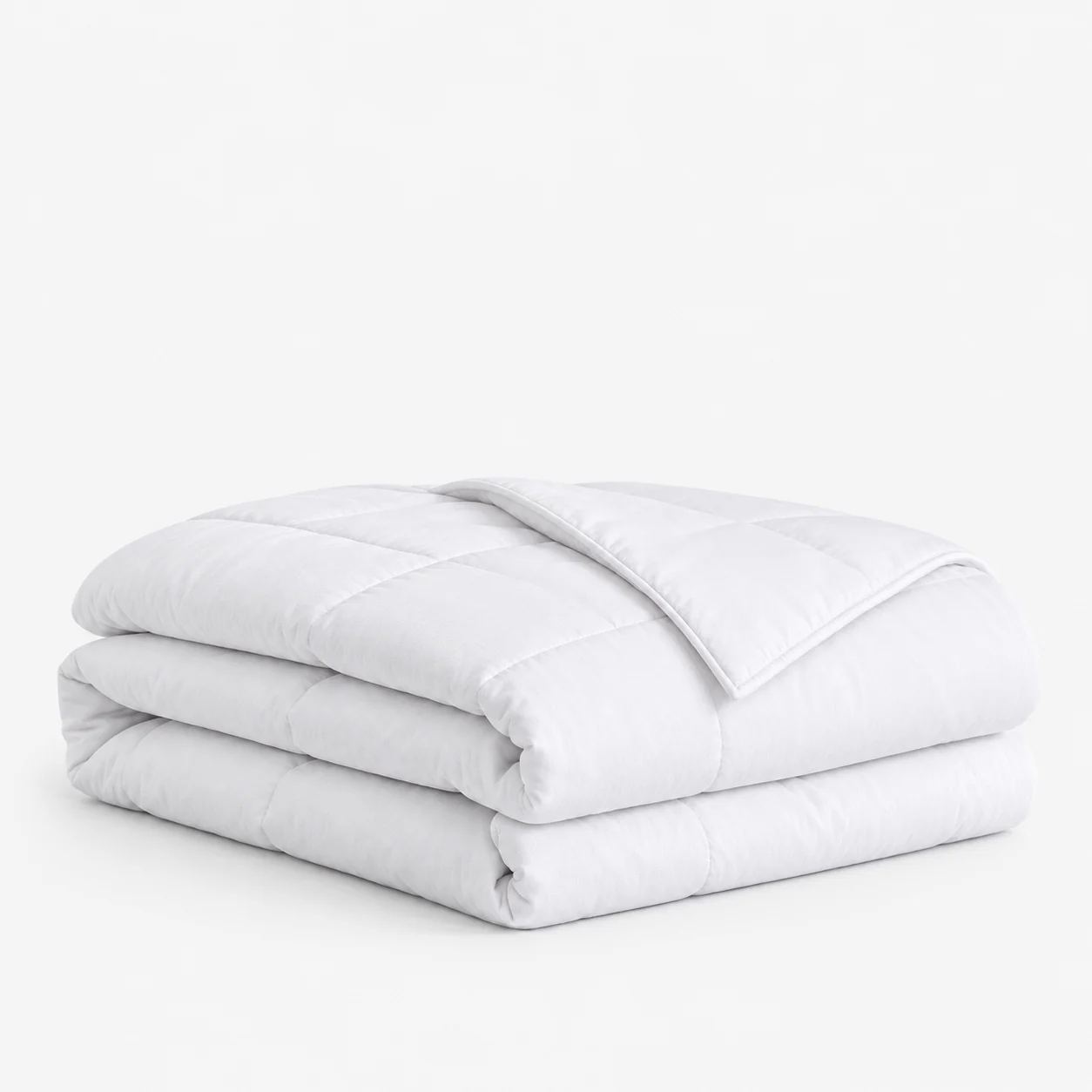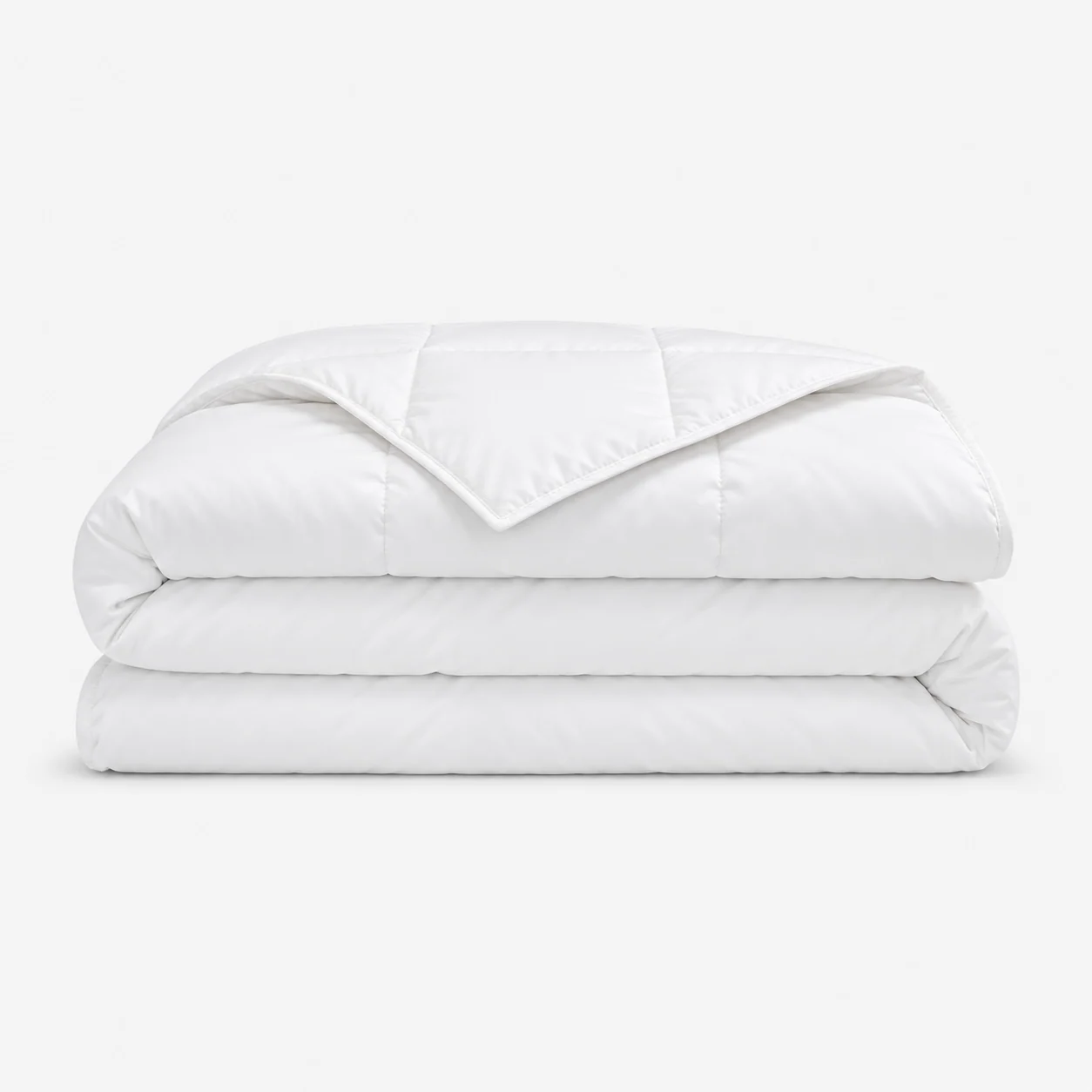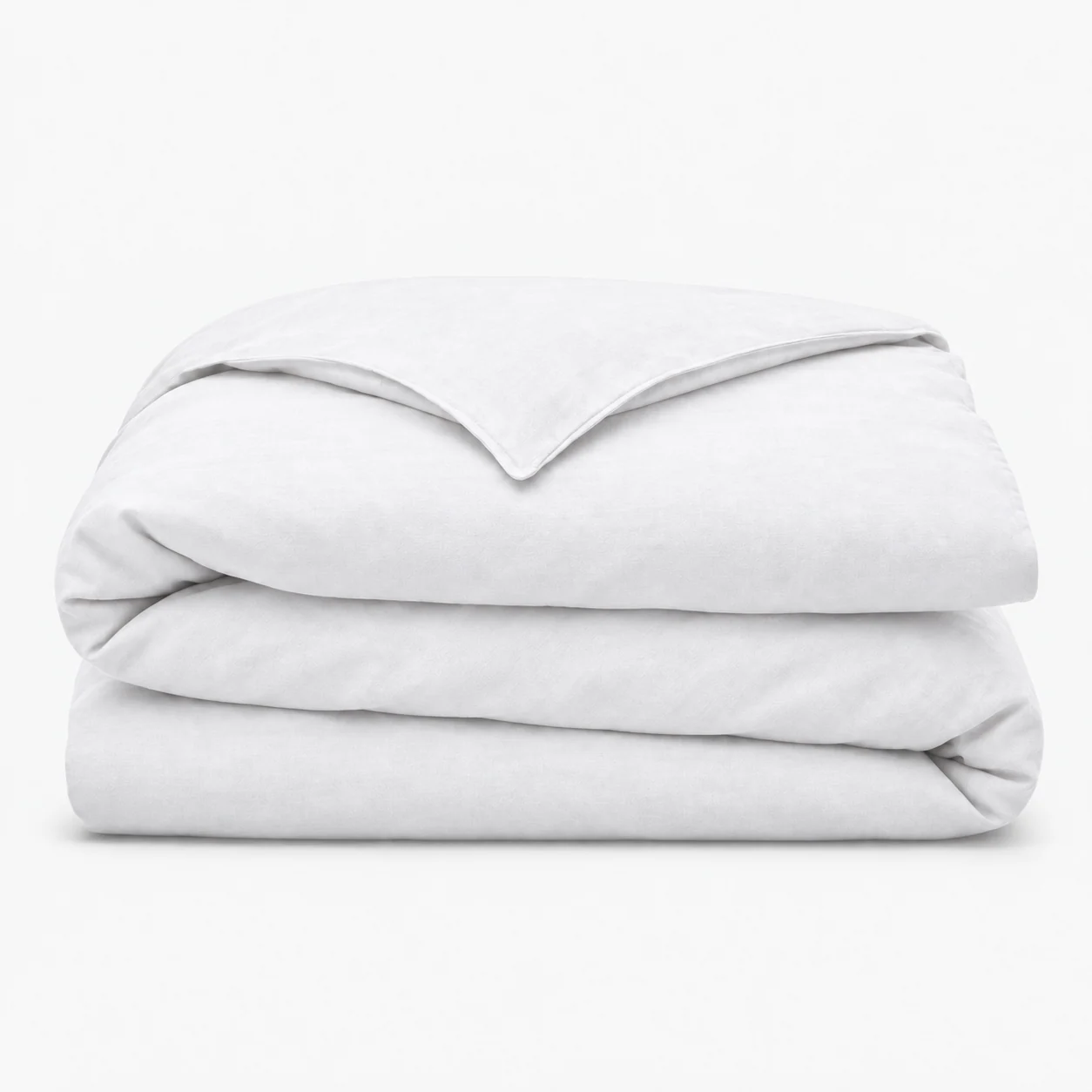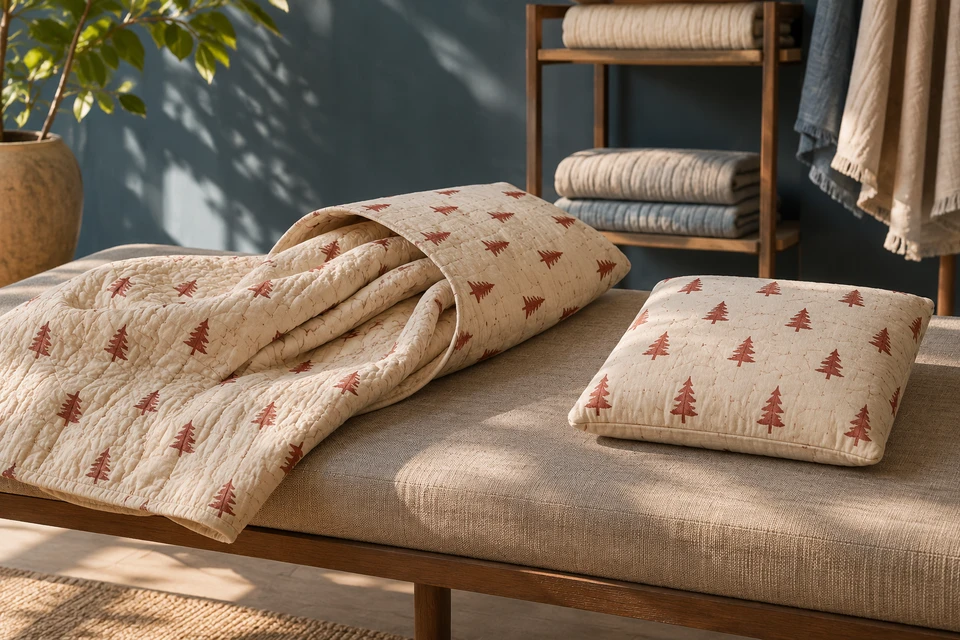
A Christmas quillow is bought as both a quilt and a folded pillow presentation. The design succeeds only when the actual finished quilt can move between those states through its attached pocket, without relying on a carefully staged photograph.
Define the two states of the supplied article
An integral pocket is not a separate gift bag
Pellon's quillow project illustrates the basic concept of a quilt that folds into a pocket to become a pillow. For procurement, that definition leaves important details to confirm: the unfolded dimensions, the pocket arrangement, the visible pillow face and the exact components supplied. Do not confuse a quillow with a quilt packed inside a detachable cover or with a cushion sold alongside a matching throw. Those alternatives can be valid products, but they are not the same construction or customer action.
Show the proposed article fully open and fully converted, with the same sample identity visible in the record. Identify which section becomes the pillow's front and which part forms the opening. Clarify whether the pocket has another intended use when the quilt is open; do not infer a foot pocket or storage function from its position alone. Keep the intended users and ordinary use description explicit. This guide does not establish suitability for infants, a sleeping-support function or any other safety or performance claim.
Size the pocket around finished bulk
Flat measurements cannot represent the folded assembly
Use the intended face fabric, backing, filling and quilting arrangement for the conversion sample. A thin development mock-up can help establish layout, but it cannot approve the fit of a thicker finished quilt. Ask the maker to identify which material decisions remain provisional. Record the unfolded quilt dimensions and the pocket's usable internal space separately, with clear measurement landmarks. A nominal square dimension does not explain where seams or the turning opening reduce the space available to the folded textile.
Have the maker demonstrate the complete fold without removing layers, compressing the quilt with hidden equipment or substituting a smaller sample. Observe whether the folded package fills the pocket evenly and whether corners can be positioned through the intended opening. A tight fit may look compact in a photograph yet be difficult to reproduce; a loose fit may give a different pillow silhouette. Choose the desired outcome on a physical sample and document it rather than assigning an arbitrary universal clearance to all quillows.
Decide which Christmas face appears after conversion
The folded display needs its own orientation check
Map the Christmas motif in both states. A tree placed upright on the open quilt can appear inverted or hidden after folding into the pocket. Use a simple annotated view to identify top, bottom, pocket face and the direction of the final pillow presentation. If the pocket carries separate decoration, approve its relationship to the quilt design instead of treating it as a last-minute label area. The buyer should know which face will be photographed, displayed on a shelf and first seen after unpacking.
Trial the arrangement with the intended size variants. A repeated print may tolerate several fold routes, while a placed motif may require a more specific sequence. Do not assume that enlarging the quilt or changing the quilting leaves the folded face in the same position. Record the actual route used for each variant and ask for revised approval when the visible result changes. The purpose is a coherent two-state product, not a forced promise that every Christmas motif remains fully visible in every possible fold.
Observe conversion by someone other than the maker
Instructions are part of the buying decision
Ask an unfamiliar reviewer to convert the quilt using the proposed instructions, within a sensible supervised sample review. Note where they hesitate, which face they choose and whether the pocket can be turned or filled as intended. Do not coach every movement and then record the result as effortless. The exercise should identify missing information while the design can still change. Clear photographs or a concise fold sequence may be more useful than a claim that the product is easy for everyone.
Inspect the opening, pocket attachment and surrounding quilt after the agreed handling sequence. Record local strain, displaced corners or changes in appearance without inventing a durability rating from an informal demonstration. If the maker proposes a different opening or attachment to resolve a difficulty, resample that construction. A written assurance that the pocket will be larger in bulk is not a substitute for seeing the complete revised article. Keep the conversion review separate from any formal testing needed for the intended market or claim.
Repeat the conversion in the agreed care state
Care and preparation can change the fit relationship
Confirm the appropriate care procedure with the supplier for the actual finished article, then review the same open and folded states after that procedure and its specified preparation. Keep the sample identity and care record together. Measure the body and pocket using the original landmarks, and repeat the fold without undocumented adjustments. The useful question is whether the accepted conversion can still be achieved under the agreed conditions, not whether one dimension alone remains close to its starting value.
Different layers or components may change differently, so investigate the whole assembly if the pocket no longer accepts the quilt as expected. Do not prescribe stronger stretching, aggressive pressing or a new treatment merely to restore the photograph. Ask the technical owner to review the material and construction proposal. Any revised care instruction must be checked for the actual product. Avoid advertising lasting shape, a wash-count life or universal machine washability based solely on the quillow concept or another supplier's example.
Pack and order the approved state deliberately
Choose what the customer receives first
Decide whether the item is packed as a quilt, as its pillow form or in another agreed arrangement. Trial that pack and inspect the result after opening. If the product arrives folded into the pocket, the customer should be able to identify how to unfold it without mistaking the pocket for a separate cover. Confirm the included instruction and component count. Packing dimensions and carton quantities should come from the actual accepted assembly rather than a loose quilt or an empty pillow cover.
Build the enquiry around the two-state photographs, material references, fold sequence, size variants and target quantities. Ask FY Bedding to confirm the appropriate development route and any minimum quantities or sample costs for the proposed construction. Keep changes to filling or quilting visible because they can affect pocket fit as well as appearance. Agree production and transport timing separately from design approval. A Christmas-ready visual presentation does not establish stock availability or an arrival date until the responsible parties confirm the order-specific arrangements.
Approve the same finished quillow open, converted, unpacked and in the agreed post-care state. Tie the pocket size to actual quilt bulk and keep the Christmas orientation and conversion instructions with the purchase reference.
Method references: Pellon Projects: quilt folding into an integral pocket.