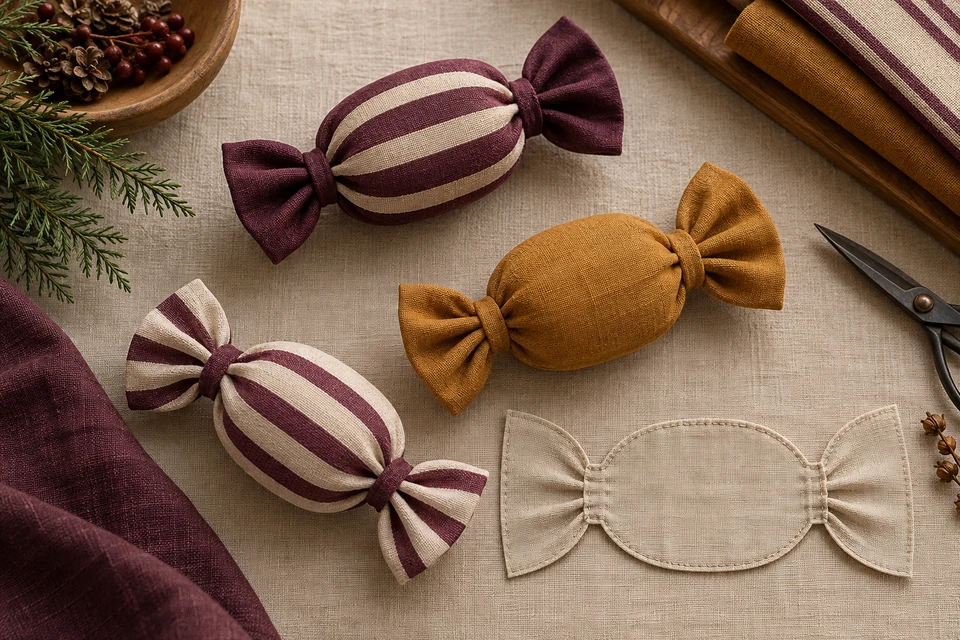
A soft candy ornament is an assembled textile decoration, not a sweet wrapper or a refillable Christmas cracker. Its rounded centre and empty gathered ends have different jobs. Buyers should approve those zones separately so a pleasing sample does not become an inconsistent assortment when fabric, filling or gathering changes.
Define a permanently closed decorative object
Keep the sales description separate from food and toys
Begin with the intended display and the complete sold unit. Is the ornament supplied loose for a tabletop arrangement, fitted with a hanging loop, or attached to another decoration? Record overall length, filled-body length and the visible length of each empty end. State which attachments are included. Avoid photographs that imply the textile contains confectionery or opens to reveal a gift when the actual product is sewn permanently closed.
The separate fabric cracker guide concerns a refillable construction. Do not copy that product's opening instructions into a candy-shaped ornament listing. Decide the intended user and product category with the responsible reviewer; a decorative label alone is not a safety assessment. Record any required evidence before approving small components or loops, without claiming that the appearance establishes suitability for children.
- Define display use and included fittings.
- Distinguish a closed ornament from refillable packaging.
Choose the filled centre before adjusting the ends
Compare profile rather than total length alone
Ask for a production-intent centre with the proposed outer fabric, lining if any, seam and filling. Compare oval, rounded rectangular and cylindrical profiles using identified samples. Specify where measurements are taken and how the soft shape is allowed to relax. A change in filling distribution can move the apparent shoulder even when overall length stays unchanged. Retain side and overhead views that show the centre without squeezing it into a preferred outline.
Identify fill material and any inner containment in the bill of materials. Inspect the seam and the transition into the gathered ends for visible fill, loose threads or uneven shoulders. A decorative sample does not justify a resilience or attachment-strength claim. If the buyer needs performance evidence, agree the method, sample identity and acceptance decision separately from the visual shape approval.
- Record relaxed body dimensions and both shoulder profiles.
- Keep filling inside the agreed closed zone.
Control gathering without filling the wrapper tails
Make the left and right reference intentional
The empty ends should fan out in the intended way without appearing accidentally stuffed. Define their fabric shape, edge treatment and gather location relative to the body. Ask whether the gather is secured by stitching, a fixed textile band or another documented assembly. A loose styling ribbon used for photography must not silently become the only production attachment. Show the reverse and the hidden side of each gathered junction in approval records.
For striped cloth, decide how stripes travel over the body and into the ends. Matching every stripe may change cutting requirements; rotating a tail may be acceptable if it is deliberately approved. Use the pattern placement checklist to record the chosen orientation. Review both ends together, but do not demand artificial mirror symmetry if the agreed construction has a natural handmade variation. Define that variation with actual samples.
- Approve empty-tail edge treatment and gather position.
- Document the securing method beneath any decorative band.
Review colours as assembled ornaments
Count bodies, not loose decorative parts
A seasonal pack may mix cream-and-plum stripes with solid ochre pieces. List the number of complete ornaments in each colourway and distinguish a mixed set from randomly assorted stock. Review the contrast between body, end bands and any hanging loop under ordinary shop lighting. Flat cloth swatches cannot show the shadows created by gathering or the visual change caused by a smaller filled body.
Ask which minimum quantities and cost drivers apply to the fabric, colour, filling operation and final packed set. Request alternatives if the initial assortment requires impractical component quantities. Do not change the colour mix informally to consume leftover bands: the approved pack identity, photographs and order line should all describe the same contents. Keep replacements distinguishable from the original approval.
- Fix the colourway count per sellable unit.
- Reapprove changes to bands, loops or fabric direction.
Protect the gathered profile through packing
Approve the unpacking result, not a loose studio sample
Place the complete assortment in its intended pack and inspect the pressure on the body and empty tails. A compact pack can flatten the ends while leaving the centre apparently unchanged. Open the packed sample using the proposed customer instructions and record whether ordinary handling restores the agreed presentation. Do not require steaming or manipulation that is absent from the care and handling information supplied with the product.
Use the sample packing record to connect the packed arrangement with the arrival photographs. Approve artwork, finished samples and packaging in a defined sequence before confirming a seasonal shipment plan. Send FY Bedding the body profile, tail treatment, intended display, colour split and pack count for a scoped development discussion; a concept image does not establish stock, confirmed production capacity or holiday arrival.
- Retain one packed reference and its unpacking observations.
- Make the delivery decision after construction and pack approval.
Release the ornament only when the filled centre, empty tails, securing method and mixed-pack count match one documented assembly.