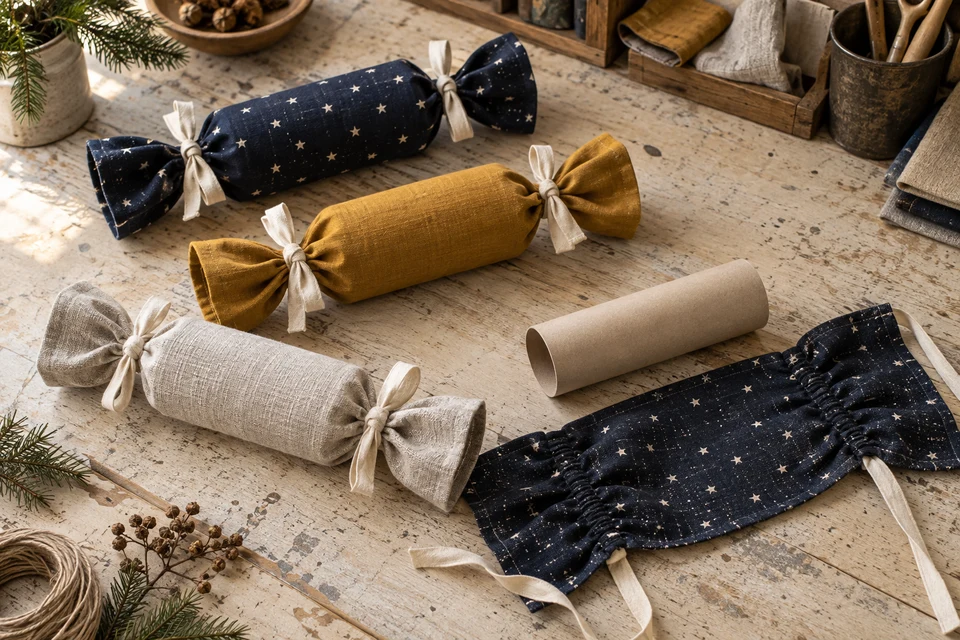
A reusable fabric Christmas cracker can mean a decorative table-favor wrap around a removable tube. This guide covers that textile-and-insert format only, without a snap, pyrotechnic component or supplied edible contents. Buyers should make those boundaries explicit before comparing samples or quotations.
Separate the components in the brief
Do not let a familiar name define the supplied product
List the textile wrap, ties, removable tube and any agreed packaging as separate components. State what is excluded. If a retailer intends to add a gift later, identify who supplies it and who checks its suitability. A photograph containing a wrapped favor does not establish that the favor is included in the order.
The reusable fabric gift-wrap guide addresses general wrap presentation; the cracker-shaped format adds a central cylinder and two gathered ends. Describe the product as a refillable decorative textile table favor where that is the actual scope. Do not use the familiar Christmas-cracker name to imply a snapping action, food-contact suitability or any unreviewed function. Requests for additional components need a separate feasibility and compliance review before they enter the specification.
- List supplied and excluded components in the quotation request.
- Confirm that no snap or pyrotechnic element is part of this brief.
Fit the textile around the tube
Approve overlap and gathering on the actual insert
Record the proposed tube's outside dimensions and the wrap's finished dimensions. Wrap the actual sample around the tube and inspect the overlap along its length. Check whether a seam or raw edge becomes prominent at the front, whether the cloth sits comfortably around the cylinder and whether both gathered ends can be formed without forcing the fabric.
Compare the relationship with bottle gift-bag fit, while recognizing that this product has two gathered ends and a removable straight insert rather than a shaped base. Decide how much tube should remain hidden under the gathers. A longer tube can make the decorative center larger but leave less fabric for the end fans; adjust the full assembly rather than approving each dimension in isolation.
- Retain the actual tube used for wrap approval.
- Record overlap position and visible central length after tying.
Make refill possible without damage
Try the same opening sequence a customer will use
Untie one end, remove the tube, open the wrap and reassemble it using the intended method. Observe whether ties can be handled comfortably and whether the textile maintains its agreed shape after that sequence. If ties are separate loose pieces, decide how they are retained in the retail pack and described in the contents list. Do not assume the word reusable establishes a particular number of cycles.
Check the insert edges and any fold or join that contacts the cloth. The insert contact-review guide provides a useful framework for identifying rubbing points and visible impressions. Discuss the insert material, replacement availability and any care limitations separately. A washable textile wrap does not mean a paperboard insert should be washed with it; instructions must describe the actual components and the evidence available for each.
- Demonstrate removal and reassembly with a production-representative sample.
- Keep textile care and insert handling instructions distinct.
Review the place setting and assortment
Check the finished favor, not only its flat fabric
Place the assembled sample alongside the intended plate, glassware and napkin. Decide whether it sits across the plate, beside it or in a separate gift position. Confirm the length of the tied ends in that arrangement. A generous fan that looks attractive in a studio close-up may crowd a compact table setting.
For a mixed-color pack, state the color sequence and number of each design. Inspect whether the wraps have comparable central lengths and end shapes after assembly. Use place-setting clearance to keep the table arrangement grounded in actual dimensions. If the retailer will assemble or fill the favors, agree which stage is photographed for approval and which stage is supplied. Keep those two conditions explicit in both the pack description and receiving checks.
- Approve one complete table setting with the assembled favor.
- Define color quantities and whether goods arrive flat or assembled.
Choose flat or assembled distribution
Compare preparation time with presentation recovery
Ask for both packing options if the decision is unresolved. Flat wraps and separate tubes may need more assembly at the destination; assembled favors may occupy more pack space and require protection against crushing. Compare actual samples and measured packs instead of assuming one option is always cheaper or more sustainable.
After the agreed storage trial, inspect tie pressure marks, flattened end fans and tube shape. Review ribbon pressure and crease recovery when deciding whether the presentation can be restored with reasonable preparation. Share the component list, assembly method and proposed gift dimensions with FY Bedding for a scoped discussion. Confirm quantities, packaging responsibilities and delivery expectations before presenting the format as a ready-to-ship Christmas item.
- Record the assembly work expected at the receiving destination.
- Approve the packed and unpacked assembly, not only the uncompressed sample.
Can the textile wrap, removable tube and ties be identified, opened and reassembled exactly as the supplied-product description promises?