A sewn fabric envelope gives a flat textile gift a different opening experience from a loose wrapping cloth or drawstring bag. Its appeal depends on a flap that reaches comfortably over the filled body and a recipient who can remove the contents without pulling the seams out of shape. Start with the actual folded gift, then specify the envelope around it. An empty sample cannot establish the fit of a complete Christmas retail set.
Freeze the folded contents first
Thickness is part of the envelope format
List the items in the gift and prepare them in the intended fold. Record the maximum width, length and thickness of the assembled unit, including any insert card or internal band. Two folded tea towels may occupy a different profile from a single napkin set even when their flat dimensions appear similar. Approve a physical packed reference rather than asking the supplier to infer the contents from a nominal rectangle.
Use the folded-pack dimension review to fix the reference. If several gift variants share one envelope, identify the smallest and largest profiles and trial both. A loose fit on one variant and a strained flap on another are commercial design choices, not details to resolve after the packaging quantity has been ordered.
- Measure the assembled gift, including all internal inserts.
- Sample the full range of thicknesses proposed for one envelope size.
Draw the flap in its closed position
An attractive open outline does not prove overlap
Specify the flap reach from its seam or fold line to the intended closure point with the gift inside. Look at the side profile as well as the front. A triangular flap may reach the centre while leaving the upper corners exposed; a broad rectangular flap may cover well but obscure the decorative face. Decide which presentation is intended and keep a closed sample beside the open construction drawing.
The technical brief should distinguish body depth, flap shape and closure arrangement. If a fastener is proposed, record its identity and the area it contacts. Ask for a revised sample when the contents or cloth thickness change rather than assuming the original overlap will remain adequate.
- Approve closed front and side views with the actual gift inside.
- Record overlap as a filled-pack dimension.
Place the Christmas motif where it will be seen
The flap can hide part of the decoration
Choose whether the seasonal motif belongs on the flap, the body or both. A fir sprig placed across the closure line may look complete when empty and become misaligned when the envelope is filled. Review the motif on the finished closed pack from the shopper's viewing angle. Keep the design readable without requiring the retailer to flatten the contents or hold the flap in an artificial position.
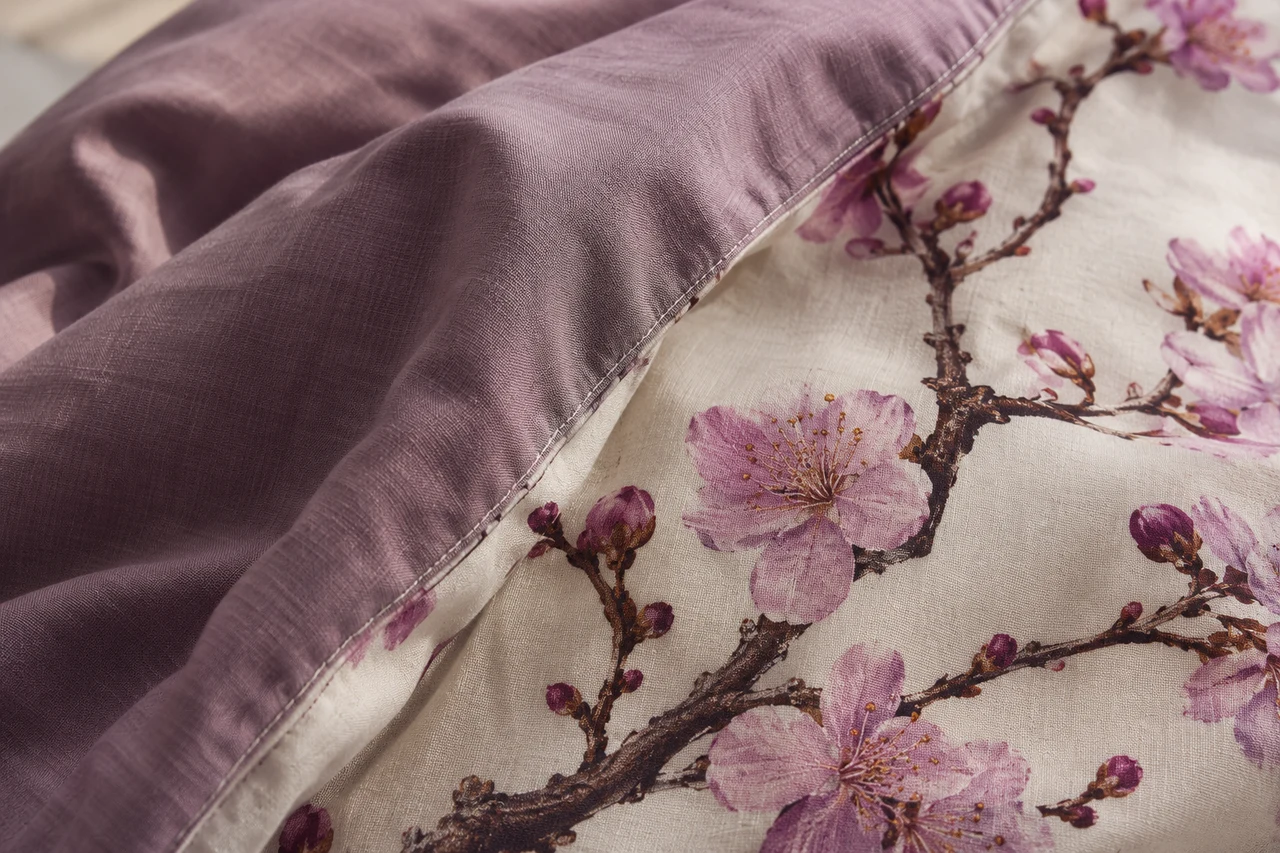
Use the color and material reference to compare the envelope with the gift. A burgundy outer cloth does not need to match every textile inside, but the intended relationship should be explicit. Request the actual material identity and care proposal if the envelope is marketed for continued use, rather than inferring washability from a natural-looking fabric.
- Review motif placement on the filled closed envelope.
- Separate a coordinating color relationship from an exact-match requirement.
Walk through opening and repacking
The recipient should understand the mechanism
Ask someone unfamiliar with the prototype to open it using only the intended presentation. Watch whether they can identify the flap, release the closure and remove the folded gift without catching a corner. Then try repacking the same set. Record the preparation needed to restore the envelope, particularly if the textile has a directional surface or the flap relies on a precise fold.
The fabric gift-wrap guide covers loose cloth presentation; this envelope needs its own sewn-body and flap trial. A proposed reuse claim should describe a realistic function supported by the construction and evidence. Avoid assuming that a fabric presentation envelope is a protective shipping mailer or a long-term storage solution.
- Trial the first opening with a person who has not seen the sample.
- Document any preparation needed before the envelope can be reused.
Quote the envelope and transport pack separately
Presentation does not replace distribution protection
State the number of envelopes, the quantity of enclosed textile sets and who performs final assembly. Ask the supplier to identify sampling, decoration, closure and packing costs rather than comparing a plain empty-envelope price with a fully assembled gift. Confirm the actual minimum quantities for the selected material and construction. If the retailer supplies the contents, agree how a representative packed sample will reach the envelope maker.
Use the packaging approval checklist for the whole offer, including any separate outer protection. Keep the seasonal launch date conditional on confirmed sample and order milestones. A simplified flap or decoration may be a valid alternate, but it should be approved as a different pack rather than silently substituted to recover time.
- Separate empty-envelope, assembly and transit-pack responsibilities.
- Approve alternates explicitly before quantities are committed.
Approve the largest and smallest intended gift profiles inside the finished envelope, with the flap closed and the opening sequence demonstrated. Share those references with FY Bedding to define a quotation that does not confuse presentation packaging with transit protection.