A gathered fabric wreath cover depends on a supporting ring that may be included, supplied by the buyer or excluded from the retail unit. The cloth needs enough fullness for the intended texture while leaving a deliberate central opening and an accessible closure. Buyers should approve that relationship on the actual ring form. This guide concerns decorative textile development, not a claim about hanging-system strength, fire performance or suitability for every display location.
Identify the ring form before sizing the cover
Outer diameter does not describe the whole support
Record the ring's outer and inner dimensions, cross-section and any joins or projections that affect the cloth. Compare a flat ring with a rounded form as different supports even if their outside diameter is the same. Photograph the actual reference from front and side, and retain it with the textile brief. Do not ask the sample maker to infer the section from a single frontal image.
State whether the ring is part of the quoted offer. If the cover is designed for a buyer-owned form, list that reference explicitly and define how substitutions are approved. A broad size label can imply compatibility the sample has not demonstrated. Keep the support's structural and hanging responsibilities separate from the cover's fit and decorative appearance.
- Record inner opening and support cross-section.
- Identify who supplies and approves the ring form.
Choose a gathered appearance rather than maximum fullness
The opening is part of the design
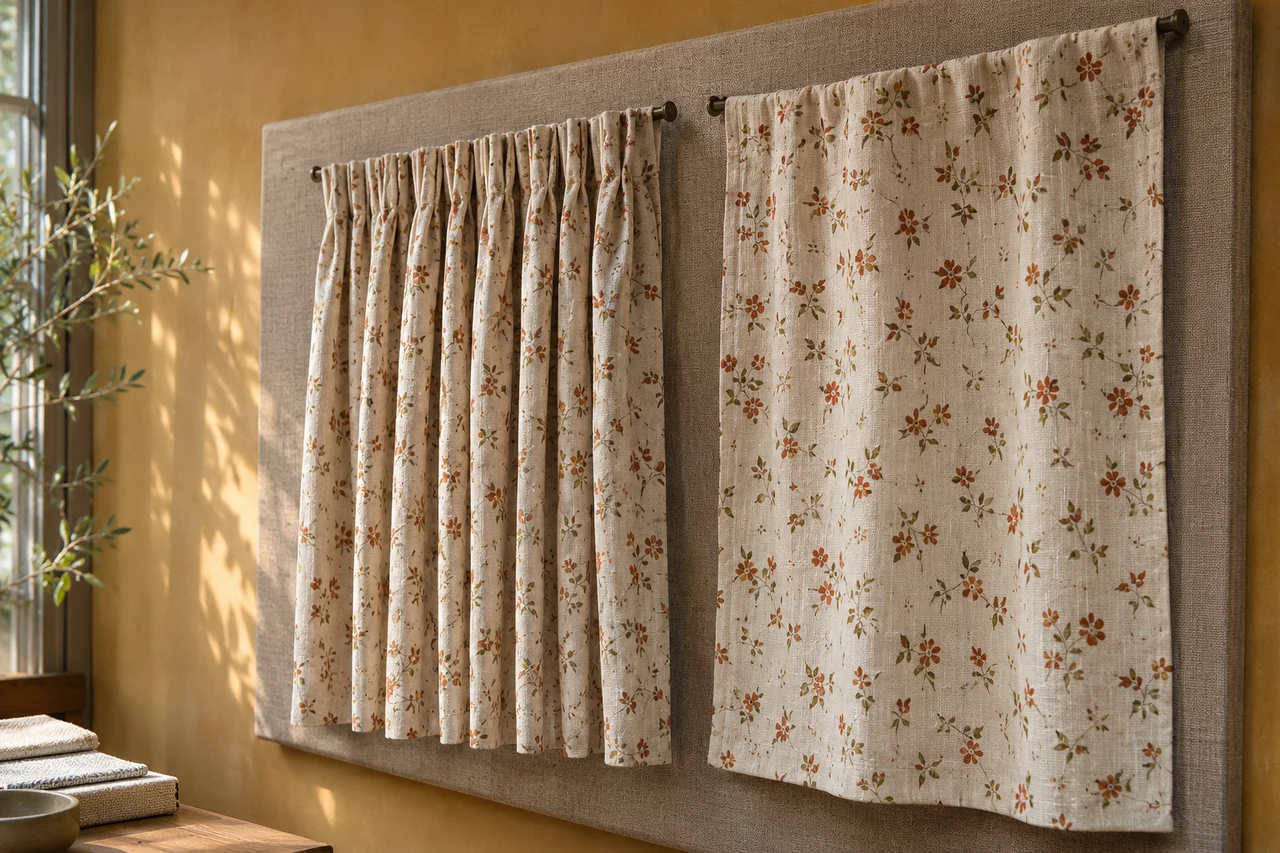
Distribute the cloth around the ring using the proposed assembly method. Observe the front relief, side depth and central opening. More cloth can create a richer surface but can also crowd the aperture or hide the ring's intended circular outline. Compare alternatives in the same position and light, with no extra pins holding folds that the finished assembly will not retain.
Use the Christmas collection references to agree the visual direction, then record the actual cover pattern and assembly used to obtain it. A photo alone does not tell the supplier how fullness was distributed. Mark any intentional difference between the top and lower sections, and keep the accepted naturally resting view rather than a moment of freshly arranged folds.
- Approve the aperture and side depth as well as the front.
- Document the actual method of distributing fullness.
Keep the removable closure accessible
A concealed fastening still needs an ordinary opening route
Show the closure on the reverse and identify how the cover is removed without damaging the ring or fabric. Open it on the sample and check whether the fabric can pass around the support's joins. If assembly requires tools or professional fitting, describe that honestly rather than presenting the cover as an effortless customer swap. Do not improvise a fastening absent from the quoted design.
The textile support-interface guide offers a useful related distinction between decorative cloth and display hardware. For this cover, verify that the proposed closure does not conflict with the support's separately approved hanging arrangement. Any new ring, closure or hanging route should trigger the relevant review instead of being treated as a cosmetic substitution.
- Show the reverse and ordinary removal sequence.
- Review closure access alongside the separate hanging arrangement.
Assess stored and reopened appearance
Reusable styling needs a realistic setup reference
Store the sample in the proposed retail or seasonal pack, then reopen and refit it through the accepted instructions. Inspect the gathered profile and central opening before special styling. Record any permitted adjustment needed to recover the reference. If the cover only looks satisfactory after an undocumented treatment, revise the customer instructions or the product rather than hiding that step.
Confirm care information for the actual material, decoration and closure with the technical owner. Keep the ring's care separate where appropriate. The sample evidence record should identify which components were present during each assessment. A removable cover is not automatically washable, and a brief refitting trial does not establish an indefinite service life or all-season outdoor use.
- Review the genuine reopened and refitted sample.
- Confirm care for the cover and support separately.
Compare complete cover-and-support offers
Avoid pricing different sold units as equivalents
Ask suppliers to separate textile cover, supporting form, hanging accessories and packaging in the quotation. Confirm which elements are included in the customer unit and which are only photography props. Identify color or fabric variants that change the gathering pattern or assembly time. Shared nominal diameter does not make differently shaped supports or different cover constructions interchangeable.
For a fabric wreath-cover development enquiry, send the ring sample or detailed drawing, preferred fullness, closure access and quantity mix. Confirm the offered material route and sampling stages before accepting a production schedule. Preserve the released cover together with its named support reference so future reorders do not drift into a different silhouette under the same product name.
- Compare textile, ring and accessory scope explicitly.
- Keep the released cover linked to its approved support.
Approve a removable wreath cover on its named ring, with a deliberate aperture, documented gathering and accessible closure. Keep the decorative fit separate from the support and hanging evidence.