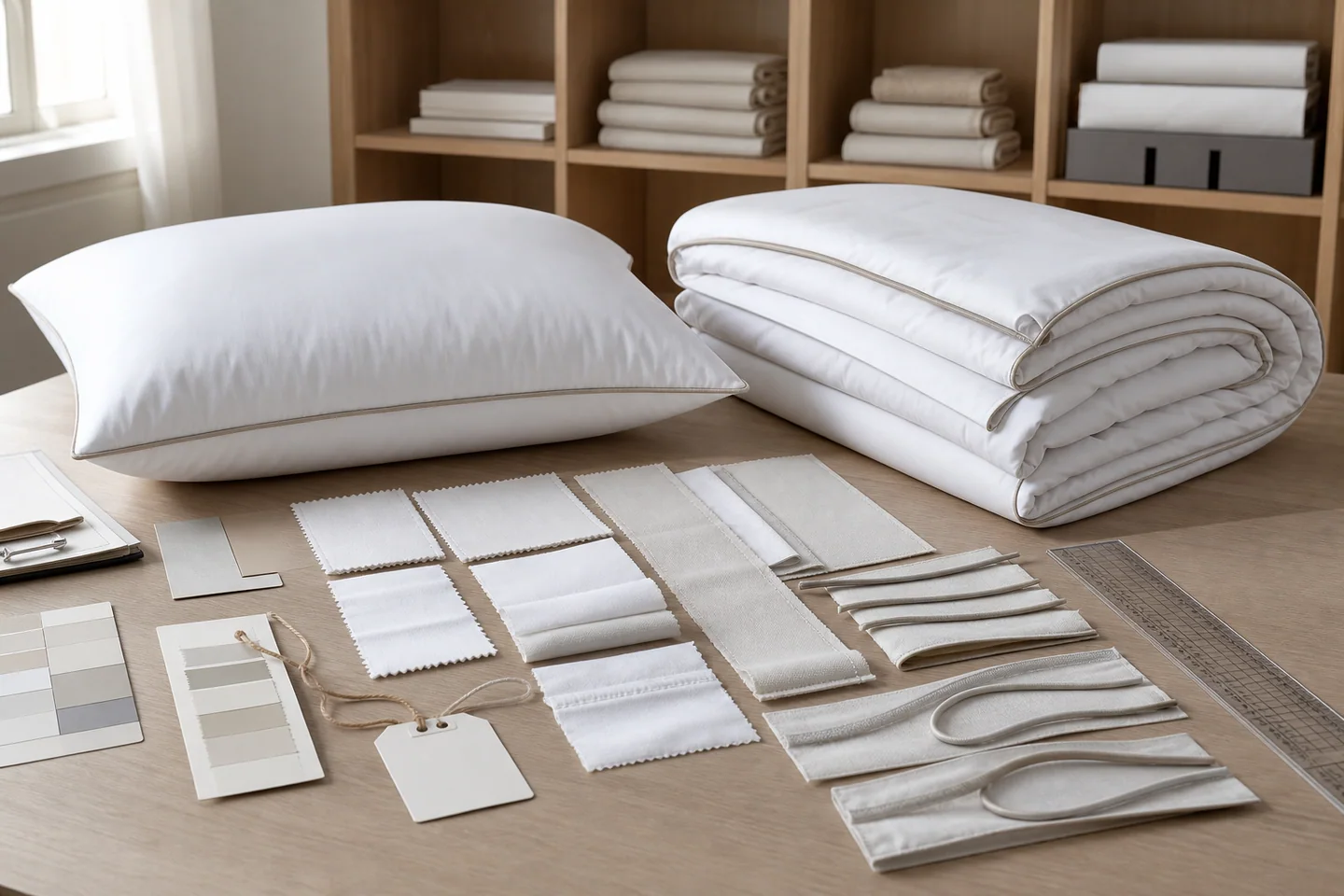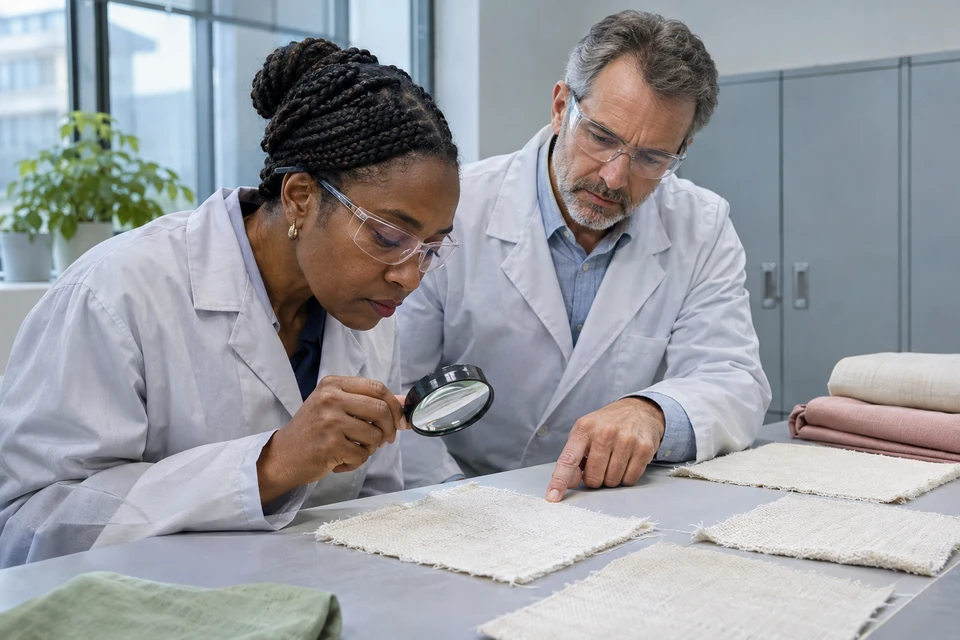
A bright white cotton sample does not by itself show that its preparation was appropriate for the next production stage. Scouring and bleaching answer different questions, and later finishes can further change how a sample looks and wets. For a bedding order, the buyer needs a clear account of the preparation state being supplied and evidence relevant to that state. Whiteness should not become a convenient substitute for that discussion.
- 1. Separate removal of impurities from creation of a white base
- 2. Identify the stage represented by each sample
- 3. Connect preparation requirements to the next operation
- 4. Ask for relevant evidence instead of relying on an improvised demonstration
- 5. Keep bleaching and added finish claims in their own scope
- 6. Release a traceable preparation and finished-product record
Separate removal of impurities from creation of a white base
Similar-looking samples can represent different preparation histories
CottonWorks describes scouring as removal of unwanted impurities during preparation and bleaching as a process used to obtain a white base. Its cotton preparation guidance also discusses removal of natural oils and waxes. These definitions help frame the buying question; they do not establish a result for any supplied bedding. Ask the processor to identify the preparation steps relevant to the actual cotton material rather than accepting the single word prepared as a complete description.
Keep desizing distinct where it applies. Removing added warp size and addressing cotton's natural impurities are not the same approval question, even if a processor combines operations in a particular route. The buyer does not need to prescribe a chemical recipe. The useful record states the actual substrate, the purpose of the relevant steps and the condition the processor is committing to deliver for the following operation or finished product.
Identify the stage represented by each sample
A finished soft sample is not an unqualified preparation reference
Ask whether the sample is raw, prepared for dyeing or printing, coloured, mechanically finished or treated with an additional finish. Record the sequence at a level that connects the supplied sample with the actual production route. A soft finished swatch may be useful for a bedding decision but unsuitable as the only evidence about an earlier preparation step. Keep intermediate and final samples separately identified if both are used in the approval discussion.
When comparing two suppliers, reconcile those sample states first. A difference in visible whiteness, wetting or handle may reflect later treatment rather than scouring alone. Do not attribute every observation to the stage currently under discussion. Ask the responsible processor to explain the relevant differences and the evidence available. This prevents a purchasing review from rewarding an attractive final presentation while leaving the underlying preparation requirement undefined.
Connect preparation requirements to the next operation
The handoff needs a defined acceptance question
Clarify whether the material is being purchased for subsequent dyeing, printing, another finishing step or direct assembly into a specified bedding article. Ask the receiving processor or technical team what preparation characteristics must be demonstrated for that handoff. The requirement should belong to the actual substrate and intended route, not a generic checklist copied from a different cotton product. A bright retail appearance and readiness for a particular coloration process are related but separate decisions.
Document who confirms the handoff and which material lot or sample that confirmation covers. If the next operation exposes an unexpected issue, retain enough identity information to investigate the sequence rather than assuming that the last visible stage caused it. The purchasing file should support a focused technical conversation about the actual material history. It should not supply an improvised chemical correction or encourage changes to process conditions without qualified production review.
Ask for relevant evidence instead of relying on an improvised demonstration
Observations need a method and a sample identity
Where cleanliness, wetting or another preparation characteristic is important, agree the appropriate assessment with the qualified laboratory or responsible technical provider. Identify specimen preparation, the measured property, the method and the acceptance criteria. A casual drop of water on a finished sample can be influenced by more than the earlier scouring stage. Treat such an observation as a prompt for investigation, not a standardized result or proof of complete impurity removal.
Review any report against the actual material reference and stage. Do not use a result from an uncoloured intermediate cloth to claim the performance of a finished bedding set containing other fabrics, sewing components or treatments. Likewise, a final-product result may not explain why an intermediate process behaved unexpectedly. Keep each piece of evidence attached to the question it can answer, and ask for clarification when the tested specimen cannot be traced to the offer.
Keep bleaching and added finish claims in their own scope
Whiter is not automatically better prepared
If a white base is required, define the intended appearance and the evidence relevant to it separately from scouring. Ask whether any optical brightener or other finish contributes to the appearance of the sample, where that information is material to the project. Do not assume that a naturally cream sample is unclean or that a very white one proves superior preparation. The commercial requirement should be explicit enough to avoid using colour alone as a technical verdict.
For the completed bedding article, review the actual composition, care proposal and relevant product assessments. Scouring is not sterilisation and does not establish a hygiene, medical or skin-safety claim. A process description also does not certify chemical compliance. Any such statements require their own correctly scoped evidence and review. Keep the language in the quotation and product copy limited to what is known about the supplied article rather than expanding a preparation term into unrelated benefits.
Release a traceable preparation and finished-product record
Make changes visible before another lot is accepted
The purchasing record should identify the cotton material, relevant preparation route, sample states, accepted handoff evidence and final article reference. Establish which changes need review, including a different substrate, processor, sequence or significant finishing revision. For repeat orders, confirm that the offered material still matches the agreed scope instead of relying on a familiar white swatch. The useful control is the link between the material history and the accepted result, not a colour impression remembered from development.
Send FY Bedding the intended bedding product, required material state, downstream process or care expectations, quantity and available technical requirements for discussion. Ask for confirmation of the proposed supply scope and evidence without assuming ownership of a particular processing line. If a preparation question remains unresolved, keep it visible before release. A well-defined cotton order distinguishes cleaning, whitening and finished-product performance so each can be assessed by the appropriate evidence.
Does the file distinguish scouring, any desizing or bleaching, and later finishes, with sample identities and appropriate evidence for both the preparation handoff and the actual finished bedding?
Method references: CottonWorks: scouring and bleaching are distinct preparation steps; CottonWorks: natural oils and waxes in cotton preparation.