Downproof performance comes from the shell fabric, finishing, seams and fill system working together. A very closed fabric may reduce leakage but change hand, noise and breathability, while an unsuitable seam or needle can create leakage paths in otherwise capable material.
Define the shell construction and finished state
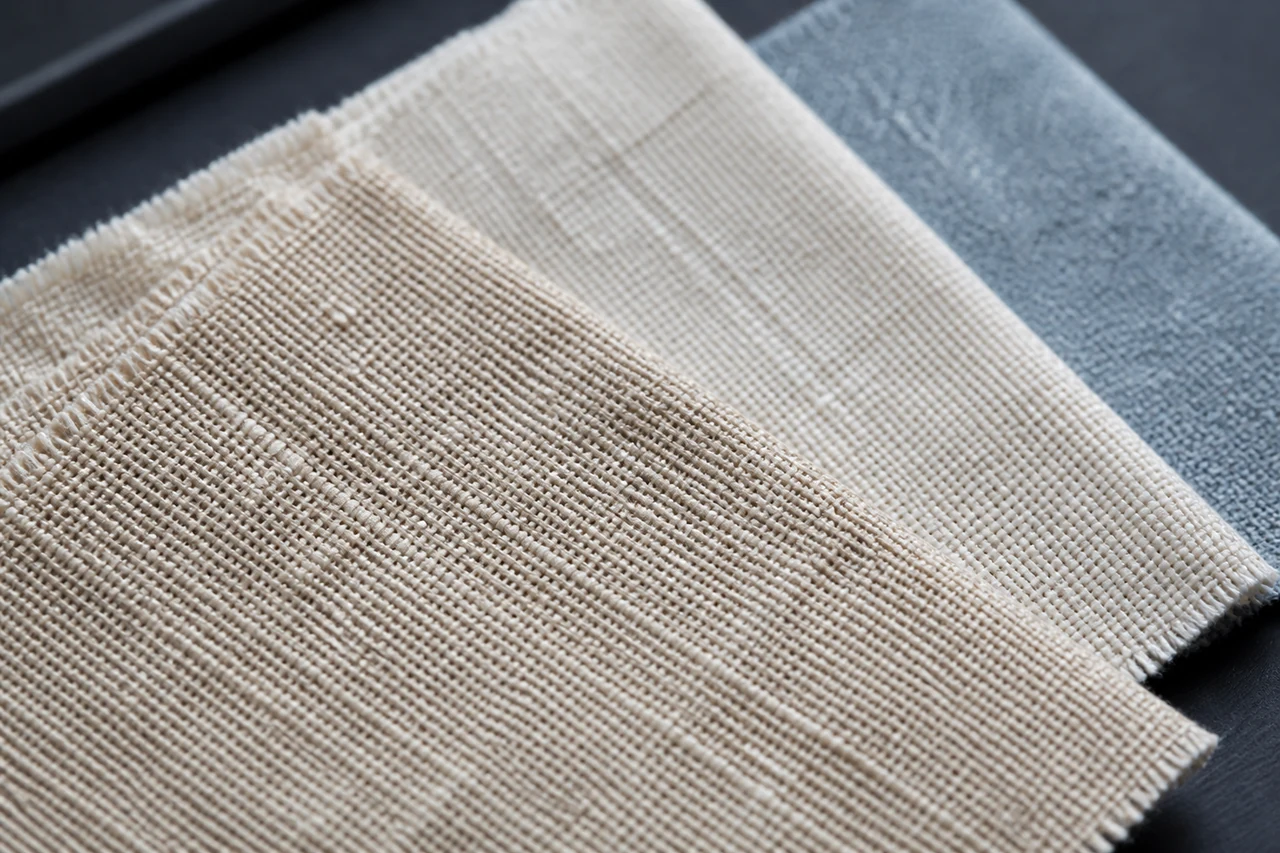
Record fiber content, yarn construction and count, weave, density, finished weight, usable width, color and face direction. Identify calendering, coating or other finishing that contributes to downproof behavior. The approved state is the finished fabric, not only greige construction data.
Place shell and finish references in the home-textile tech pack. A change in mill, yarn, density or finishing route can alter air flow, hand and leakage even when weight remains inside tolerance.
Set air-permeability methods and limits
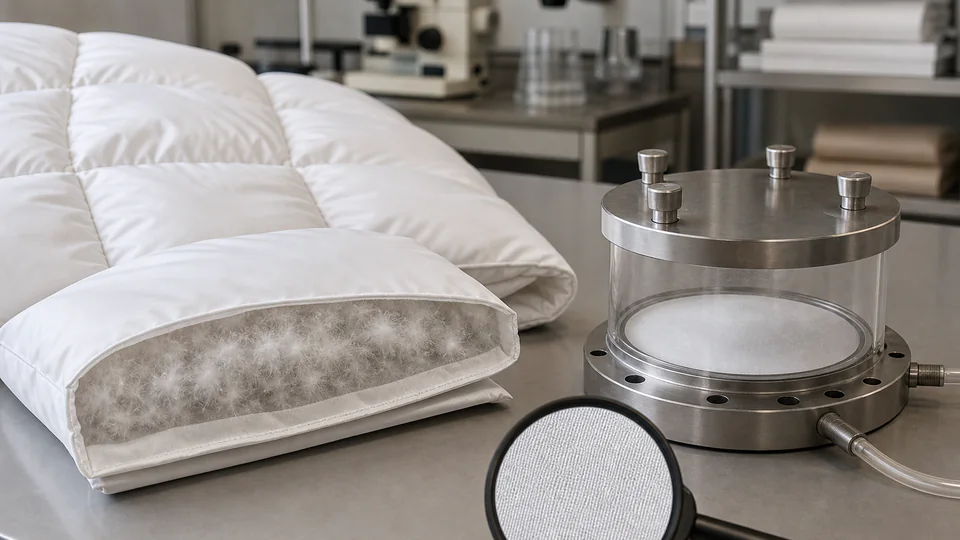
Specify the test method, pressure differential, test area, conditioning and units. Record multiple readings across representative fabric rather than one convenient location. Agree how results are rounded and how border or visibly defective areas are handled.
Select limits from product experience, fill type, comfort needs and validated performance rather than copying a number without context. Laboratory air permeability is an important process indicator, but it should be interpreted with seam and filled-product evidence.
Balance proofing with hand, noise and comfort
Compare coded finished fabrics for softness, drape, surface friction, rustle, opacity and air movement. Aggressive finishing can improve one metric while creating a noisy or board-like shell. Evaluate the fabric around the intended fill weight and quilting or baffle construction.
Run repeated flexing and care trials because finishes can relax or change. Assess whether the result remains acceptable after packing and recovery. Avoid describing laboratory closure as comfort without evidence from the finished product.
Test seams and filled-product leakage
Approve needle size, thread, stitch density, seam allowance and construction on the actual shell. Inspect needle holes, seam grin and leakage at corners, baffles, labels and closure points. Handling, compression and agitation trials should represent expected product use and packaging.
Connect shell evaluation with the seam specification and fill specification. Record fill type and particle profile because the same fabric may behave differently with another blend.
Control bulk fabric, finish and changes
Define incoming checks for construction, weight, width, shade, appearance and air permeability by roll or lot based on risk. Inspect for calender variation, creases, coating marks and local weak areas before cutting. Keep retained fabric and filled-product samples from approved production.
Require notification before changing yarn, weave, mill, finishing recipe or equipment. Revalidate air permeability, hand, care and leakage through formal change control. Trace finished bedding to relevant shell lots so complaints can be investigated and contained accurately.
Trend test results instead of reviewing only pass or fail. A steady movement toward the limit can reveal finish drift before leakage appears. Compare the trend with hand, width and shade records so corrective action addresses the actual mill or finishing variable.
Approve downproof shell as a finished fabric and seam system using a named air-permeability method plus filled-product leakage, care, hand and noise evidence.