The word chenille can describe an appearance without telling a buyer how the surface was made. A floral panel built from stitched and cut fabric layers is a different construction from a fabric woven with chenille yarn. Before comparing quotations, establish which route the supplier is proposing and examine how the botanical image changes when the upper layers are opened. A soft-looking photograph is not a construction specification.
Ask whether the texture comes from yarn or fabric layers
The material list should explain the visible surface
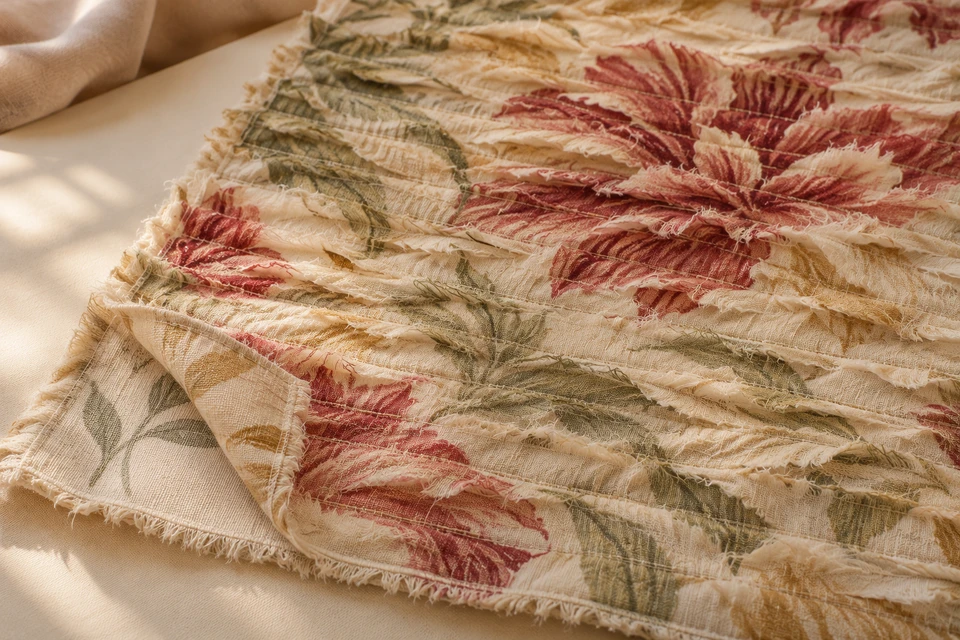
Request a cross-section or an unfinished sample showing the proposed layers and their relationship to the base. OLFA's published fabric-preparation example describes a layered construction in which stitching creates channels and upper fabric layers are cut while the base remains intact. This explains the faux-chenille principle; it is not a pattern instruction for the buyer to copy or evidence that a particular FY Bedding collection item uses that process.
Have the supplier identify the ground, decorative layers and any other components separately. If the submitted surface is instead made with chenille yarn, record that distinction and assess it under the appropriate specification. Do not compare the two offers as identical simply because both use the same descriptive name. Their visual result may be similar from a distance, but the construction, material consumption and sampling questions are not necessarily the same.
Decide where the floral image is carried
A print on one layer can read differently after cutting
Ask which layer or layers contain the botanical image and which contribute background colour. Compare the uncut arrangement with the completed surface. As the cut edges open, the visible balance of printed areas and underlying colours can change. The buyer should approve the final reading of the flower, not just the attractive flat fabric that entered the process. Retain both stages as supporting evidence when the transformation matters to the design decision.
Include representative flowers, leaves and small connecting details in the trial panel. A broad petal and a fine stem may not remain equally legible through the same layered texture. Decide whether the design is intended to read as a clear botanical image or a looser floral colour impression. Neither choice should be left to assumption. If a more abstract result is accepted, describe it as that result rather than promising the crisp detail visible in the original print file.
Review the stitched channels as part of the composition
Direction changes the way the image breaks up
Identify the proposed channel direction and its position within the finished panel. Photograph the texture under consistent light and from the intended product-viewing direction. Check how the stitch lines cross key floral features and whether the opened surface produces the agreed rhythm. Do not replace this review with a general statement that the panel should look fluffy. A defined physical sample gives the supplier a more useful target than an adjective alone.
Where an alternative channel arrangement is proposed, compare it on the same artwork and layer combination if a controlled comparison is needed. A simultaneous change in several materials can make the reason for a different appearance difficult to identify. Record the design and construction revision of each sample. Avoid adopting a generic channel spacing or cutting recipe from a tutorial as a production requirement; the technical method must be suitable for the actual proposed materials and product.
Check the base and the boundaries
The intended cut surface should not conceal unintended damage
Inspect the reverse and the edges of the panel with the supplier's technical team. Confirm which layer is intended to remain continuous and identify any cut or disturbed areas that fall outside the approved construction. The buyer should not assume that an attractive opened face proves the supporting base is intact. Where a finding is uncertain, retain the sample and request a technical explanation rather than classifying it solely from a photograph.
Review how the layered surface finishes at seams, closures and panel edges. Show the proposed seam allowances and which layers continue into the assembly. If a decorative zone stops before a construction edge, preserve that location in the approved reference. These observations define the product being purchased; they are not a substitute for any required seam, abrasion or care assessment. A layered textile may need several kinds of evidence, each linked to the actual offered construction.
Approve the surface after the agreed finishing stage
Do not compare an unfinished trial with a finished reference
Ask the supplier to state when the sample reaches its intended presentation stage and what processing has occurred before submission. Compare like-for-like states. A newly cut sample and a sample whose edges have been deliberately opened may look different without representing different artwork. Keep the processing record available to the responsible technical team and label the samples clearly so buyers do not mistake a development stage for the final approval standard.
Review loose material, surface consistency and floral visibility using the agreed inspection conditions. If shedding or appearance after care matters to the intended use, define an appropriate assessment and retain the results for that specific proposal. Do not infer satisfactory performance from a supplier brushing the sample once or from a clean staged image. Any claim about continuing appearance should be supported separately from the initial design approval and should state the relevant conditions.
Make quotation differences visible
Layered construction can change the proposed material scope
Request the material identity of each layer, the finished panel dimensions, artwork revision and assembly reference alongside the commercial offer. Ask suppliers to identify changes in layer count or construction instead of treating them as invisible cost substitutions. Minimums, sampling charges and production timing should be quoted for the actual proposal. A price for a superficially similar chenille-yarn fabric is an alternative route, not automatically the same product at a better price. When discussing the FR-01 floral direction, ask separately whether a layered cut-fabric construction can be proposed; the displayed photograph is not a construction record.
When discussing an FY Bedding floral project, use a selected botanical direction as the starting point and state explicitly that a stitched-and-cut layered effect is being explored. The public floral range does not establish that this construction is available for every displayed design. Request feasibility confirmation and a physical sample before approving the route. The completed purchasing brief should allow someone to trace the visible flower back through the cut layers to a clearly identified supporting base.
Identify the layered construction, inspect the continuous base and review the flower after the intended finishing stage. Keep faux-chenille fabric layers distinct from chenille yarn when comparing offers.
Method references: OLFA: stitched and cut fabric layers with an intact base.