Chenille cushion covers are often selected by touch before anyone writes a technical brief. That makes the reference easy to like and difficult to reproduce if the yarn, fabric and preparation remain unnamed. A buying team should turn the initial impression into a small set of observable decisions: how the pile presents across the face, how the seams disappear or remain visible, and what the customer should expect after the agreed care route.
Chenille describes a yarn character, not a fibre declaration
Ask what the proposed cover is actually made from
CottonWorks defines chenille as a yarn with a pile and describes its fuzzy appearance. The name therefore does not establish that a cushion cover is cotton, polyester or any particular blend. Ask the supplier to identify the offered fabric and its composition, yarn arrangement, backing if present, and finish. Keep that information tied to the sample reference instead of treating several visually similar chenille swatches as interchangeable.
Show whether the same cloth will be used on the face and reverse. A contrasting reverse may be an intentional design choice, but it changes the product being quoted and should be visible in the bill of materials. Use the composition and labelling review to separate material evidence from the decorative name. Do not extend a source's certification or care claim to a different cover construction.
Agree the face appearance on a complete cover
Compare ordinary presentation, not a freshly brushed patch
Place an assembled cover on its identified insert and view it in the intended retail display. Compare the centre, edges and corners under consistent lighting. Record which changes in pile presentation are part of the accepted material character and which would cause the buyer to question the product. Do not continuously brush or turn the sample to obtain a favourable photograph without recording the preparation used.
Keep a flat swatch for material identity and a complete cushion for appearance reference. Those samples answer different questions. The multi-light colour review can support shade decisions when required; it should not be confused with a change caused by the pile's viewing direction. Describe the observation precisely before asking the source to solve it. Otherwise, a colour adjustment may be proposed for a surface-presentation issue.
Discuss how a store should present a cover that has just been unpacked. The supplier may propose a preparation routine for review, but that routine must be assessed rather than assumed. Keep an untreated unpacked example beside the prepared one so the merchandising team understands the difference the customer may initially see.
- Identify the insert used for the appearance review.
- Record any permitted brushing or preparation before assessment.
Inspect the seam while the cover is filled
Soft pile must not conceal an unresolved construction
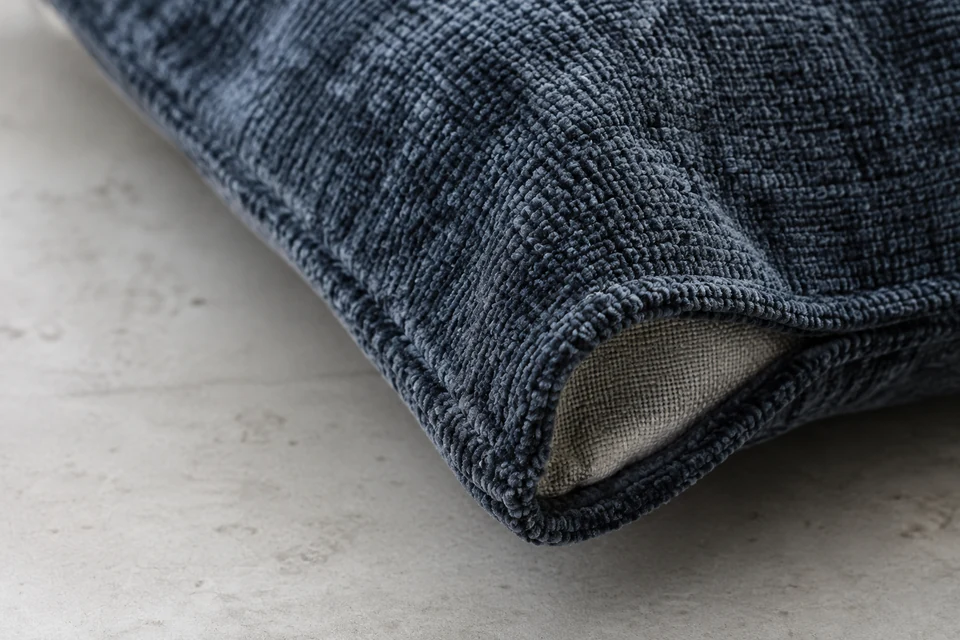
Examine the sewn perimeter, corners and closure in the normal filled state. Look for exposed ground fabric, unexpectedly flattened bands, uneven turns and pile trapped in a way that changes the intended edge. Ask for a representative sewn sample rather than choosing a seam method solely from a swatch. The technical team should propose the construction and any necessary evaluation; the buyer should describe the required finished appearance and use context.
Link the chosen edge to the seam and stitch specification. Keep any required seam-performance evidence separate from the visual approval. If the cover only looks acceptable with a smaller insert, record that as a change to the assembly and revisit the insert-to-cover decision. Do not approve the originally quoted fit on the strength of a different display combination.
Make care approval specific to the offered cover
Repeat the pile and seam observations after processing
Request a proposed care route supported for the complete construction, including the closure and any backing or trim. Agree the sample preparation and evaluation conditions before the trial. After processing, inspect the same face areas, edge lines and closure positions used in the first review. Retain both the observations and the sample so the acceptance decision does not depend on a short written note saying that the cover washed well.
If loose fibres, snagging or contact wear are concerns for the intended setting, state the concern and request an appropriate evaluation plan. The surface-damage guide and contact-zone evidence guide help scope those separate questions. Do not convert a soft feel into a durability promise, or improvise an aggressive rubbing demonstration and present it as a standardised test result.
- Compare the same identified areas before and after care.
- Record observations separately from formal performance evidence.
Carry the accepted surface into the retail handover
Packaging and photography should represent the supplied product
Review the packed cover after a representative unpacking and preparation routine. Decide whether the retailer will sell the cover alone or filled, and show that distinction in the order and product content. Ask how the proposed fold and pack support the accepted presentation rather than assuming that an unpacked sample will immediately resemble a styled cushion. Any required preparation should be practical, documented and reflected in the retail team's expectations.
Keep approved material references with the photography-to-sample record. Order colours and sizes against named constructions, with minimums and availability checked for the actual yarn and fabric route. Share the desired pile character, edge treatment and care expectations in a FY Bedding sample enquiry. The next useful output is a confirmed sample and sourcing scope, not an unsupported claim that every chenille appearance is already available at one fixed minimum.
Release the cover only when material identity, complete-face appearance, filled seams, care observations and retail preparation all point to one accepted revision. Chenille is the start of the material discussion, not its complete specification.
Method references: CottonWorks: chenille yarn definition.