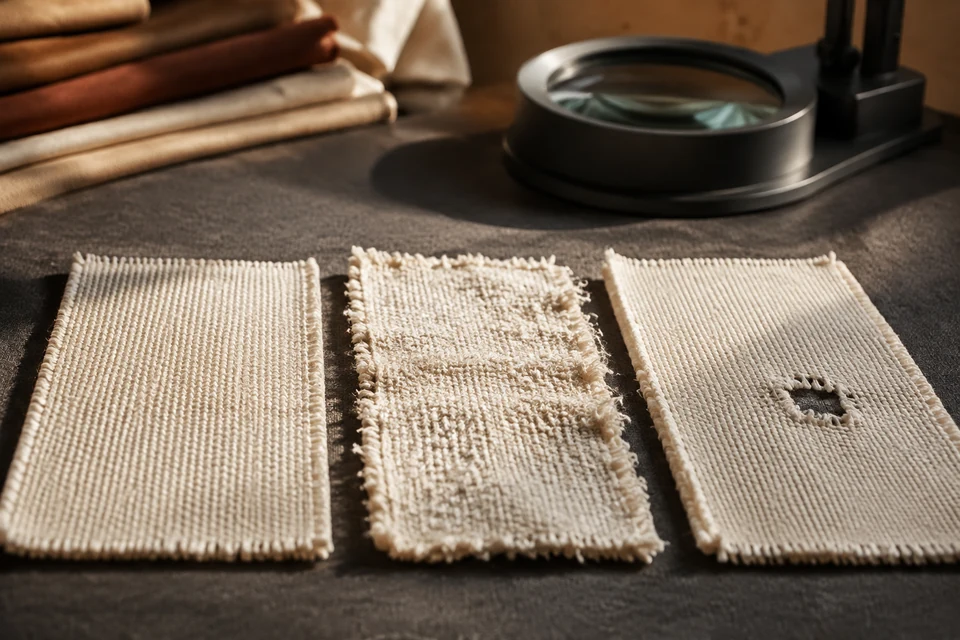
Bedding abrasion evidence becomes useful when it answers a defined purchasing question: where might the fabric wear through, under which contacts, and what observation will trigger rejection? A cycle count copied into a quotation cannot answer those questions alone. Sheets, pillowcases and decorative covers encounter different combinations of rubbing, pressure, laundering and handling. This guide explains how to commission and compare evidence for those contact conditions. It focuses on loss of material and the chosen test endpoint, while keeping appearance changes and actual service-life expectations visible in the buying decision.
Map the contact zones
Describe the wear mechanism before selecting a test
Start with the product in its intended setting. Mark areas that contact a mattress edge, a sleeper, a chair surface or housekeeping equipment, and note whether the fabric is flat, folded or stretched there. Record the layer immediately beneath it because a padded surface and a hard edge create different conditions. The product testing plan should connect each concern to the evidence needed, rather than assigning one familiar test to every item in the collection.
Photographs of returned items can help identify locations, but first separate abrasion from cuts, open seams, chemical damage and snagged yarns. Several mechanisms may coexist. Ask the reviewer to record uncertainty instead of labelling every hole as poor fabric. The returns-to-specification guide offers a way to turn these observations into questions for a controlled trial. Include an unused reference so the original weave and finish can be compared with the affected area.
- Mark the contact location on the product.
- Record the supporting surface and fabric tension.
- Separate suspected abrasion from other damage.
- Retain an unused comparison specimen.
Agree the method and endpoint
Make the reported result interpretable
The official scope of ISO 12947-2:2016 describes a Martindale procedure for determining specimen breakdown through inspections at defined intervals. Its published scope excludes coated and laminated fabrics. A buyer should therefore ask the laboratory to confirm applicability to the actual submitted construction before requesting that method. Do not transfer a result from an uncoated shell to a membrane assembly. The laminated-material specification guide helps identify the layers that need to be declared.
Agree what the report will contain: method edition, specimen description, preparation, test conditions, inspection intervals, endpoint and any departures from the method. Also clarify how a test stopped before breakdown will be reported. A result expressed as surviving a specified number of cycles is different from a measured breakdown endpoint. The laboratory should explain the report format before testing, including whether a conformity statement is requested and which buyer-approved acceptance criterion it will use for that statement.
- Confirm that the method covers the construction.
- Name the endpoint and reporting convention.
- Declare preparation and method departures.
- Agree acceptance criteria before testing starts.
Keep specimens comparable
Control identity and preparation across candidates
Collect specimens from identifiable production material and keep their roll, lot, face and direction records. If testing both before and after laundering, treat those as separate conditions with their own identifiers. A supplier's development swatch may not represent the finish planned for bulk supply. The sample identity review should establish which product variant the result supports and which changes would require a new evidence review before a purchase decision.
When comparing suppliers, request equivalent conditions rather than ranking numbers from unrelated reports. Different preparation, endpoints or specimen constructions can make a larger number misleading. Preserve the individual observations as well as any summary, particularly when one specimen behaves differently. Use the conditioning record to document handling before evaluation. If evidence cannot be made comparable, describe the gap in the shortlist rather than manufacturing a precise ranking from incompatible data.
- Trace specimens to the relevant material lot.
- Separate washed and unwashed test conditions.
- Compare equivalent endpoints and preparation.
- Investigate unusual individual results.
Add a product-use trial
Assess appearance and function alongside breakdown
A laboratory abrasion result addresses a controlled exposure. It does not, by itself, predict how many hotel nights or domestic wash cycles the product will last. Plan a small representative use trial around the identified contact zones, recording the mattress setup, care route and observed damage. Keep the trial duration and sample count visible when describing the findings. The hotel wash-trial framework helps connect handling and care records to the operational review.
Inspect appearance separately from wear-through. A fabric may remain intact while becoming unacceptable to the buyer because of fuzzing, colour change or altered handfeel. Conversely, a visually tidy surface does not prove strong resistance to breakdown. Agree which observations are mandatory gates and which are preferences. Keep any pilling assessment in its own record so the team can see why an otherwise acceptable abrasion result does or does not support release of the finished bedding range.
- Avoid converting test cycles into service-life claims.
- Trial the actual contact setup and care route.
- Record appearance independently of breakdown.
- State the limits of the trial evidence.
Release an evidence-backed construction
Carry the approved conditions into bulk control
Combine the material specification, laboratory report, use-trial observations and acceptance decision under one revision. Identify changes to yarn, weave, weight or finish that require review, rather than assuming the approved result follows every future fabric carrying the same sales name. Include sampling and verification timing in the order discussion. A practical release record also names who can resolve an inconclusive result and whether production may proceed while that question remains open.
Send FY Bedding a fabric performance brief with the product use, contact concerns, care route and evidence already available. The useful next step is a defined sample and test discussion with the proposed production route. Ask for any quotation to state what testing is included, which specimen version will be used and who receives the final report. That keeps evidence costs and approval responsibilities visible before the bulk order is committed.
- Release specification and evidence under one revision.
- Identify changes that trigger another review.
- Agree sample and report responsibilities.
- Resolve inconclusive evidence before the relevant release.
Can the abrasion result be traced to the intended construction, test endpoint and contact concern without turning a laboratory number into an unsupported lifetime promise?
Method references: ISO 12947-2:2016 — specimen breakdown in Martindale abrasion testing.