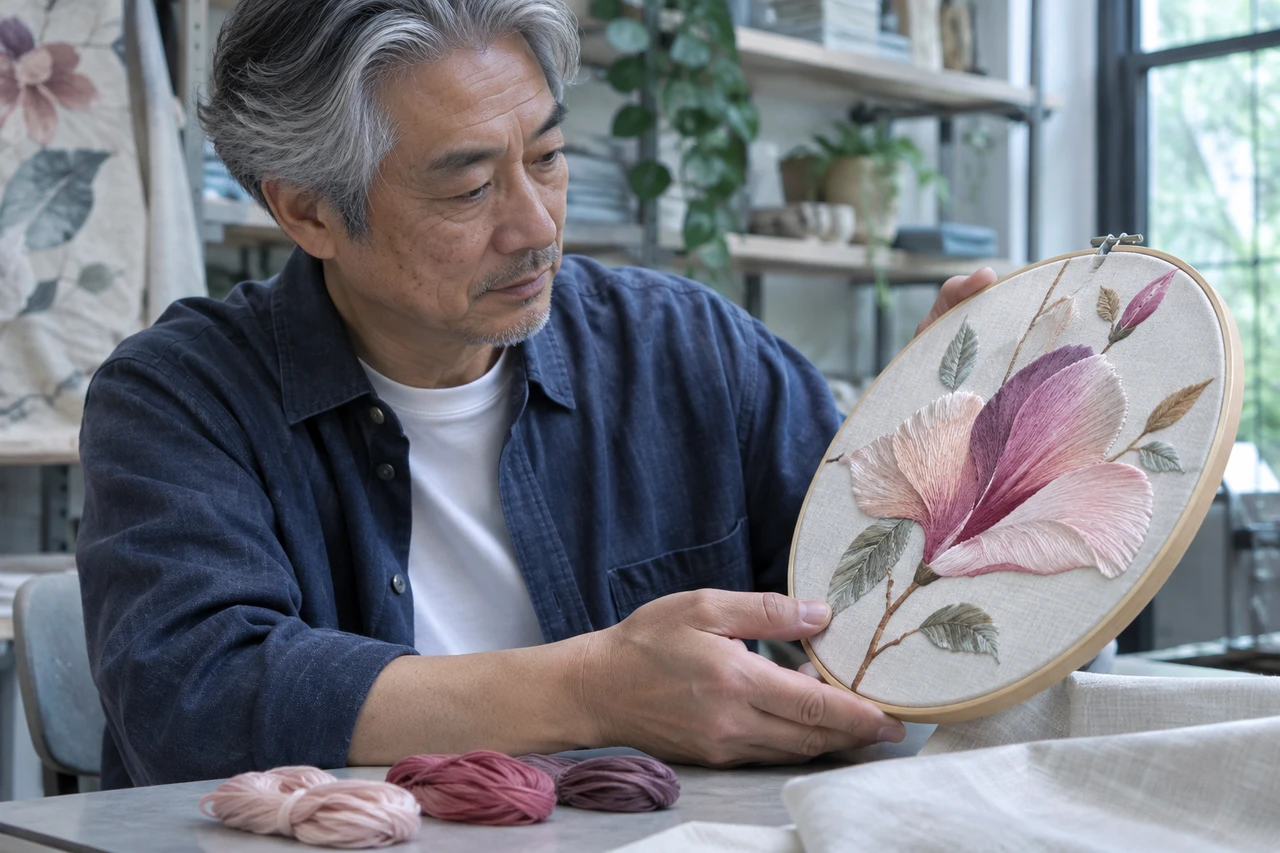
Turning a painted flower into vector artwork changes how its edges are represented. A neat outline may lose the small irregularities that made the original botanical design distinctive, while an overly detailed trace can preserve scan dust as unwanted shapes. Buyers need an explicit contour decision before sampling. The deliverable is not simply a file that opens as a vector; it is an authorised interpretation of the flower.
Decide why conversion is needed
Editable paths are a means, not the design objective
Ask the receiving studio why it needs vector artwork for the proposed process. The answer may concern editing, colour separation or another production requirement. Do not request conversion merely because a vector filename sounds more professional. Some painted effects are better retained in a suitable raster workflow. The responsible designer and printer should agree the appropriate format for the actual artwork and intended textile route.
If conversion is required, identify the parts that must remain visually faithful and those that may be simplified. The approved source should include the complete composition and close views of representative petals. State whether the goal is a clean graphic interpretation or a close preservation of irregular brushwork. These are legitimate but different creative decisions; the supplier should not have to choose between them while preparing a quotation or production file.
Separate meaningful edge detail from unwanted marks
A trace cannot know every artistic intention
Choose examples of a deliberate brush notch, a pale petal tip and an isolated speck outside the motif. Ask the artwork owner to identify what each should become in the delivered design. Adobe's tracing guidance describes a trade-off between fine detail and smooth paths, including the difficulty of retaining faint strokes and small white details together. Use that as a reason to review results, not as a preset that guarantees fidelity.
Do not approve a global cleanup simply because it reduces the number of shapes. A small irregularity can be essential to one flower and irrelevant to another. Conversely, retaining every mark from a scan may introduce unwanted dots across the printed cloth. Keep a short, located decision list for the selected examples so the designer can apply a consistent interpretation without guessing what the buyer considers authentic texture.
Compare contours at two useful scales
Enlarged paths and finished motifs answer different questions
Inspect the traced design at the intended physical motif size. Does the flower still have the same visual weight, and do its leaf tips and stem joins remain recognisable? Then examine the marked details more closely to locate unexpected corners, lost gaps or extra shapes. Neither view is sufficient alone. A technically smooth close-up can hide that the whole blossom has become too heavy for the planned bedding layout.
Ask for the original and converted versions in a consistent comparison, without different crops or stretching. Where a change is proposed, identify the affected contour rather than describing the entire design as wrong. This makes it possible to preserve already accepted areas. The designer should retain the source artwork and issue a separate converted revision, so the team can return to the original intention instead of repeatedly tracing an already altered copy.
Review colour boundaries separately from outer shape
Conversion may divide a painted region differently
A painted petal may contain a gradual wash, while its vector interpretation uses several discrete shapes. Ask which boundaries are deliberate and which are artefacts of the conversion. The present decision concerns the visible interpretation of the artwork, not a promise that any printer can reproduce it exactly. Have the receiving studio explain how its proposed route handles the accepted shapes and colour regions before physical sampling begins.
Look especially at small islands near the centre of a flower and narrow spaces between overlapping petals. A cleanup can merge regions that the original kept separate. If the desired result requires manual redrawing, identify that work in the development scope rather than disguising it as an automatic file conversion. Keep the authorised design owner involved when simplification changes the composition, even if the revised file is easier to process.
Approve the exported result and a textile trial
The editable document is not the last handoff
Have the recipient open the actual delivered file and generate the agreed output proof. Compare the chosen contour details with the approved converted reference. Confirm that the export has not dropped small shapes or changed visibility. This check is distinct from collecting linked assets: an intact package can still contain an interpretation that the buyer never approved. The final visible result, not merely file completeness, must be agreed.
Proceed to a physical sample using the proposed ground and process. Review the contour at finished scale and note any further simplification needed for that route. A vector edge on a screen is not evidence of an identical printed edge on fabric. If sampling prompts an artwork revision, return the correction to the controlled file and repeat the relevant comparison. Do not allow the sample room to become the only place where the current design exists.
Buy the conversion work with its approval record
Preserve the decision for later colourways
Ask quotations to distinguish tracing, manual redrawing and repeat or colourway development where those tasks are separately proposed. Confirm the files and proof records that the buyer will receive, subject to the agreed artwork rights. A completed conversion should leave a clear source-to-output relationship, not a folder of similarly named files whose differences can only be explained by the original technician. The FR-01 design direction is a visual discussion aid, not an editable vector master or proof of any particular fabric.
For an FY Bedding floral project, provide authorised source artwork, the target product and the desired contour character. Use collection references to communicate direction rather than to infer the source files or production method behind a displayed product. Request a scoped development proposal and sample plan. The useful approval is a visible, repeatable interpretation of the flower, with commercial terms and technical feasibility confirmed for the actual project rather than assumed from the file format.
Approve what tracing retains and removes at named petal edges. Keep the original source, converted revision, receiving proof and textile sample connected so editable paths do not silently redefine the floral design.
Method references: Adobe Illustrator: image-tracing interpretation and detail.