A floral artwork can look complete on the designer's screen while arriving at the print studio with a missing leaf, an exposed background or an empty image frame. Buying more pixels will not resolve a broken link or a changed clipping boundary. For a private-label bedding project, the useful question is whether the receiving team can reproduce the authorised visible composition from the actual delivery package. Establish that before paying for a strike-off or approving an entire range from a preview image.
Choose the visible composition that must survive
A proof is a reference, not the editable source
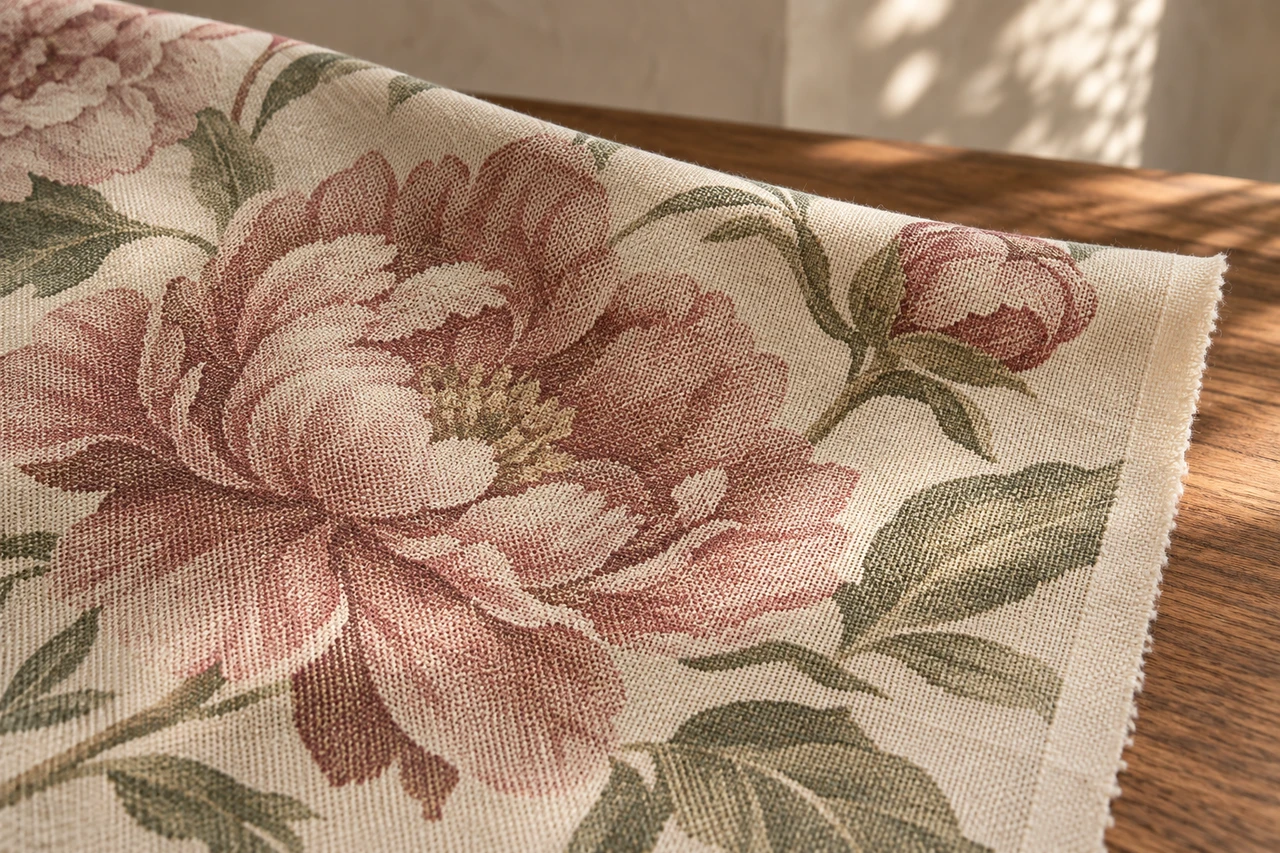
Create a dated reference showing the full intended floral composition and several close details at its edges. Include a partly hidden flower, a leaf crossing another element and any textured area supplied as a separate image. These are useful comparison points because a file can open successfully while displaying one of them differently. Name the reference in the handoff record so that a buyer, designer and print technician are comparing the same version rather than three exports with similar filenames.
The FY floral collection, including the FR-01 reference page where relevant, can help establish a design direction. It does not identify the structure of your production artwork or establish a printing method for that product. Supply the authorised project files separately. Record which visible arrangement has been approved and which content remains editable. If the range contains several colourways, treat each delivery as a named variant rather than expecting the receiving technician to infer the intended combination from a folder of alternatives.
Keep concealed content under control
A clipping boundary is not a deleted object
Adobe describes clipping masks as a way to show content within a shape while hiding content outside it. The concealed artwork remains present. Consequently, releasing or altering a mask can expose material that was never part of the approved face. For procurement, that distinction matters when an oversized bouquet image is confined to a panel shape or when a texture is visible only inside a floral silhouette. The handoff must preserve the intended boundary, not merely the flower drawing.
Ask the designer to identify the few mask groups that define critical visible edges. Do not request that a buyer dismantle every group or convert the whole file without considering the print studio's needs. Instead, agree who may edit those groups and what comparison is required afterward. A useful change record shows the before-and-after edge at the same viewing size. If a technician exposes an extra petal to repair the file, the resulting arrangement needs design approval; it is not an invisible administrative correction.
Deliver the dependencies with the document
Check the receiving location, not the sender's desktop
An editable file may depend on graphics stored elsewhere. Adobe's packaging guidance distinguishes collecting linked files from relinking the document to the new package location. Including a folder of images therefore does not, by itself, prove that the delivered document uses those copies. Ask the preparing designer to follow the application's packaging process and the receiving studio's requirements. Font sharing, if needed, also requires the appropriate permissions; do not treat a packaging command as permission to redistribute assets.
Have the recipient open the delivered package from its own working location and report missing or substituted elements. Their proof should be generated from that copy, not from the sender's previously supplied preview. Record the package name, document revision, included dependency list and the receiving person's confirmation. This small acceptance step exposes a handoff failure before fabric is involved. Where a linked component is unavailable, request an approved replacement or a corrected package rather than allowing an unrecorded substitute from the recipient's library.
Compare the reopened proof at the fragile edges
Separate file integrity from colour approval
Review the recipient's full composition first, then compare the marked details. Is the same leaf partly hidden? Does the texture remain confined to the same petal shape? Has an object appeared outside the panel boundary? Are any flowers absent or replaced? Use position and visibility as the initial acceptance criteria. A difference in display colour is a separate investigation and should not distract the team from an element that is physically missing in the exported design.
Classify each discrepancy as a missing dependency, changed mask, altered object order, deliberate design revision or unresolved issue. These categories direct the correction to the right owner. They also prevent a printer from repeatedly adjusting an otherwise intact file to match a screenshot whose colour has not been controlled. Once the visible content agrees, proceed with the project's separate colour and substrate sampling process. An intact file package is necessary evidence of handoff, not evidence that a textile print has passed appearance or performance review.
Request a correction without losing the approved version
Keep one active production package
When a correction is needed, retain the rejected export with a short explanation and issue a clearly different package revision. Avoid sending a replacement leaf in one message, a new background in another and an instruction to keep everything else from a third folder. Ask the responsible designer to assemble the complete revised package. The recipient should repeat the reopen-and-compare check on that package, including the previously correct details most likely to be affected by the change.
For an FY Bedding development enquiry, provide the approved visual reference, intended bedding components and the editable-file requirements agreed with the proposed production route. Ask which file checks and physical samples can be included in the quotation, who owns corrective artwork work and how revisions affect the schedule. Keep technical feasibility and commercial approval conditional until confirmed. The final handoff record should connect one authorised package to one receiving proof and the later strike-off, making an exposed petal a traceable change rather than a debate about which screen looked right.
Before sampling, obtain a proof generated from the recipient's delivered package and compare the masked edges and linked elements against the approved visual reference.
Method references: Adobe: visible and hidden clipping-mask content; Adobe: packaging and relinking artwork dependencies.